Human CCL11 Protein
Catalog No: CCL11-HP001
- Species
- Human
- Expression System
- E.coli
- Tag
- His
Product overview
Recombinant Human CCL11 Protein is expressed in E. coli with a His tag at the N-terminus. It contains amino acid residues Gly24-Pro97 (UniProt accession: P51671).
Product Details
- Molecular Aliases
- Eotaxin; C-C motif chemokine 11; Small-inducible cytokine A11; SCYA11; eotaxin-1
- Protein Length
- Gly24-Pro97
- Expression System
- E.coli
- Theoretical Molecular Weight
- The protein has a predicted MW of 9.46 kDa. The protein migrates to 13-15 kDa based on Bis-Tris PAGE result.
- Purity
- > 95% as determined by Bis-Tris PAGE
- Endotoxin
- Less than 1 EU per μg by the LAL method.
- Buffer / Formulation
- Supplied as 0.22μm filtered solution in 20mM PB, 500mM NaCl, 200mM L-arginine (pH 7.4).
- State
- Liquid
- Storage Conditions
- Valid for 12 months from date of receipt when stored at -80°C. Recommend to aliquot the protein into smaller quantities for optimal storage. Please minimize freeze-thaw cycles.
Data Display
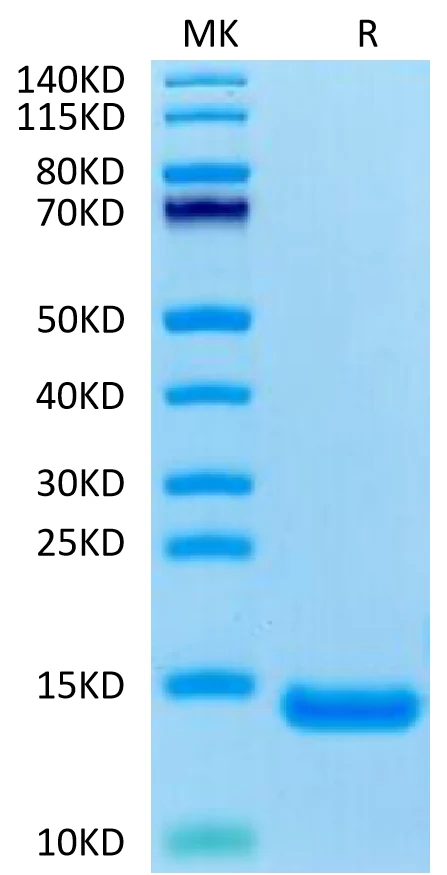
Human CCL11 on Bis-Tris PAGE under reduced condition. The purity is greater than 95%.
Background
The chemokine CCL11 (also known as eotaxin-1) is a potent eosinophil chemoattractant that mediates allergic diseases such as asthma, atopic dermatitis, and inflammatory bowel diseases. CCL11 released from activated astrocytes triggers oxidative stress via microglial NOX1 activation and potentiates glutamate-mediated neurotoxicity, which may be involved in the pathogenesis of various neurological disorders.
References
- Parajuli B, Horiuchi H, Mizuno T, Takeuchi H, Suzumura A. CCL11 enhances excitotoxic neuronal death by producing reactive oxygen species in microglia. Glia. 2015 Dec;63(12):2274-84. doi: 10.1002/glia.22892. Epub 2015 Jul 17. PMID: 26184677.
Have questions about this product?
Our technical team can help with product selection, application questions and order support.