Human IL-21 Protein
Catalog No: IL21-HP001
- Species
- Human
- Expression System
- E. coli
- Activity
- Activity verified
Product overview
Recombinant Human IL-21 Protein is expressed in E. coli without tag. It contains amino acid residues Gln32-Ser162 (UniProt accession: Q9HBE4-1).
Product Details
- Molecular Aliases
- Interleukin-21; IL-21; Za11; CVID11
- Protein Length
- Gln32-Ser162
- Expression System
- E. coli
- Theoretical Molecular Weight
- The protein has a predicted MW of 15.4 kDa same as Bis-Tris PAGE result.
- Purity
- > 95% as determined by Bis-Tris PAGE > 95% as determined by HPLC
- Endotoxin
- Less than 1 EU per μg by the LAL method.
- Buffer / Formulation
- Lyophilized from 0.22μm filtered solution in 20mM NaAc, 150mM NaCl (pH 5.5). Normally 8% trehalose is added as protectant before lyophilization.
- State
- Lyophilized
- Storage Conditions
- -20 to -80°C for 12 months as supplied from date of receipt. -80°C for 3 months after reconstitution. Recommend to aliquot the protein into smaller quantities for optimal storage. Please minimize freeze-thaw cycles.
- Reconstitution Advice
- Dissolve the lyophilized protein in 20mM NaAc (pH 5.5). Please refer to the Certificate of Analysis for detailed instructions.
Data Display
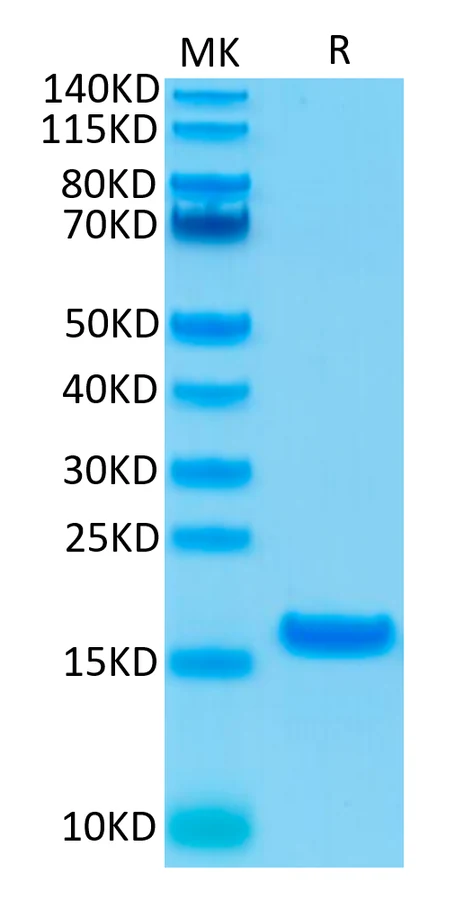
Human IL-21 on Bis-Tris PAGE under reduced condition. The purity is greater than 95%.
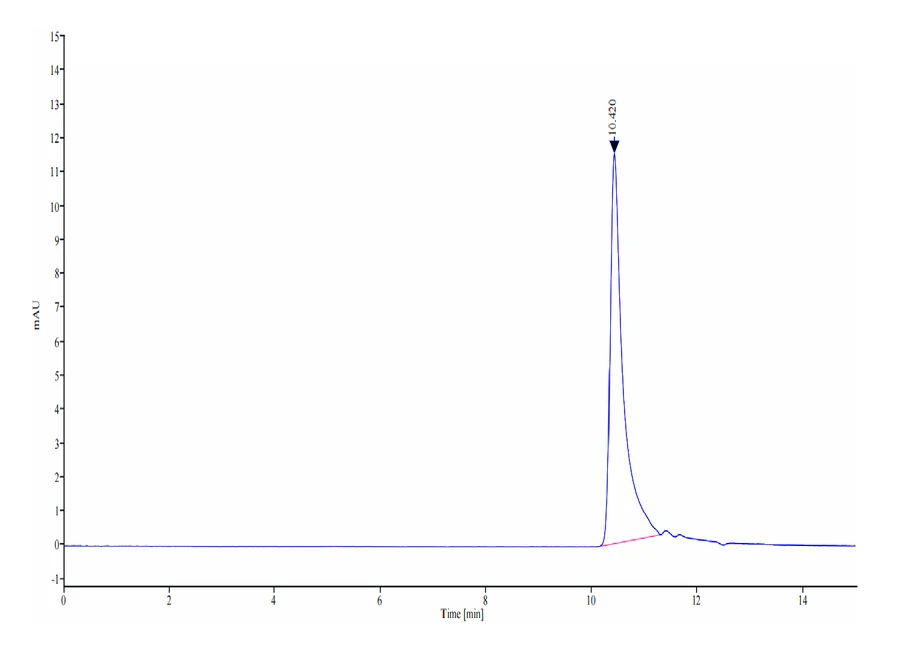
The purity of Human IL-21 is greater than 95% as determined by SEC-HPLC.
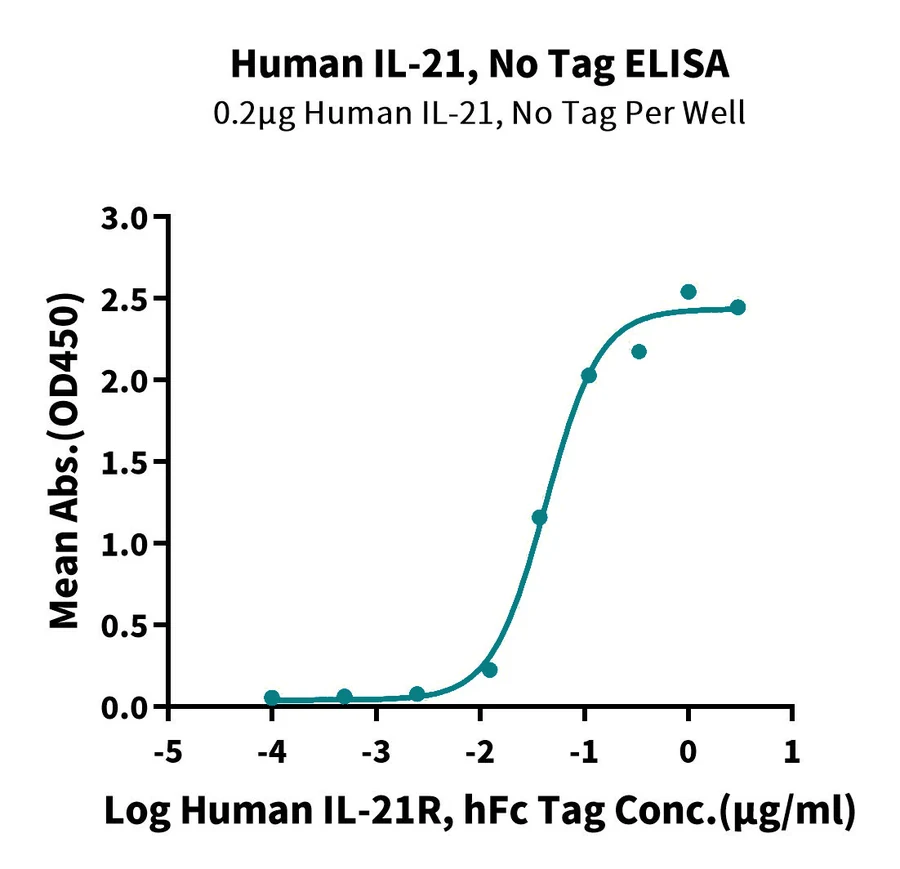
Immobilized Human IL-21, No Tag at 2μg/ml (100μl/well) on the plate. Dose response curve for Human IL-21R, hFc Tag with the EC50 of 42.3ng/ml determined by ELISA. (QC Test)
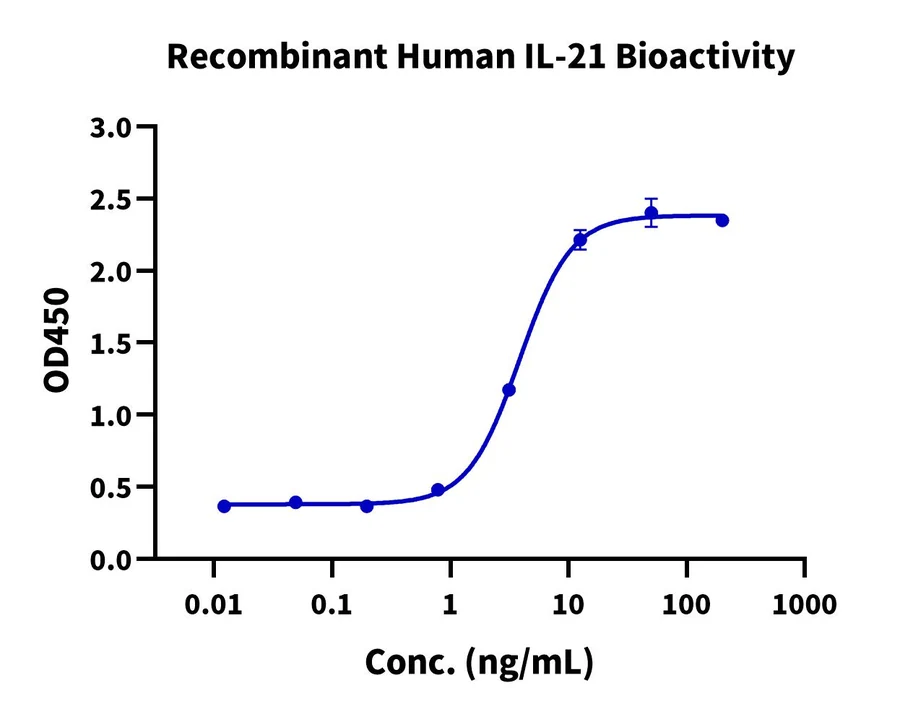
Measured by its ability to enhance IFN-gamma secretion in NK-92 human natural killer lymphoma cells. The ED50 for this effect is <8 ng/mL (QC Test).
Background
Interleukin-21 (IL-21), produced predominantly by CD4 T cells and natural killer T (NKT) cells, is a newly discovered member of the common γ-chain family of cytokines. It has been implicated in many immunological processes and has been linked to autoimmune diseases, allergies and other inflammatory diseases.
References
- Sim GC, Radvanyi L. The IL-2 cytokine family in cancer immunotherapy. Cytokine Growth Factor Rev. 2014 Aug;25(4):377-90. doi: 10.1016/j.cytogfr.2014.07.018. Epub 2014 Aug
- PMID: 25200249.
Have questions about this product?
Our technical team can help with product selection, application questions and order support.