Human G-CSF Protein
Catalog No: GCSF-HF001
- Species
- Human
- Expression System
- HEK293
- Tag
- an hFc (IgG1)
- Activity
- Activity verified
Product overview
Recombinant Human G-CSF Protein is expressed in HEK293 cells with an hFc (IgG1) tag at the N-terminus. It contains amino acid residues Thr31-Pro204 (accession: NP_757373.1).
Product Details
- Molecular Aliases
- CSF3; GCSF; C17orf33; CSF3OS;; Colony stimulating factor-3; Colony stimulating factor 3
- Protein Length
- Thr31-Pro204
- Expression System
- HEK293
- Theoretical Molecular Weight
- The protein has a predicted MW of 44.20 kDa. Due to glycosylation, the protein migrates to 45-50 kDa based on Bis-Tris PAGE result.
- Purity
- > 95% as determined by Bis-Tris PAGE > 95% as determined by HPLC
- Endotoxin
- Less than 1 EU per μg by the LAL method.
- Buffer / Formulation
- Lyophilized from 0.22 μm filtered solution in PBS (pH 7.4). Normally 8% trehalose is added as protectant before lyophilization.
- State
- Lyophilized
- Storage Conditions
- -20 to -80°C for 12 months as supplied from date of receipt. -80°C for 3 months after reconstitution. Recommend to aliquot the protein into smaller quantities for optimal storage. Please minimize freeze-thaw cycles.
- Reconstitution Advice
- Dissolve the lyophilized protein in distilled water. Please refer to the Certificate of Analysis for detailed instructions.
Data Display
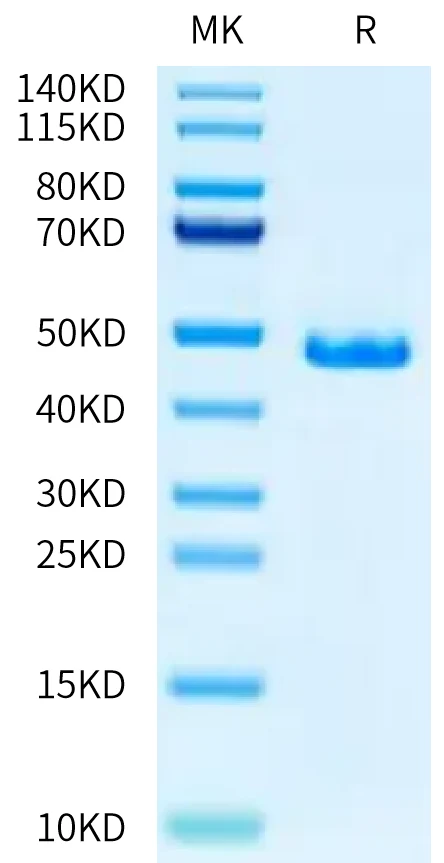
Human G-CSF on Bis-Tris PAGE under reduced condition. The purity is greater than 95%.
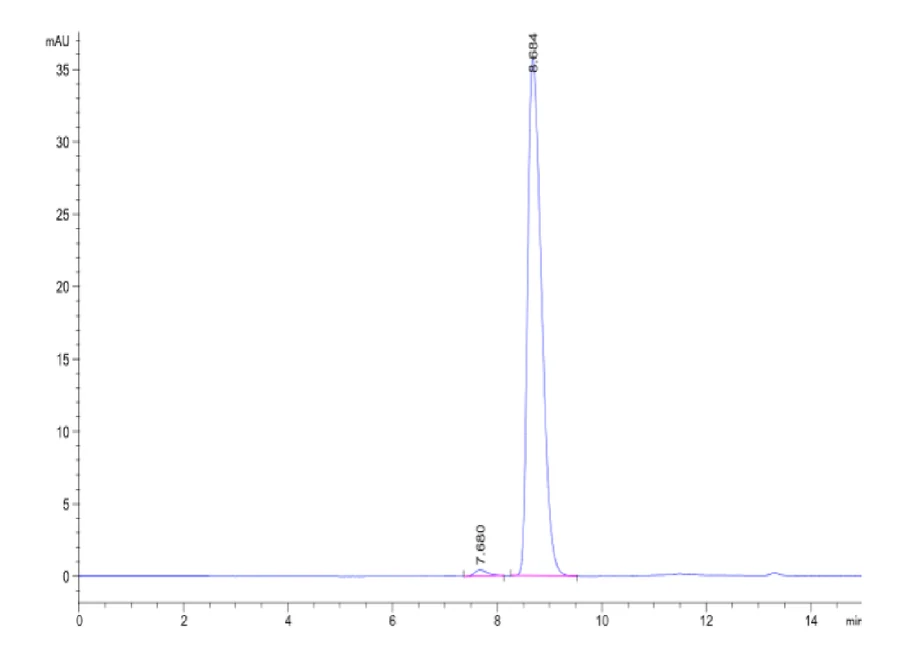
The purity of Human G-CSF is greater than 95% as determined by SEC-HPLC.
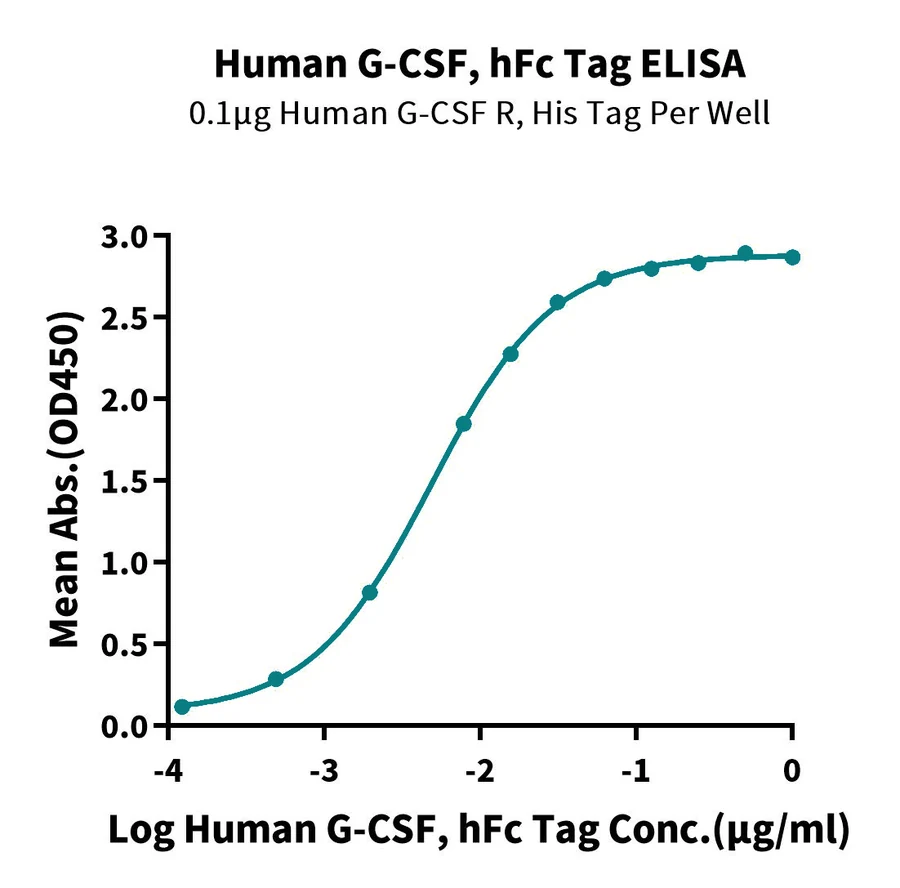
Immobilized Human G-CSF R, His Tag at 1μg/ml (100μl/well) on the plate. Dose response curve for Human G-CSF, hFc Tag with the EC50 of 4.9ng/ml determined by ELISA (QC Test).
Background
Granulocyte colony-stimulating factor (G-CSF) is an hemopoietic growth factor produced by fibroblasts, monocytes and endothelial cells. G-CSF is expressed by numerous cell types including neuronal, immune and endothelial cells. G-CSF is released in autocrine manner and binds to its receptor G-CSF-R which further activates numerous signaling transduction pathways including PI3K/AKT, JAK/STAT and MAP kinase, and thereby promote neuronal survival, proliferation, differentiation, mobilization of hematopoietic stem and progenitor cells.
References
- Visani G, Manfroi S. G-CSF in the biology and treatment of acute myeloid leukemias. Leuk Lymphoma. 1995 Aug;18(5-6):423-8. doi: 10.3109/10428199509059640. PMID: 8528048.
- Rahi V, Jamwal S, Kumar P. Neuroprotection through G-CSF: recent advances and future viewpoints. Pharmacol Rep. 2021 Apr;73(2):372-385. doi: 10.1007/s43440-020-00201-3. Epub 2021 Jan 2. PMID: 33389706.
Have questions about this product?
Our technical team can help with product selection, application questions and order support.