Human FGF basic Protein
Catalog No: FGFBASIC-HP001
- Species
- Human
- Expression System
- E. coli
- Activity
- Activity verified
Product overview
Recombinant Human FGF basic Protein is expressed in E. coli without tag It contains amino acid residues Pro143-Ser288 (UniProt accession: P09038-4).
Product Details
- Molecular Aliases
- bFGF; FGF basic; FGF2; FGF-2; FGF2AS; GFG1; HBGF-2; NUDT6; Prostatropin; BFGF; FGFB; FGFβ; HBGF2
- Protein Length
- Pro143-Ser288
- Expression System
- E. coli
- Theoretical Molecular Weight
- The protein has a predicted MW of 16.5 kDa same as Bis-Tris PAGE result.
- Purity
- > 95% as determined by Bis-Tris PAGE > 95% as determined by HPLC
- Endotoxin
- Less than 0.02 EU per μg by the LAL method.
- Buffer / Formulation
- Lyophilized from 0.22 μm filtered solution in PBS, 8% trehalose (pH 7.4).
- State
- Lyophilized
- Storage Conditions
- -20 to -80°C for 12 months as supplied from date of receipt. -80°C for 3 months after reconstitution. Recommend to aliquot the protein into smaller quantities for optimal storage. Please minimize freeze-thaw cycles.
- Reconstitution Advice
- Dissolve the lyophilized protein in distilled water. Please refer to the Certificate of Analysis for detailed instructions.
Data Display
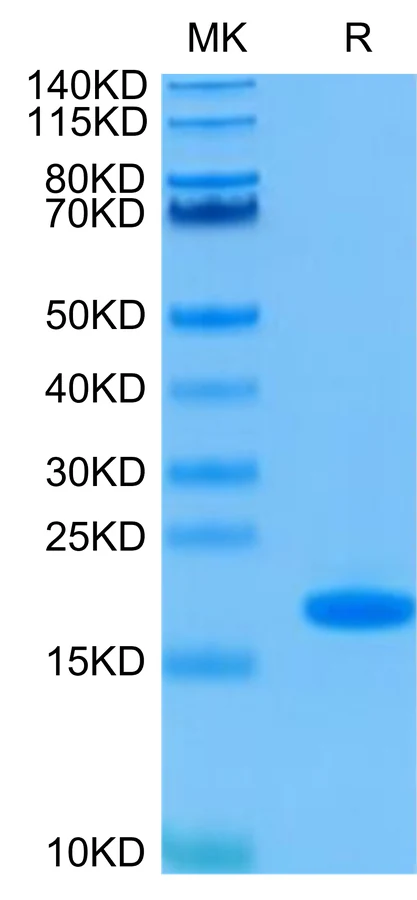
Human FGF basic on Bis-Tris PAGE under reduced condition. The purity is greater than 95%.
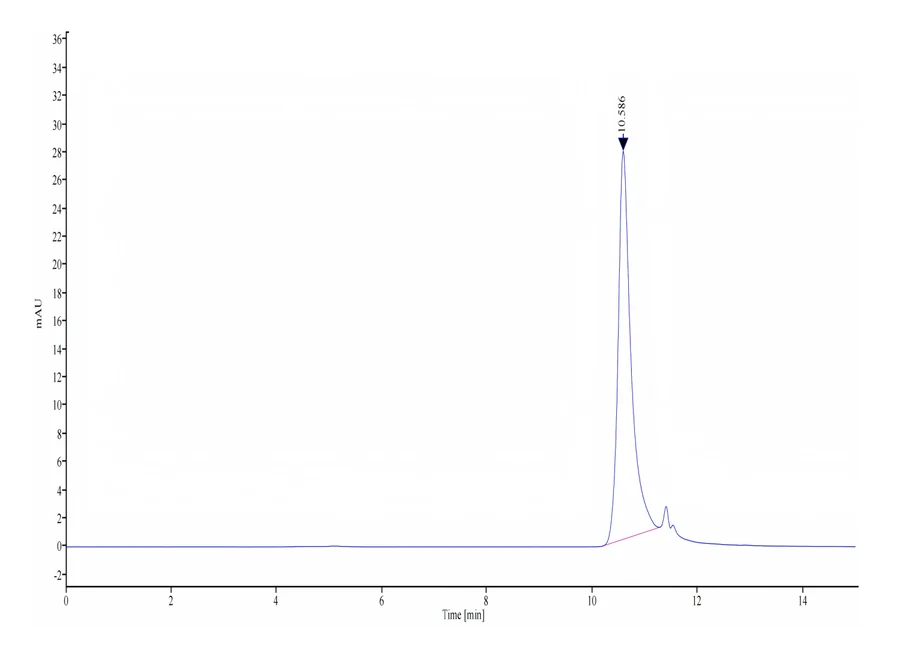
The purity of Human FGF basic is greater than 95% as determined by SEC-HPLC.
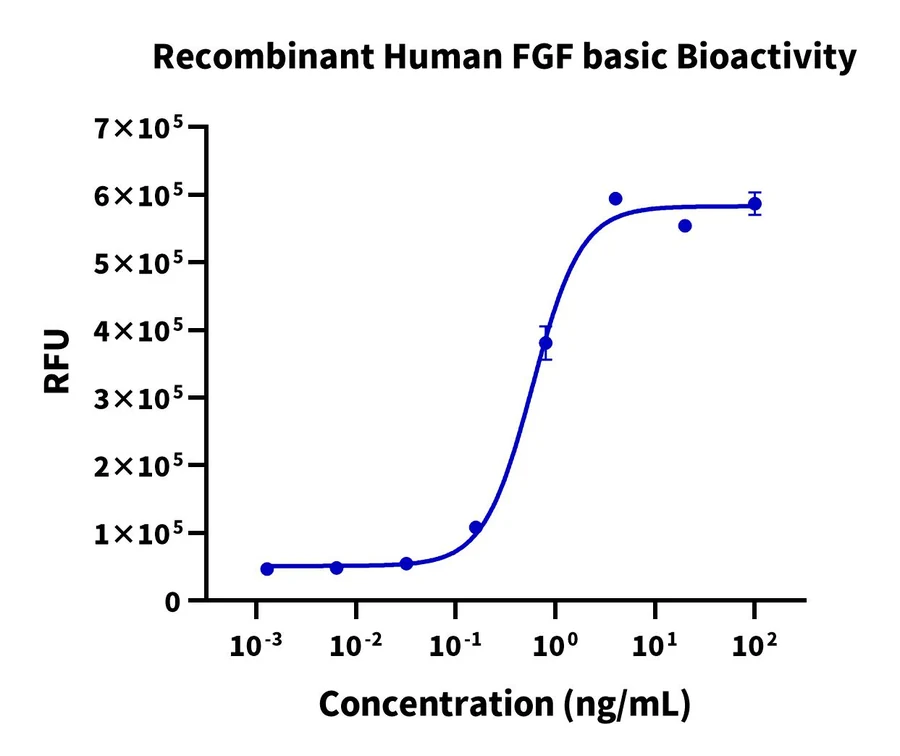
Measured in a cell proliferation assay using BALB/c 3T3 mouse embryonic fibroblasts. The ED50 for this effect is 0.1 - 0.6 ng/ml (QC Test).
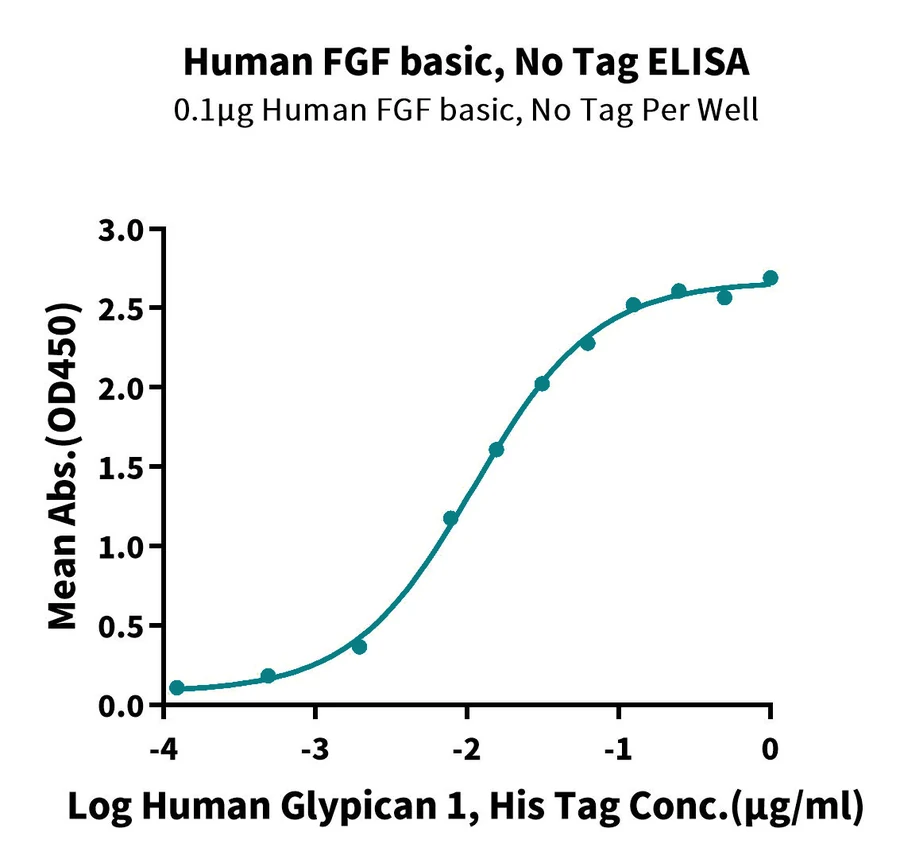
Immobilized Human FGF basic at 1μg/ml (100μl/Well) on the plate. Dose response curve for Human Glypican 1, His Tag with the EC50 of 11.1ng/ml determined by ELISA. (QC Test)
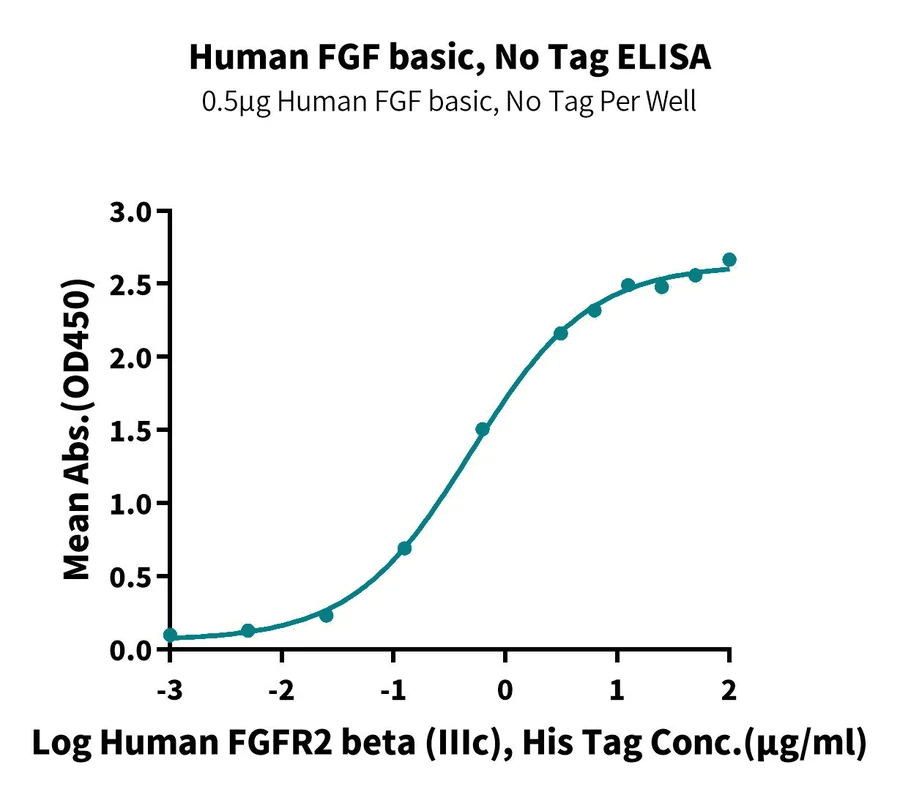
Immobilized Human FGF basic, No Tag at 5 μg/ml (100 μl/well) on the plate. Dose response curve for Human FGFR2 beta (IIIc), His Tag with the EC50 of 0.49 μg/ml determined by ELISA.
Background
FGF basic is a member of the FGF family of at least 23 related mitogenic proteins which show 35-60% amino acid conservation. FGF acidic and basic, unlike the other members of the family, lack signal peptides and are apparently secreted by mechanisms other than the classical protein secretion pathway.
References
- Zhiwu J, Xiaofeng J, Suimin C, et al. Anti-GPC3-CAR T Cells Suppress the Growth of Tumor Cells in Patient-Derived Xenografts of Hepatocellular Carcinoma[J]. Frontiers in Immunology, 2017, 7.
- Ho M, Kim H. Glypican-3: A new target for cancer immunotherapy[J]. European Journal of Cancer, 2011, 47(3):0-338.
Have questions about this product?
Our technical team can help with product selection, application questions and order support.