Biotinylated Cynomolgus MSLN/Mesothelin Protein (Primary Amine Labeling)
Catalog No: MSLN-CB001
- Species
- Cynomolgus
- Expression System
- HEK293
- Tag
- His
- Activity
- Activity verified
Product overview
Recombinant Biotinylated Cynomolgus MSLN/Mesothelin Protein (Primary Amine Labeling) is expressed in HEK293 cells with a His tag at the C-terminus. It contains amino acid residues Asp296-Gly580 (accession: XP_005590873.4)
Product Details
- Molecular Aliases
- MSLN; CAK1; Mesothelin; MPF; MPFSMRP; SMR
- Protein Length
- Asp296-Gly580
- Expression System
- HEK293
- Theoretical Molecular Weight
- The protein has a predicted MW of 33 kDa. Due to glycosylation, the protein migrates to 35-50 kDa based on Bis-Tris PAGE result.
- Purity
- > 95% as determined by Bis-Tris PAGE > 95% as determined by HPLC
- Endotoxin
- Less than 1 EU per μg by the LAL method.
- Buffer / Formulation
- Lyophilized from 0.22μm filtered solution in PBS (pH 7.4). Normally 8% trehalose is added as protectant before lyophilization.
- State
- Lyophilized
- Storage Conditions
- -20 to -80°C for 12 months as supplied from date of receipt. -80°C for 3 months after reconstitution. Recommend to aliquot the protein into smaller quantities for optimal storage. Please minimize freeze-thaw cycles.
- Reconstitution Advice
- Dissolve the lyophilized protein in distilled water. Please refer to the Certificate of Analysis for detailed instructions.
Data Display
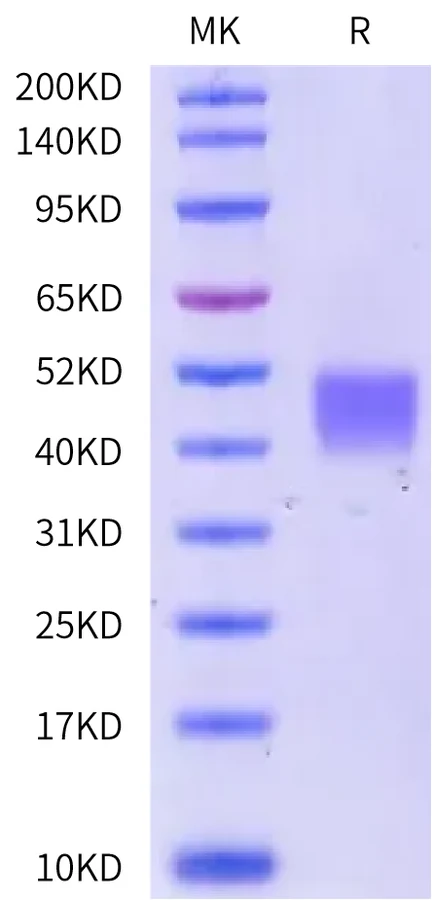
Biotinylated Cynomolgus MSLN on Bis-Tris PAGE under reduced condition. The purity is greater than 95%.
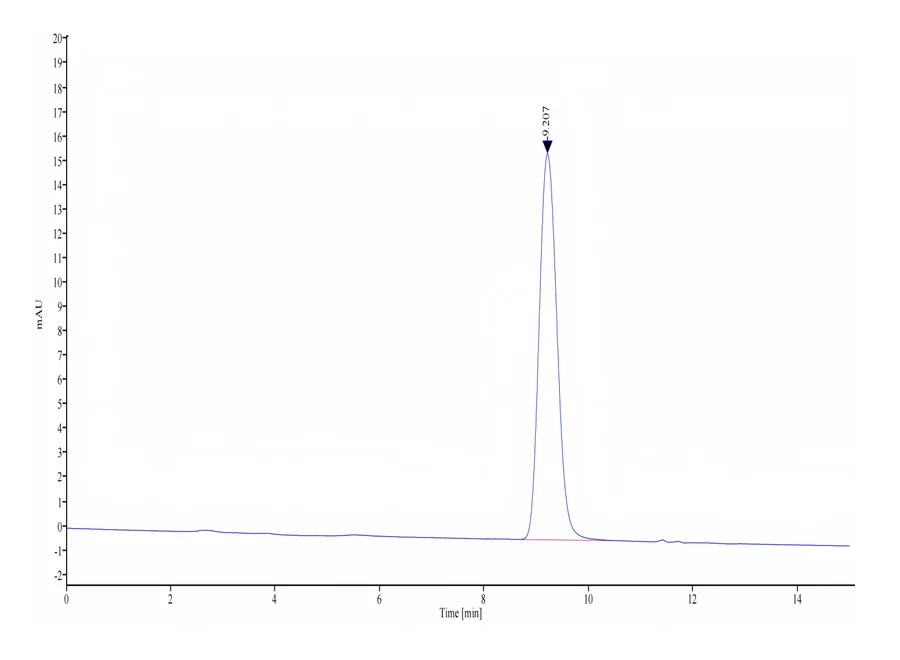
The purity of Biotinylated Cynomolgus MSLN is greater than 95% as determined by SEC-HPLC.
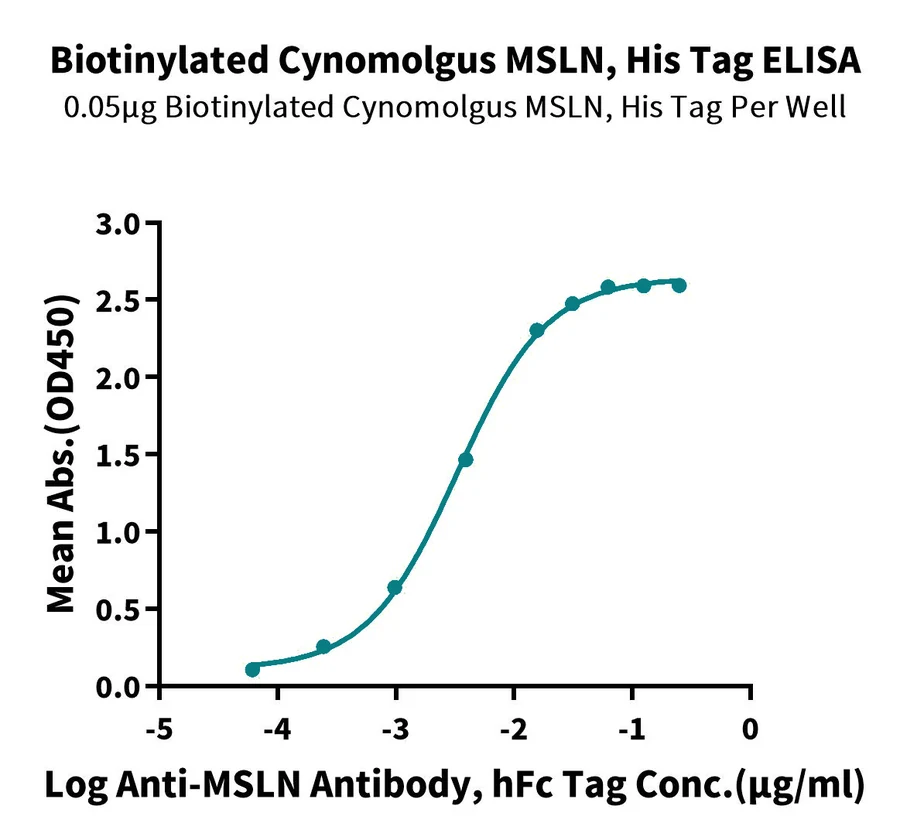
Immobilized Biotinylated Cynomolgus MSLN, His Tag at 0.5μg/ml (100μl/well) on the streptavidin precoated plate (5μg/ml). Dose response curve for Anti-MSLN Antibody, hFc Tag with the EC50 of 3.3ng/ml determined by ELISA. (QC Test)
Background
Mesothelin, also known as MSLN, is a protein that in humans is encoded by the MSLN gene. Cloning studies showed that the mesothelin gene encodes a precursor protein that is processed to yield mesothelin which is attached to the cell membrane by a glycophosphatidylinositol linkage and a 31-kDa shed fragment named megakaryocyte-potentiating factor (MPF). Although it has been proposed that mesothelin may be involved in cell adhesion, its biological function is not known. A knockout mouse line that lacks mesothelin reproduces and develops normally.
References
- Adusumilli P S, Cherkassky L, Villena-Vargas J, et al. Regional delivery of mesothelin-targeted CAR T cell therapy generates potent and long-lasting CD4-dependent tumor immunity[J]. Science Translational Medicine, 2014, 6(261):261ra151-261ra151.
Have questions about this product?
Our technical team can help with product selection, application questions and order support.