Flexible labeling formats
Compare Avi-tag and biotinylated constructs by target and intended workflow.
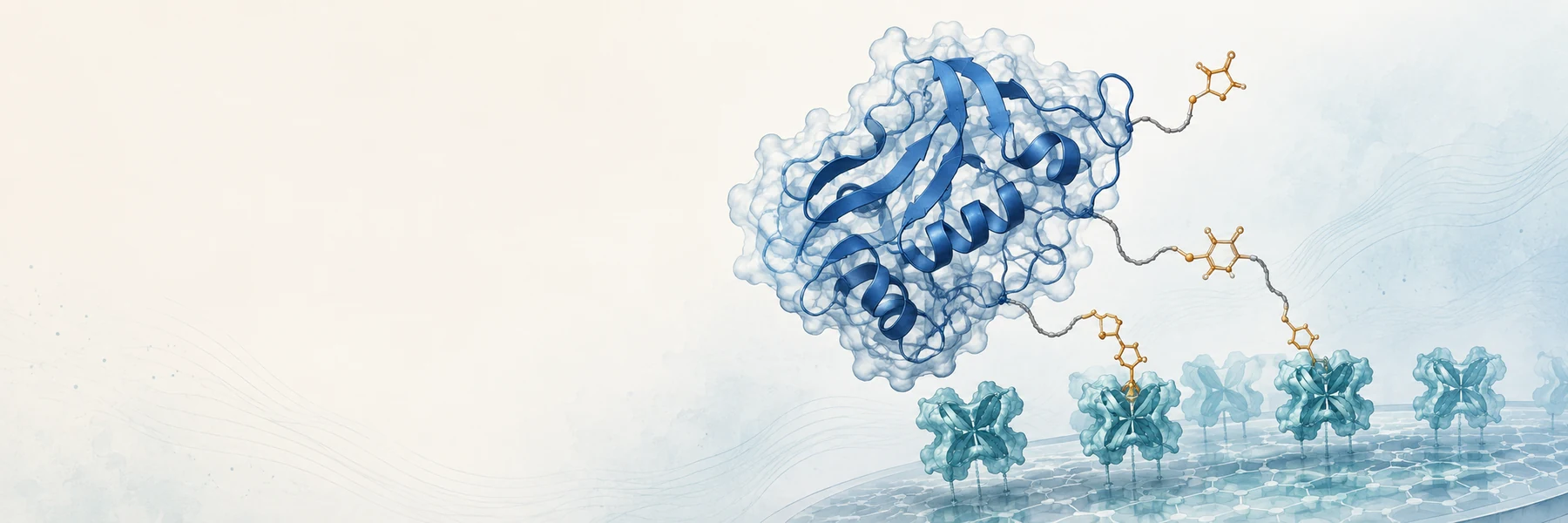
Site-specific and chemically biotinylated recombinant proteins for binding analysis, capture assays and screening workflows.
Explore ProductsPROVETOP biotinylated proteins support streptavidin-based capture, SPR and BLI analysis, antibody screening and other binding workflows. Select the target, species and tag format that fit the intended assay, then review product-specific activity data before use.
Compare Avi-tag and biotinylated constructs by target and intended workflow.
Filter by species and tag to narrow the catalog for capture or binding studies.
Review published binding curves and affinity results for the named construct.
Start with your experimental goal, then see the recommended biotinylation approach for reliable results.

Real-time binding analysis of molecular interactions.
Avi-tag preferredSite-specific labeling supports controlled protein orientation on streptavidin surfaces.
High-throughput assays for detection and screening.
Either formatBoth Avi-tag and primary-amine labeling work well for immunoassays and screening.
Pull-down and immobilization for purification or enrichment.
Avi-tag preferredSite-specific labeling enables consistent orientation and strong capture on streptavidin.
Published ELISA and BLI evidence is available for this construct.
No products match the selected filters.
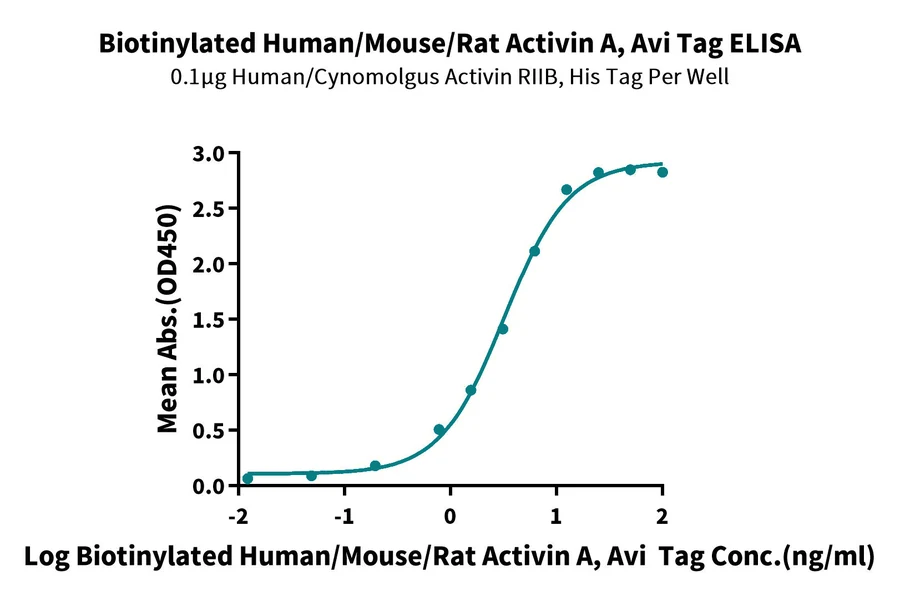
Activin RIIB was coated at 1 μg/mL (100 μL/well) for the binding assay.
Reported EC50: 3.2 ng/mL (QC test)
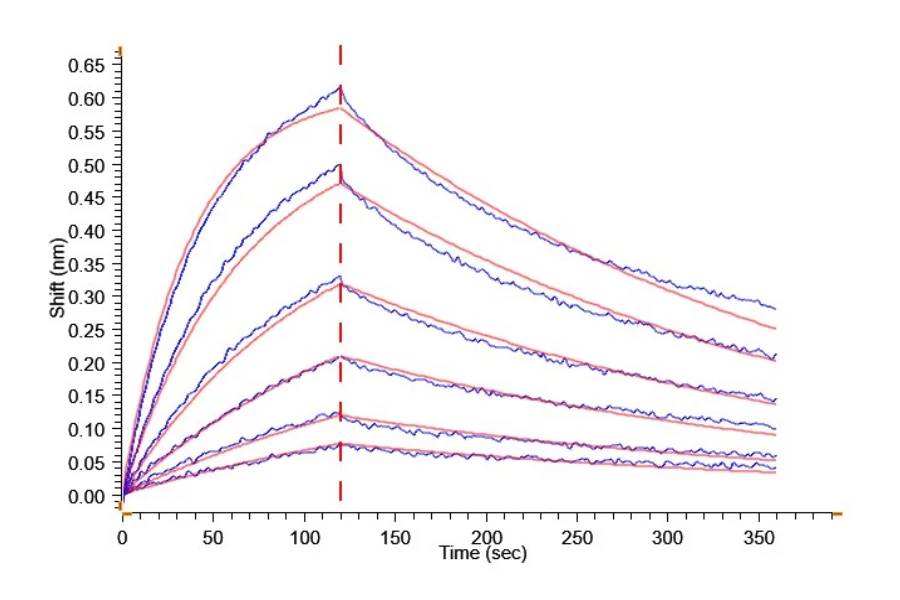
Biotinylated Activin A loaded on a streptavidin biosensor binds Human Activin RIIB.
Reported affinity constant: 30.40 nM
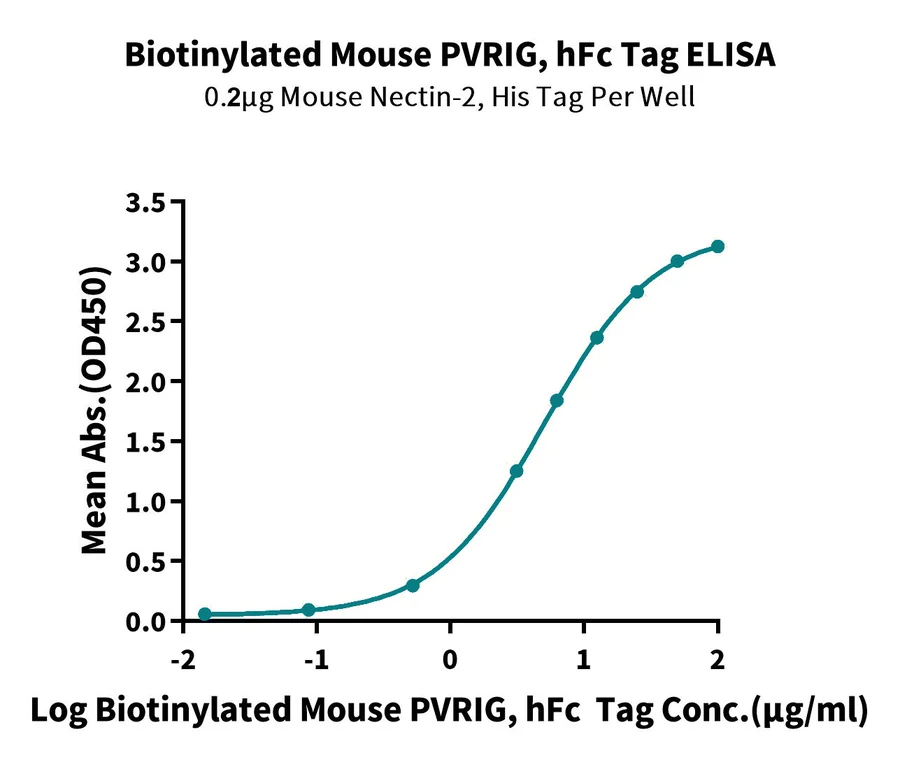
Mouse Nectin-2, His tag was immobilized at 2 μg/mL (100 μL/well).
Reported EC50: 5.04 μg/mL (QC test)
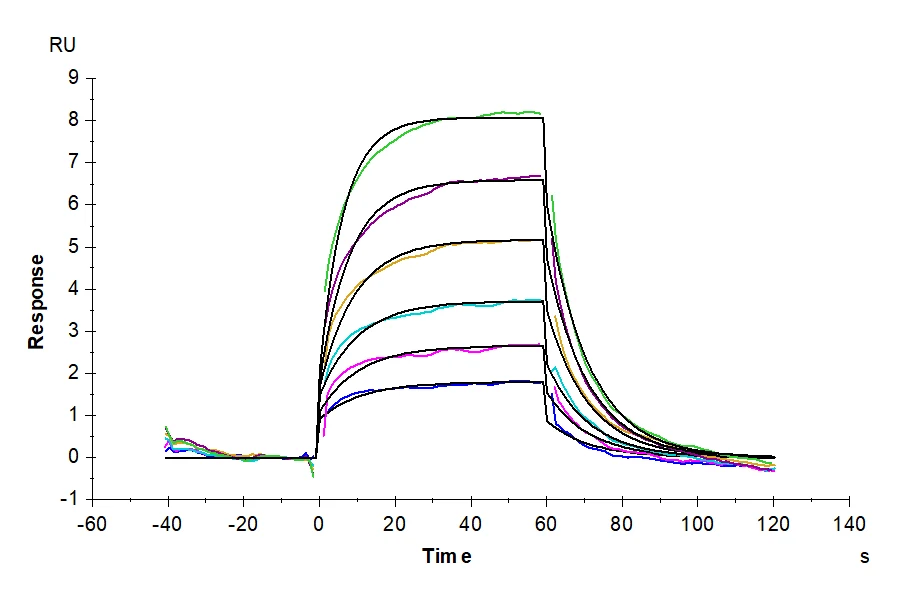
Biotinylated Mouse PVRIG, hFc-Avi tag captured on a CM5 chip binds Mouse Nectin-2, His tag.
Reported affinity constant: 2.22 μM (Biacore T200)
Thank you. Our team will review your inquiry and follow up by email.