Mouse NKG2D/CD314 Protein
Catalog No: CD314-MF001
- Species
- Mouse
- Expression System
- HEK293
- Tag
- an hFc (IgG1)
Product overview
Recombinant Mouse NKG2D/CD314 Protein is expressed in HEK293 cells with an hFc (IgG1) tag at the N-terminus. It contains amino acid residues Phe90-Val232 (UniProt accession: O54709-1).
Product Details
- Molecular Aliases
- CD314; D12S2489E; KLR; NKG2-D; NKG2D
- Protein Length
- Phe90-Val232
- Expression System
- HEK293
- Theoretical Molecular Weight
- The protein has a predicted MW of 43.7 kDa. Due to glycosylation, the protein migrates to 50-68 kDa based on Bis-Tris PAGE result.
- Purity
- > 95% as determined by Bis-Tris PAGE > 95% as determined by HPLC
- Endotoxin
- Less than 1 EU per μg by the LAL method.
- Buffer / Formulation
- Lyophilized from 0.22μm filtered solution in 20mM Tris, 250mM NaCl (pH 8.0). Normally 8% trehalose is added as protectant before lyophilization.
- State
- Lyophilized
- Storage Conditions
- -20 to -80°C for 12 months as supplied from date of receipt. -80°C for 3 months after reconstitution. Recommend to aliquot the protein into smaller quantities for optimal storage. Please minimize freeze-thaw cycles.
- Reconstitution Advice
- Dissolve the lyophilized protein in distilled water. Please refer to the Certificate of Analysis for detailed instructions.
Data Display
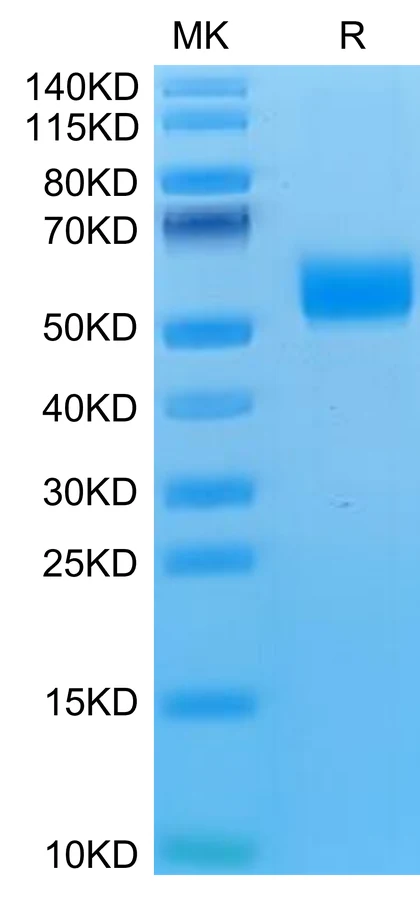
Mouse NKG2D on Bis-Tris PAGE under reduced condition. The purity is greater than 95%.
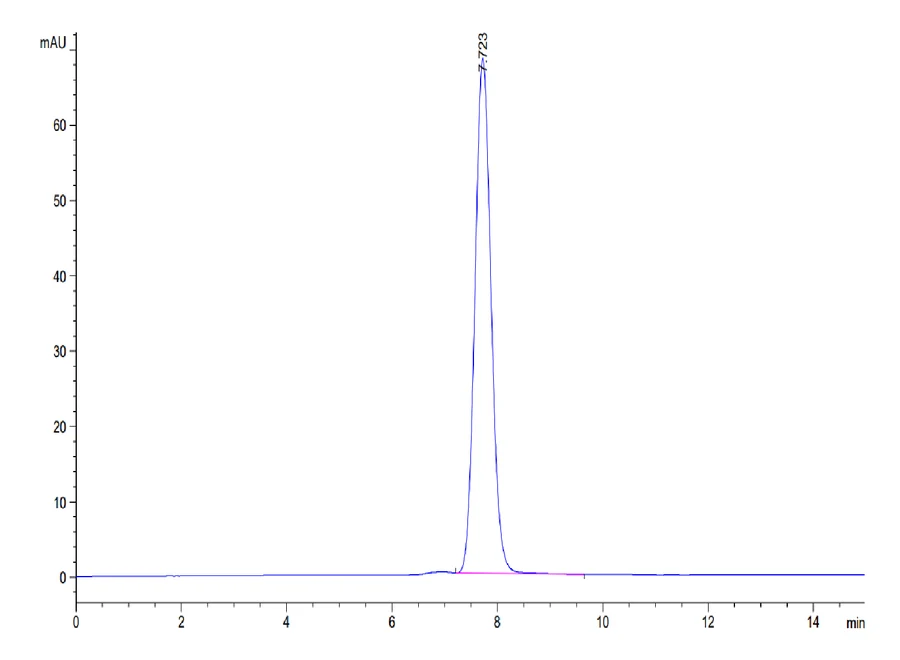
The purity of Mouse NKG2D is greater than 95% as determined by SEC-HPLC.
Background
NKG2D is a type II transmembrane glycoprotein having an extracellular lectin-like domain. This domain lacks the recognizable calcium-binding sites found in true C-type lectins and binds protein rather than carbohydrate ligands. Human NKG2D is expressed on CD8 alpha beta T cells, gamma δ T cells, NK cells and NKT cells.
References
- Spear P, Barber A, Rynda-Apple A, et al. NKG2D CAR T-cell therapy inhibits the growth of NKG2D ligand heterogeneous tumors[J]. Immunology and Cell Biology, 2013, 91(6):435-440. Note: HPLC results always come from liquid protein, due to absorption peak interference of trehalose in lyophilized powder.
Have questions about this product?
Our technical team can help with product selection, application questions and order support.