Mouse 4-1BB Ligand/TNFSF9 Protein
Catalog No: TNFSF9-MF001
- Species
- Mouse
- Expression System
- HEK293
- Tag
- an hFc (IgG1)
- Activity
- Activity verified
Product overview
Recombinant Mouse 4-1BB Ligand/TNFSF9 Protein is expressed in HEK293 cells with an hFc (IgG1) tag at the C-terminus. It contains amino acid residues Arg104-Glu309 (accession: NP_033430).
Product Details
- Molecular Aliases
- 41BB Ligand; 4-1BB Ligand; 4-1BBL; CD137L; TNFSF9
- Protein Length
- Arg104-Glu309
- Expression System
- HEK293
- Theoretical Molecular Weight
- The protein has a predicted MW of 49.7 kDa. Due to glycosylation, the protein migrates to 65-75 kDa based on Bis-Tris PAGE result.
- Purity
- > 95% as determined by Bis-Tris PAGE > 95% as determined by HPLC
- Endotoxin
- Less than 1 EU per μg by the LAL method.
- Buffer / Formulation
- Lyophilized from 0.22 μm filtered solution in PBS (pH 7.4). Normally 8% trehalose is added as protectant before lyophilization.
- State
- Lyophilized
- Storage Conditions
- -20 to -80°C for 12 months as supplied from date of receipt. -80°C for 3 months after reconstitution. Recommend to aliquot the protein into smaller quantities for optimal storage. Please minimize freeze-thaw cycles.
- Reconstitution Advice
- Dissolve the lyophilized protein in distilled water. Please refer to the Certificate of Analysis for detailed instructions.
Data Display
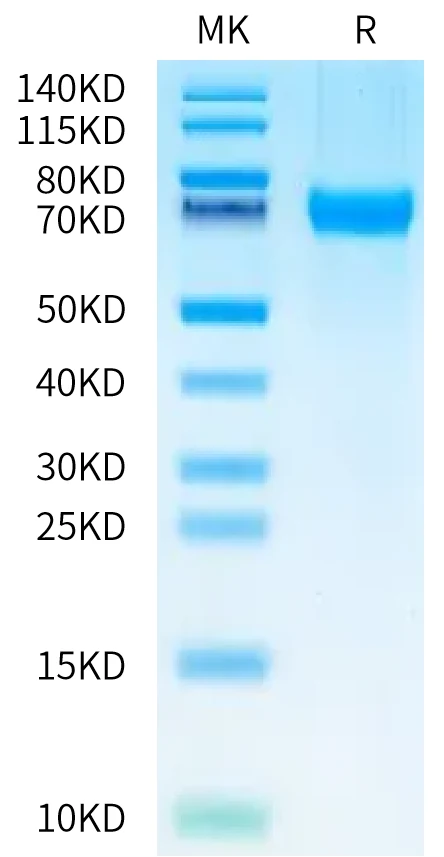
Mouse 4-1BB Ligand on Bis-Tris PAGE under reduced condition. The purity is greater than 95%.
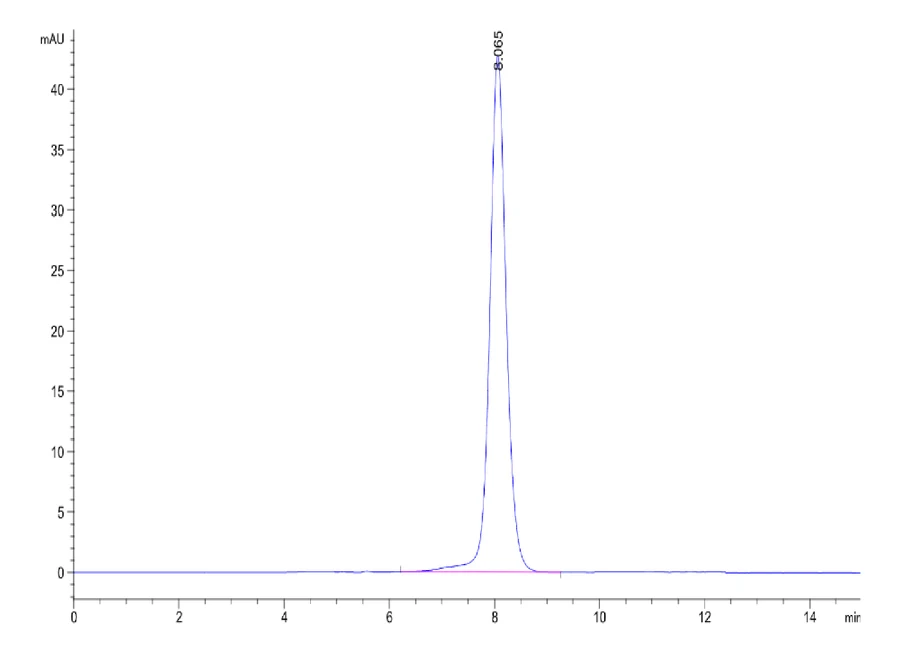
The purity of Mouse 4-1BB Ligand is greater than 95% as determined by SEC-HPLC.
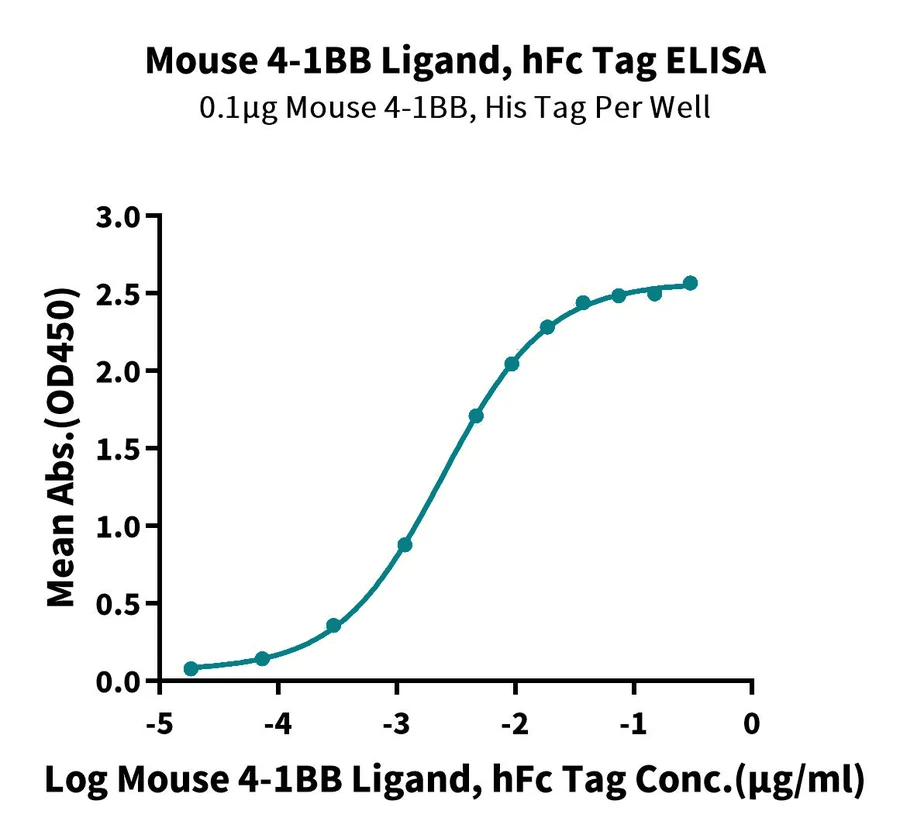
Immobilized Mouse 4-1BB, His Tag at 1μg/ml (100μl/well) on the plate. Dose response curve for Mouse 4-1BB Ligand, hFc Tag with the EC50 of 2.4ng/ml determined by ELISA (QC Test).
Background
The 4-1BBL is the high affinity ligand of 4-1BB, also known as CD137L or TNFSF9. 4-1BB ligand (4-1BBL) is an inducible molecule present on several APC types, including B cells, macrophages and DCs.4-1BB:4-1BBL pathway seems to amplify the existing costimulatory signals, even if the engagement of 4-1BB in the presence of a strong TCR signaling can induce IL-2 production in a CD28-independent manner.
References
- Vinay D S, Kwon B S. 4-1BB (CD137), an inducible costimulatory receptor, as a specific target for cancer therapy[J]. BMB Reports, 2014, 47(3):122-129. Note: HPLC results always come from liquid protein, due to absorption peak interference of trehalose in lyophilized powder.