Human IL-10 Protein
Catalog No: IL10-HP001
- Species
- Human
- Expression System
- HEK293
- Activity
- Activity verified
Product overview
Recombinant Human IL-10 Protein is expressed in HEK293 cells without tag. It contains amino acid residues Ser19-Asn178 (UniProt accession: P22301).
Product Details
- Molecular Aliases
- Interleukin-10; IL-10; CSIF; IL10A; TGIF; B-TCGF; GVHDS; MGC126450; MGC126451
- Protein Length
- Ser19-Asn178
- Expression System
- HEK293
- Theoretical Molecular Weight
- The protein has a predicted MW of 18.8 kDa same as Bis-Tris PAGE result.
- Purity
- > 95% as determined by Bis-Tris PAGE > 95% as determined by HPLC
- Endotoxin
- Less than 0.1 EU per μg by the LAL method.
- Buffer / Formulation
- Lyophilized from 0.22μm filtered solution in PBS (pH 7.4). Normally 8% trehalose is added as protectant before lyophilization.
- State
- Lyophilized
- Storage Conditions
- -20 to -80°C for 12 months as supplied from date of receipt. -80°C for 3 months after reconstitution. Recommend to aliquot the protein into smaller quantities for optimal storage. Please minimize freeze-thaw cycles.
- Reconstitution Advice
- Dissolve the lyophilized protein in distilled water. Please refer to the Certificate of Analysis for detailed instructions.
Data Display
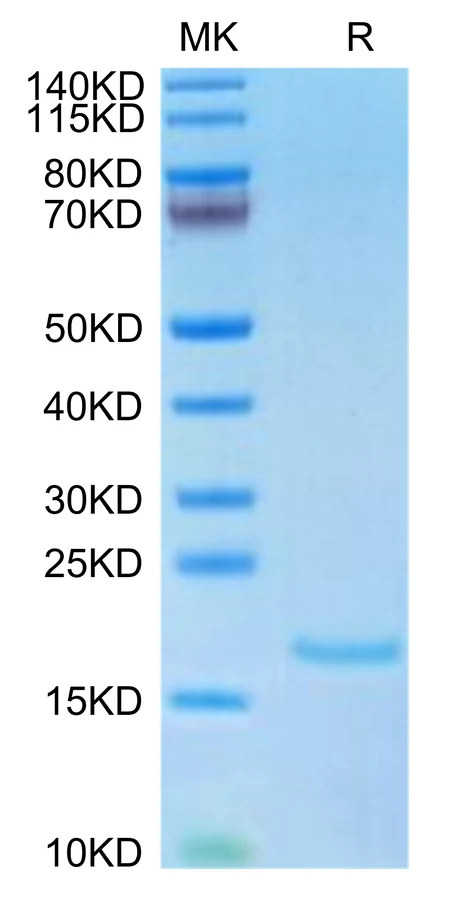
Human IL-10 on Bis-Tris PAGE under reduced condition. The purity is greater than 95%.
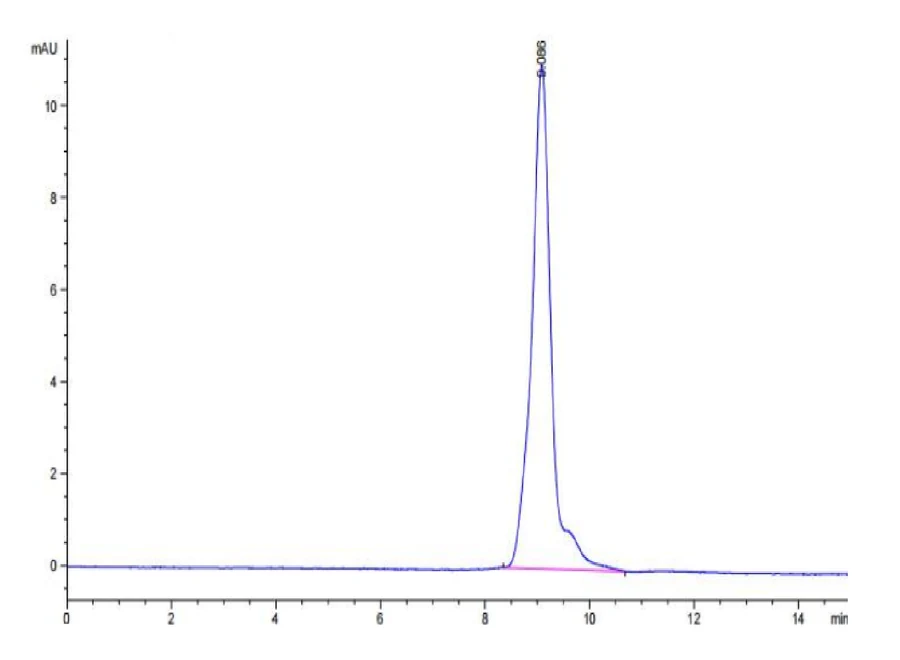
The purity of Human IL-10 is greater than 95% as determined by SEC-HPLC.
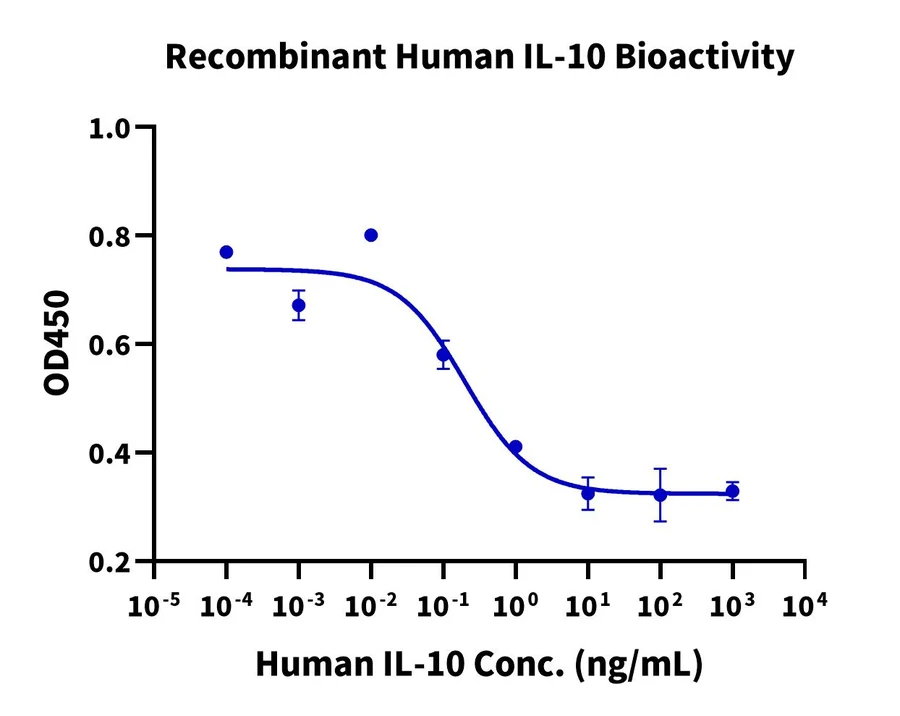
Measured by its ability to inhibit IL-6 secretion by RAW264.7 cells. The ED50 for this effect is 0.1 -1.0 ng/mL (QC Test).
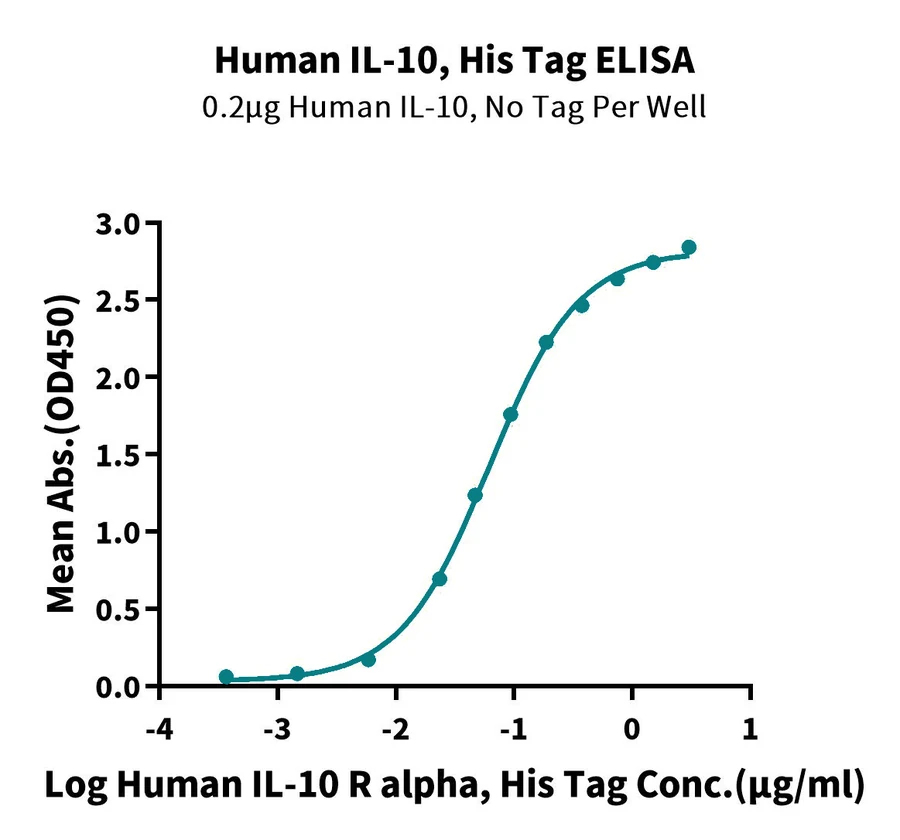
Immobilized Human IL-10, No Tag at 2μg/ml (100μl/well) on the plate. Dose response curve for Human IL-10 R alpha, His Tag with the EC50 of 61.9ng/ml determined by ELISA (QC Test).
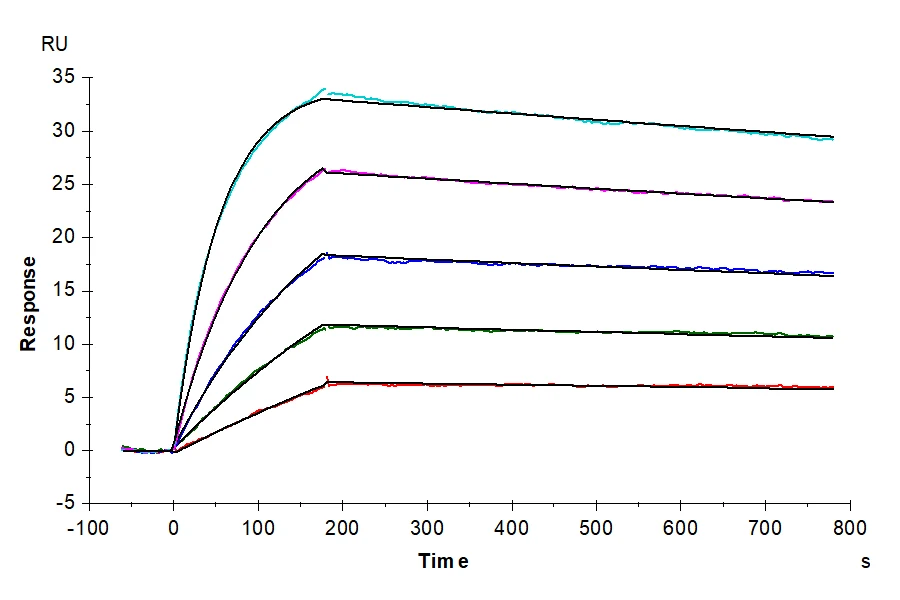
Human IL-10 R alpha, His Tag captured on CM5 Chip via Anti-His Antibody can bind Human IL-10, No Tag with an affinity constant of 0.255 nM as determined in SPR assay (Biacore T200).
Background
Interleukin 10 (IL10) is a key anti-inflammatory cytokine that can inhibit proinflammatory responses of both innate and adaptive immune cells. An association between IL10 and intestinal mucosal homeostasis became clear with the discovery that IL10 and IL10 receptor (IL10R)-deficient mice develop spontaneous intestinal inflammation. Similarly, patients with deleterious mutations in IL10, IL10RA, or IL10RB present with severe enterocolitis within the first months of life.
References
- Piazzon MC, Lutfalla G, Forlenza M. IL10, A Tale of an Evolutionarily Conserved Cytokine across Vertebrates. Crit Rev Immunol. 2016;36(2):99‐129. doi:10.1615/CritRevImmunol.2016017480
Have questions about this product?
Our technical team can help with product selection, application questions and order support.