Human HLA-A*02:01&B2M&P53 R175H (HMTEVVRHC) Monomer Protein
Catalog No: P53R175H-HP002
- Species
- Human
- Expression System
- E. coli
- Tag
- His, Avi
- Activity
- Activity verified
Product overview
Recombinant Human HLA-A*02:01&B2M&P53 R175H (HMTEVVRHC) Monomer Protein is expressed from E.coli with His tag and Avi tag at the C-terminus. It contains Gly25-Thr305 (HLA-A*02:01), Ile21-Met119 (B2M) and HMTEVVRHC peptide (accession: A0A140T913(HLA-A*02:01) & P61769(B2M) &HMTEVVRHC).
Product Details
- Molecular Aliases
- MHC; HLA-A; P53; TP53; Antigen NY-CO-13; BCC7; FLJ92943; LFS1; TRP53
- Protein Length
- Gly25-Thr305
- Expression System
- E. coli
- Theoretical Molecular Weight
- The protein has a predicted MW of 35.6 kDa (HLA-A*02:01) and 11.9 kDa (B2M) same as Bis-Tris PAGE result.
- Purity
- > 95% as determined by Bis-Tris PAGE > 95% as determined by HPLC
- Endotoxin
- Less than 1 EU per μg by the LAL method.
- Buffer / Formulation
- Supplied as 0.22 μm filtered solution in 20mM Tris, 200mM NaCl (pH 8.0).
- State
- Liquid
- Storage Conditions
- Valid for 12 months from date of receipt when stored at -80°C. Recommend to aliquot the protein into smaller quantities for optimal storage. Please minimize freeze-thaw cycles.
Data Display
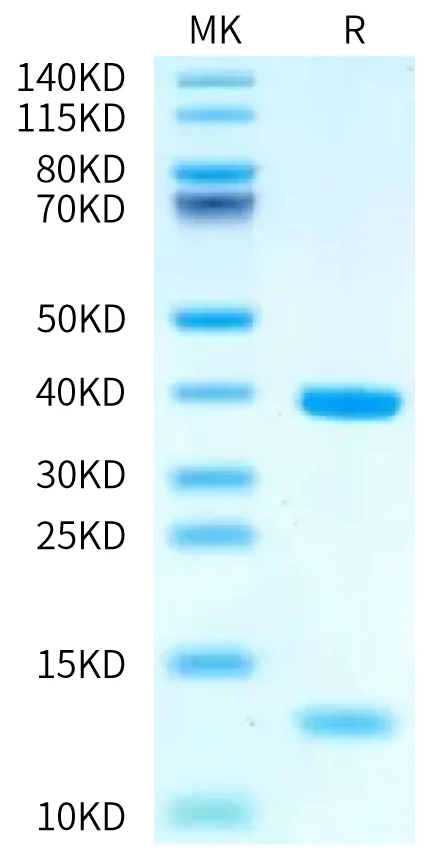
Human HLA-A*02:01&B2M&P53 R175H (HMTEVVRHC) Monomer on Bis-Tris PAGE under reduced condition. The purity is greater than 95%.
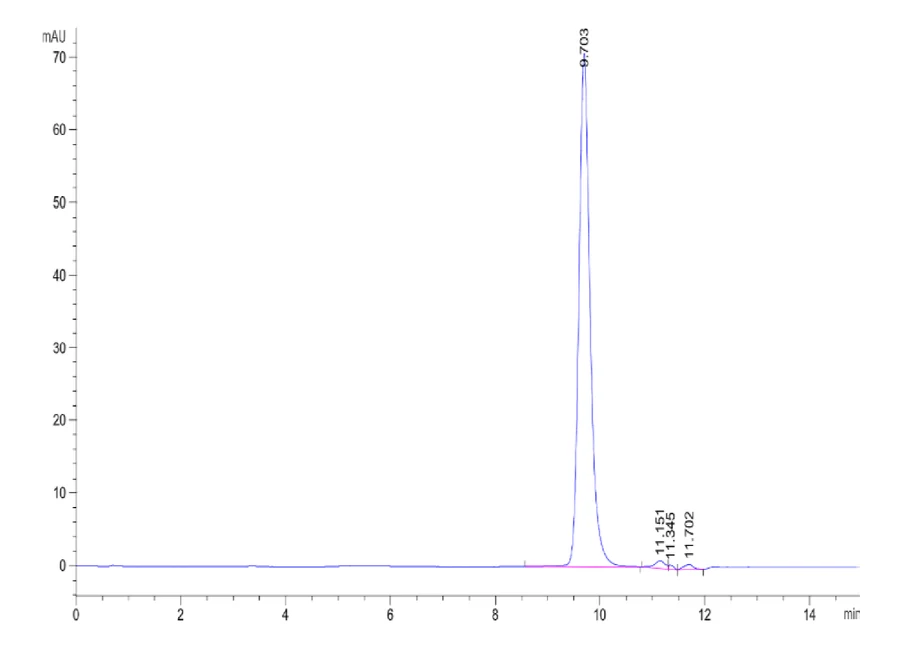
The purity of Human HLA-A*02:01&B2M&P53 R175H (HMTEVVRHC) Monomer is greater than 95% as determined by SEC-HPLC.
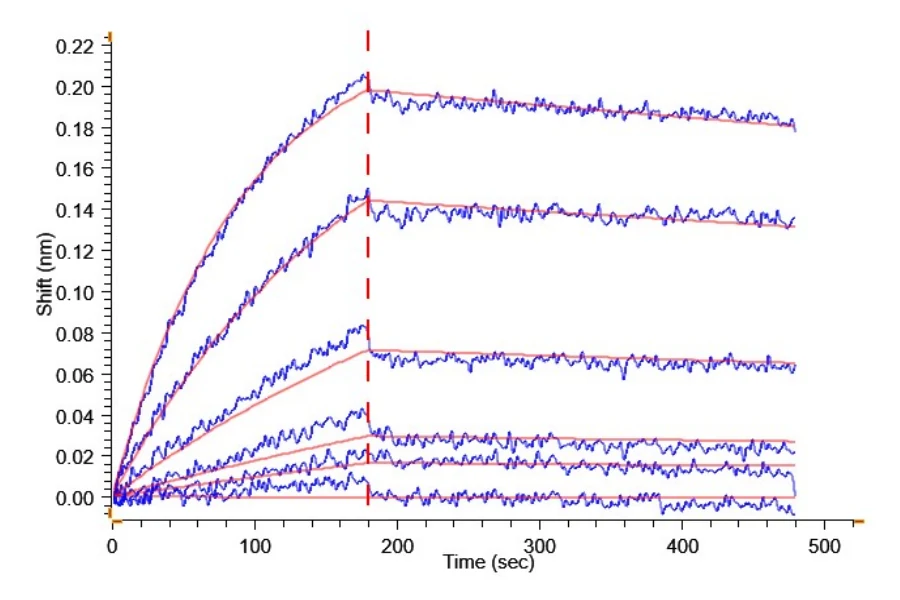
Loaded Human HLA-A*02:01&B2M&P53 R175H (HMTEVVRHC) Monomer on Anti-His-Biosensor can bind Anti-HLA-A*02:01&B2M&P53 R175H (HMTEVVRHC) Antibody, hFc Tag with an affinity constant of 1.43 nM as determined in BLI assay. (QC Test)
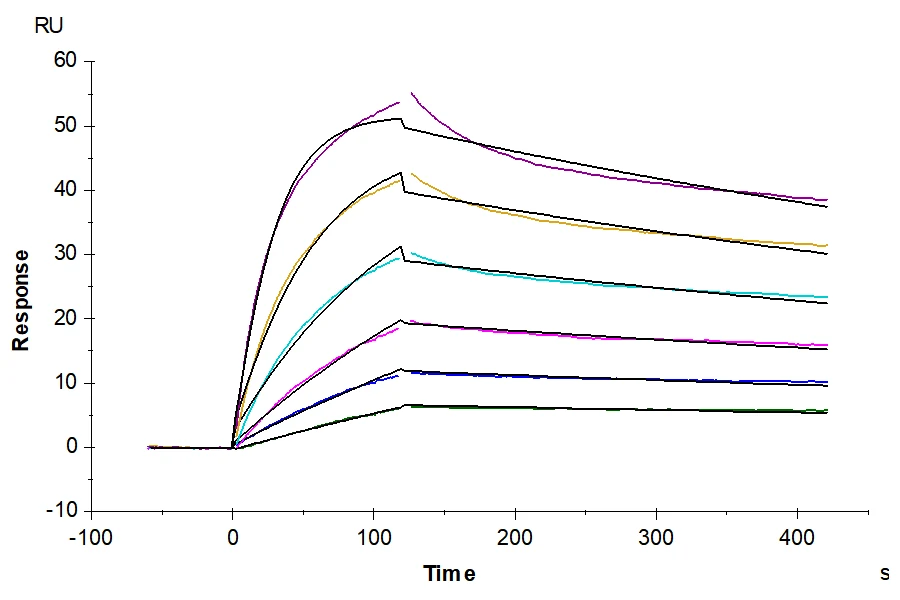
Human HLA-A*02:01&B2M&P53 R175H (HMTEVVRHC) Monomer, His Tag captured on CM5 Chip via Anti-His Antibody can bind Anti-HLA-A*02:01&B2M&P53 R175H (HMTEVVRHC) Antibody, hFc Tag with an affinity constant of 2.35 nM as determined in SPR assay (Biacore T200).
Background
p53 is a tumor suppressor protein. Under stressful conditions, p53 tightly regulates cell growth by promoting apoptosis and DNA repair. When p53 becomes mutated, it loses its function, resulting in abnormal cell proliferation and tumor progression. Depending on the p53 mutation, it has been shown to form aggregates leading to negative gain of function of the protein.p53 mutant associated aggregation has been observed in several cancer tissues and has been shown to promote tumor growth.
References
- (1) Kanapathipillai M. Treating p53 Mutant Aggregation-Associated Cancer. Cancers (Basel). 2018 May 23;10(6):154. doi: 10.3390/cancers10060154. PMID: 29789497; PMCID: PMC6025594.
Have questions about this product?
Our technical team can help with product selection, application questions and order support.