Human CEACAM-5/CD66e Protein
Catalog No: CD66E-HF001
- Species
- Human
- Expression System
- HEK293
- Tag
- an hFc (IgG1)
- Activity
- Activity verified
Product overview
Recombinant Human CEACAM-5/CD66e Protein is expressed in HEK293 cells with an hFc (IgG1) tag at the C-terminus. It contains amino acid residues Lys35-Ala685 (UniProt accession: P06731).
Product Details
- Molecular Aliases
- CEACAM-5; CD66e; CEA; Meconium antigen 100; Carcinoembryonic; CEACD66e; DKFZp781M2392;CEACAM5
- Protein Length
- Lys35-Ala685
- Expression System
- HEK293
- Theoretical Molecular Weight
- The protein has a predicted MW of 97.27 kDa. Due to glycosylation, the protein migrates to 160-200 kDa based on Bis-Tris PAGE result.
- Purity
- > 95% as determined by Bis-Tris PAGE > 90% as determined by HPLC
- Endotoxin
- Less than 1 EU per μg by the LAL method.
- Buffer / Formulation
- Supplied as 0.22 μm filtered solution in PBS (pH 7.4).
- State
- Liquid
- Storage Conditions
- Valid for 12 months from date of receipt when stored at -80°C. Recommend to aliquot the protein into smaller quantities for optimal storage. Please minimize freeze-thaw cycles.
Data Display
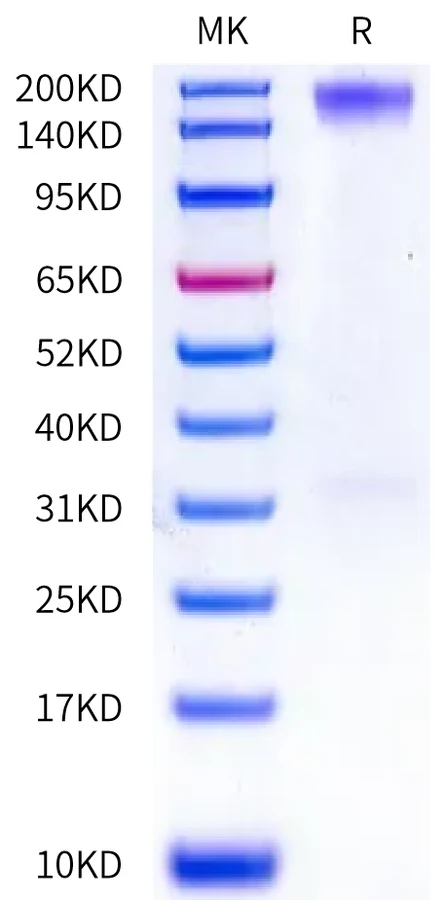
Human CEACAM-5 on Bis-Tris PAGE under reduced condition. The purity is greater than 95%.
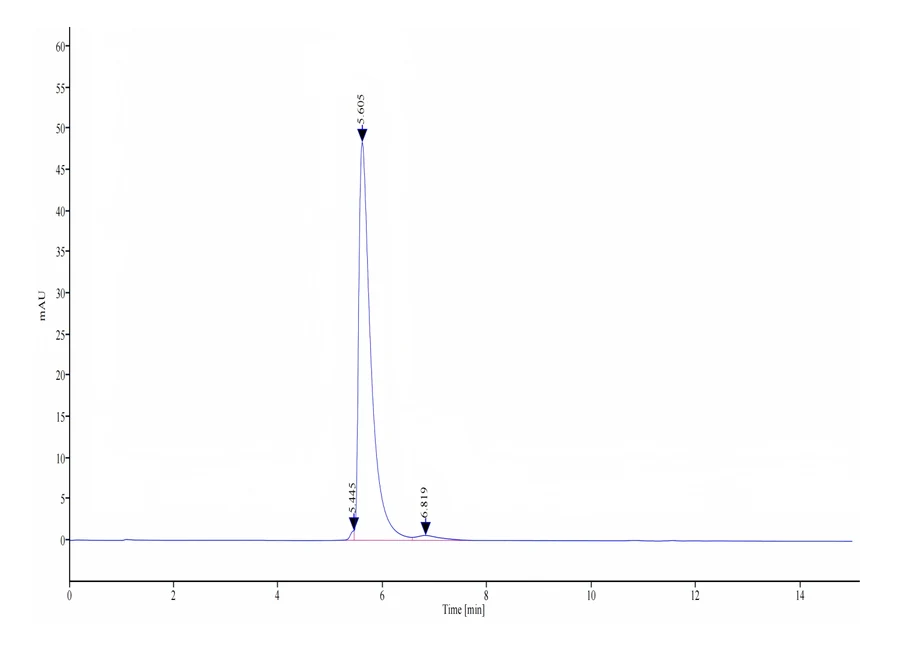
The purity of Human CEACAM-5 is greater than 90% as determined by SEC-HPLC.
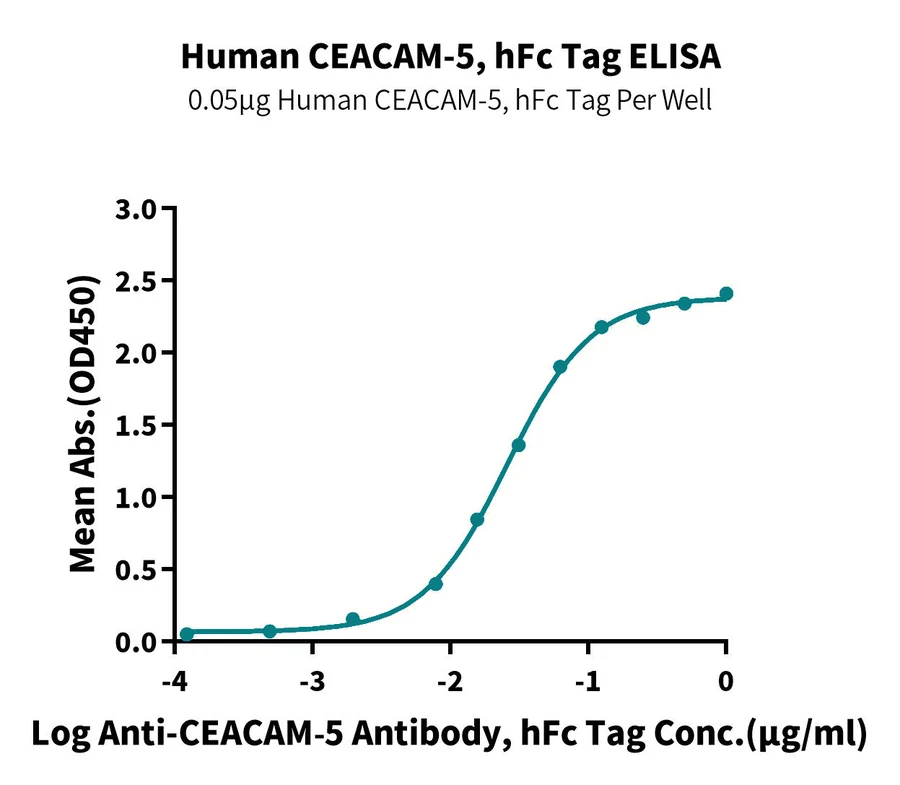
Immobilized Human CEACAM-5, hFc Tag at 0.5μg/ml (100μl/well) on the plate. Dose response curve for Anti-CEACAM-5 Antibody, hFc Tag with the EC50 of 25.8ng/ml determined by ELISA. (QC Test)
Background
Carcinoembryonic antigen-related cell adhesion molecule 5 (CEACAM5) was identified as a metastatic driver. CEACAM5 overproduction enriched for an epithelial gene expression pattern and facilitated tumor outgrowth at metastatic sites. Tissues from patients with metastatic breast cancer confirmed elevated levels of CEACAM5 in lung metastases relative to breast tumors, and an inverse correlation between CEACAM5 and the mesenchymal marker vimentin was demonstrated.
References
- Li Q, Li Y, Li J, et al. FBW7 suppresses metastasis of colorectal cancer by inhibiting HIF1α/CEACAM5 functional axis. Int J Biol Sci. 2018;14(7):726-735. Published 2018 May 12. doi:10.7150/ijbs.24505
Have questions about this product?
Our technical team can help with product selection, application questions and order support.