Human CD36/SR-B3 Protein
Catalog No: CD36-HF001
- Species
- Human
- Expression System
- HEK293
- Tag
- an hFc (IgG1)
- Activity
- Activity verified
Product overview
Recombinant Human CD36/SR-B3 Protein is expressed in HEK293 cells with an hFc (IgG1) tag at the C-terminus. It contains amino acid residues Gly30-Asn439 (UniProt accession: P16671-1).
Product Details
- Molecular Aliases
- CD36; FAT; FATCHDS7; GPIIIb; GPIV; PAS IV; PAS-4; SCARB3; SRB3; SR-B3; BDPLT10; CHDS7; GP3B;PAS4
- Protein Length
- Gly30-Asn439
- Expression System
- HEK293
- Theoretical Molecular Weight
- The protein has a predicted MW of 72.56 kDa. Due to glycosylation, the protein migrates to 90-120 kDa based on Bis-Tris PAGE result.
- Purity
- > 90% as determined by Bis-Tris PAGE > 95% as determined by HPLC
- Endotoxin
- Less than 0.1 EU per μg by the LAL method.
- Buffer / Formulation
- Supplied as 0.22 μm filtered solution in PBS (pH 7.4).
- State
- Liquid
- Storage Conditions
- Valid for 12 months from date of receipt when stored at -80°C. Recommend to aliquot the protein into smaller quantities for optimal storage. Please minimize freeze-thaw cycles.
Data Display
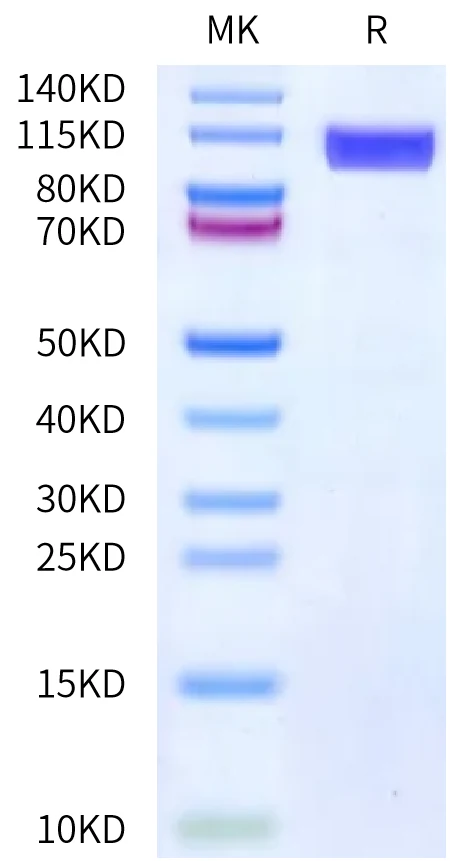
Human CD36 on Bis-Tris PAGE under reduced condition. The purity is greater than 90%.
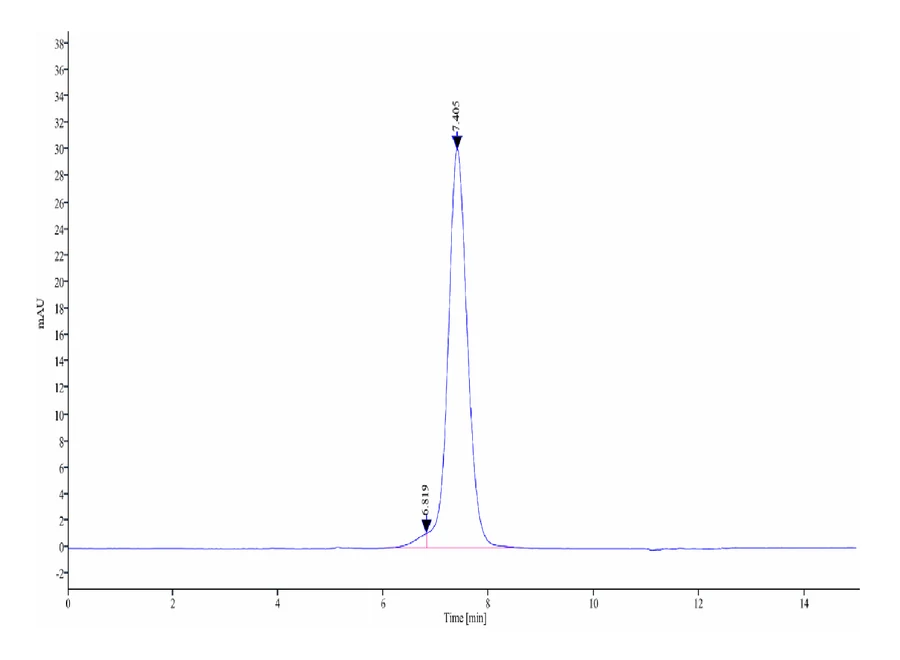
The purity of Human CD36 is greater than 95% as determined by SEC-HPLC.
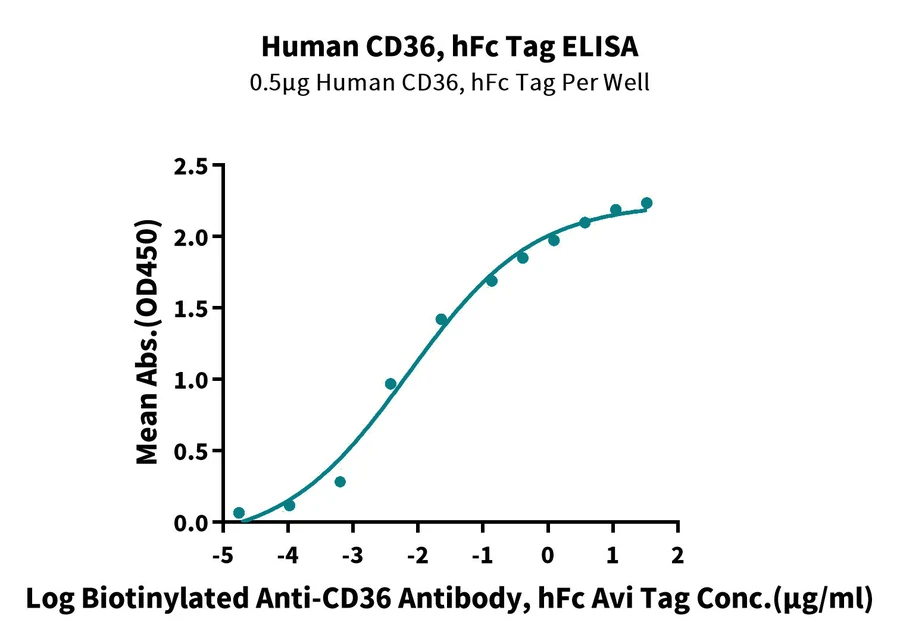
Immobilized Human CD36, hFc Tag at 5μg/ml (100μl/well) on the plate. Dose response curve for Biotinylated Anti-CD36 Antibody, hFc Avi tag with the EC50 of 7.1ng/ml determined by ELISA. (QC Test)
Background
CD36, alternatively known as platelet membrane glycoprotein IV (GPIV), GPIIIb, thrombospondin receptor, collagen receptor, fatty acid translocase (FAT), and scavenger receptor class B, member 3 (SR-B3), is an integral membrane glycoprotein that has multiple physiological functions.CD36 is a multifunctional glycoprotein that acts as receptor for a broad range of ligands. Ligands can be of proteinaceous nature like thrombospondin, fibronectin, collagen or amyloid-beta as well as of lipidic nature such as oxidized low-density lipoprotein (oxLDL), anionic phospholipids, long-chain fatty acids and bacterial diacylated lipopeptides.
References
- Cho, Sunghee. CD36 as a Therapeutic Target for Endothelial Dysfunction in Stroke[J]. Current Pharmaceutical Design, 2012, 18(25):3721-3730.
Have questions about this product?
Our technical team can help with product selection, application questions and order support.