FITC-Labeled Human EGFRVIII Protein
Catalog No: EGFRVIII-HP001
- Species
- Human
- Expression System
- HEK293
- Tag
- His, Avi
- Activity
- Activity verified
Product overview
Recombinant FITC-Labeled Human EGFRVIII Protein is expressed in HEK293 cells with a His tag and Avi tag at the C-terminus. It contains amino acid residues Leu25-Ser378 (accession: NP_001333870.1).
Product Details
- Molecular Aliases
- ErbB; EC 2.7.10; EC 2.7.10.1; EGFR; mENA; LEGFR; ERBB; ERBB1; HER1; PIG61; NISBD2
- Protein Length
- Leu25-Ser378
- Expression System
- HEK293
- Theoretical Molecular Weight
- The protein has a predicted MW of 41.6 kDa. Due to glycosylation, the protein migrates to 68-80 kDa based on Bis-Tris PAGE result.
- Purity
- > 95% as determined by Bis-Tris PAGE > 95% as determined by HPLC
- Buffer / Formulation
- Supplied as 0.22μm filtered solution in PBS (pH 7.4).
- State
- Liquid
- Storage Conditions
- Valid for 6 months from date of receipt when stored at -80°C. Recommend to aliquot the protein into smaller quantities for optimal storage. Please minimize freeze-thaw cycles.
Data Display
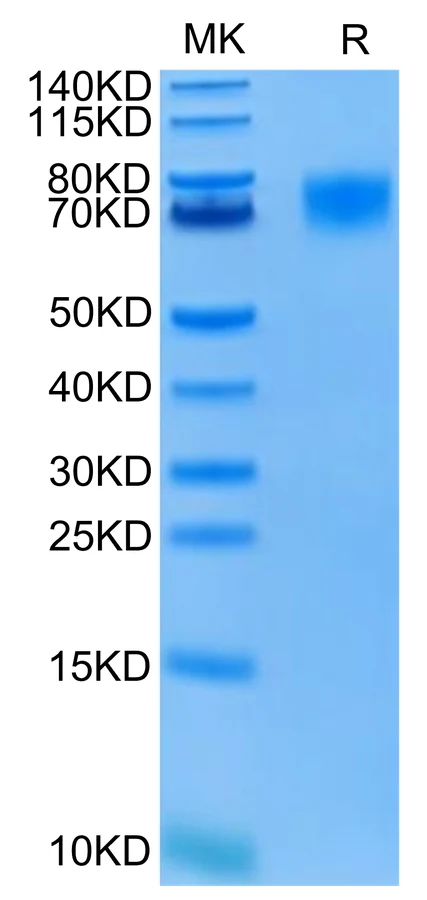
FITC-Labeled Human EGFRVIII on Bis-Tris PAGE under reduced condition. The purity is greater than 95%.
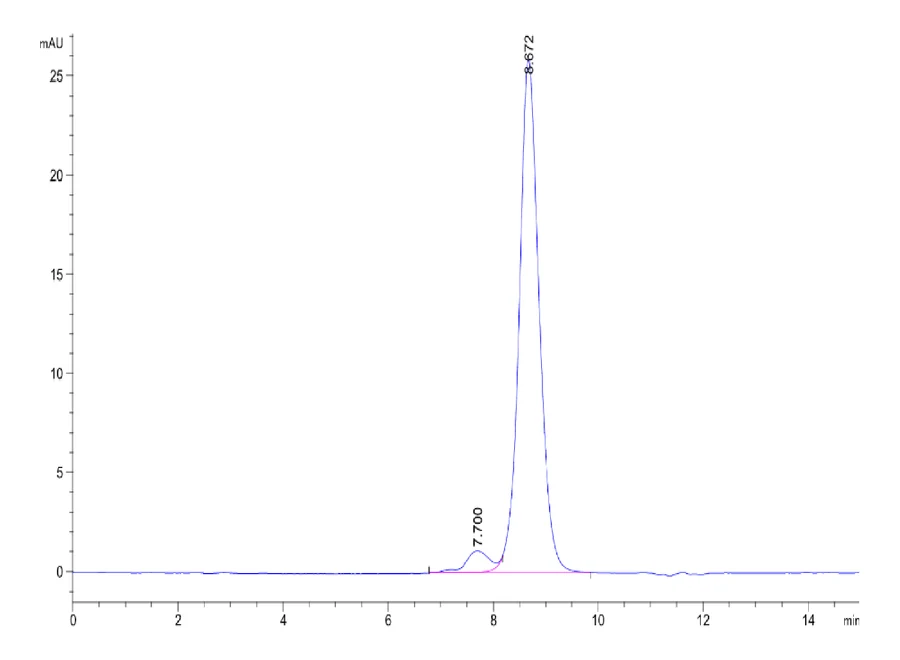
The purity of FITC-Labeled Human EGFRVIII is greater than 95% as determined by SEC-HPLC.
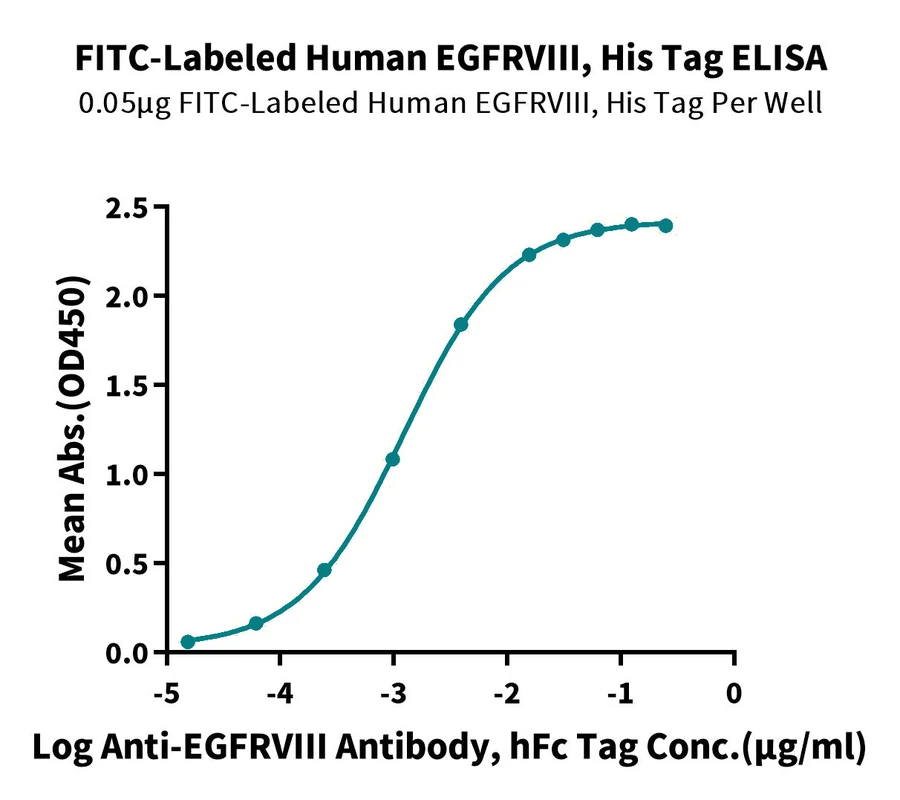
Immobilized FITC-Labeled Human EGFRVIII, His Tag at 0.5μg/ml (100μl/well) on the plate. Dose response curve for Anti-EGFRVIII Antibody, hFc Tag with the EC50 of 1.2ng/ml determined by ELISA (QC Test).
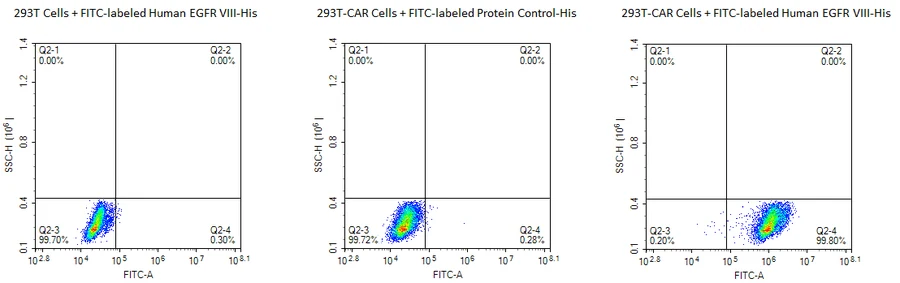
FACS Analysis of Anti-EGFRVIII CAR Expression. 293T cells were transfected with anti-EGFRVIII-scFv and His tag. Cells were incubated with 5μg/ml FITC-Labeled Human EGFRVIII, His Tag and FITC-labeled protein control. Non-transfected 293T cells and FITC-labeled protein control were used as negative control.
Background
The epidermal growth factor receptor (EGFR) is overexpressed in a variety of human epithelial tumors, often as a consequence of gene amplification. Tumors with EGFR gene amplification frequently contain EGFR gene rearrangements, with the most common extracellular domain mutation being EGFRvIII. This mutation leads to a deletion of exons 2-7 of the EGFR gene and renders the mutant receptor incapable of binding any known ligand.
References
- Pedersen M W, Meltorn M, Damstrup L, et al. The type III epidermal growth factor receptor mutation Biological significance and potential target for anti-cancer therapy[J]. Annals of Oncology, 2001, 12(6):745-760.
Have questions about this product?
Our technical team can help with product selection, application questions and order support.