Biotinylated Human RGMa Protein
Catalog No: RGMA-HB001
- Species
- Human
- Expression System
- HEK293
- Tag
- His, Avi
- Activity
- Activity verified
Product overview
Recombinant Biotinylated Human RGMa Protein is expressed in HEK293 cells with a His tag and Avi tag at the C-terminus. It contains amino acid residues Cys48-Gly422 (UniProt accession: Q96B86-1).
Product Details
- Molecular Aliases
- RGMA; RGM
- Protein Length
- Cys48-Gly422
- Expression System
- HEK293
- Theoretical Molecular Weight
- The protein has a predicted MW of 44.5 kDa. Due to autocatalytic cleavage, the protein migrates to 27-35 kDa and 40-50 kDa based on Bis-Tris PAGE result.
- Purity
- > 95% as determined by Bis-Tris PAGE > 95% as determined by HPLC
- Endotoxin
- Less than 1 EU per μg by the LAL method.
- Buffer / Formulation
- Lyophilized from 0.22μm filtered solution in PBS (pH 7.4). Normally 8% trehalose is added as protectant before lyophilization.
- State
- Lyophilized
- Storage Conditions
- -20 to -80°C for 12 months as supplied from date of receipt. -80°C for 3 months after reconstitution. Recommend to aliquot the protein into smaller quantities for optimal storage. Please minimize freeze-thaw cycles.
- Reconstitution Advice
- Dissolve the lyophilized protein in distilled water. Please refer to the Certificate of Analysis for detailed instructions.
Data Display
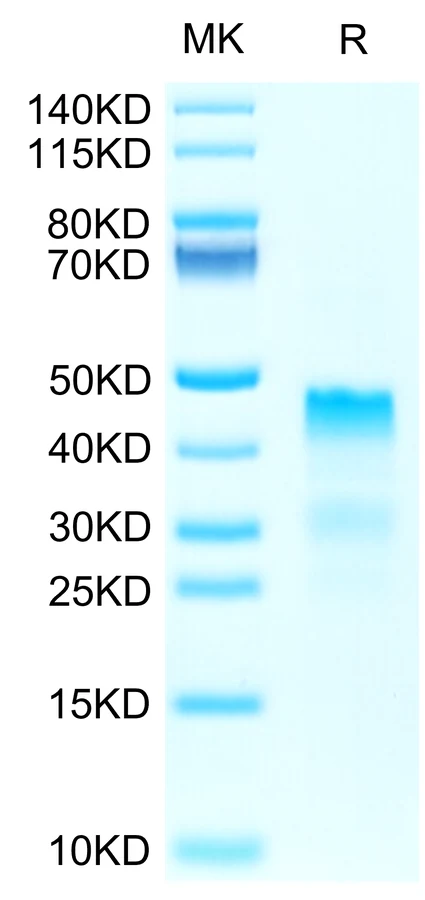
Biotinylated Human RGMa on Bis-Tris PAGE under reduced condition. The purity is greater than 95%.
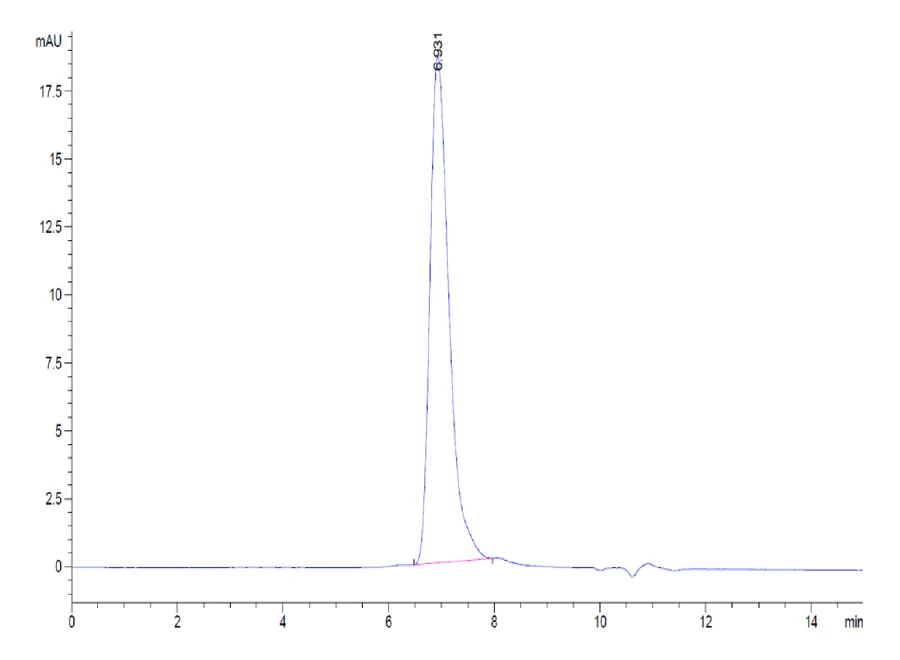
The purity of Biotinylated Human RGMa is greater than 95% as determined by SEC-HPLC.
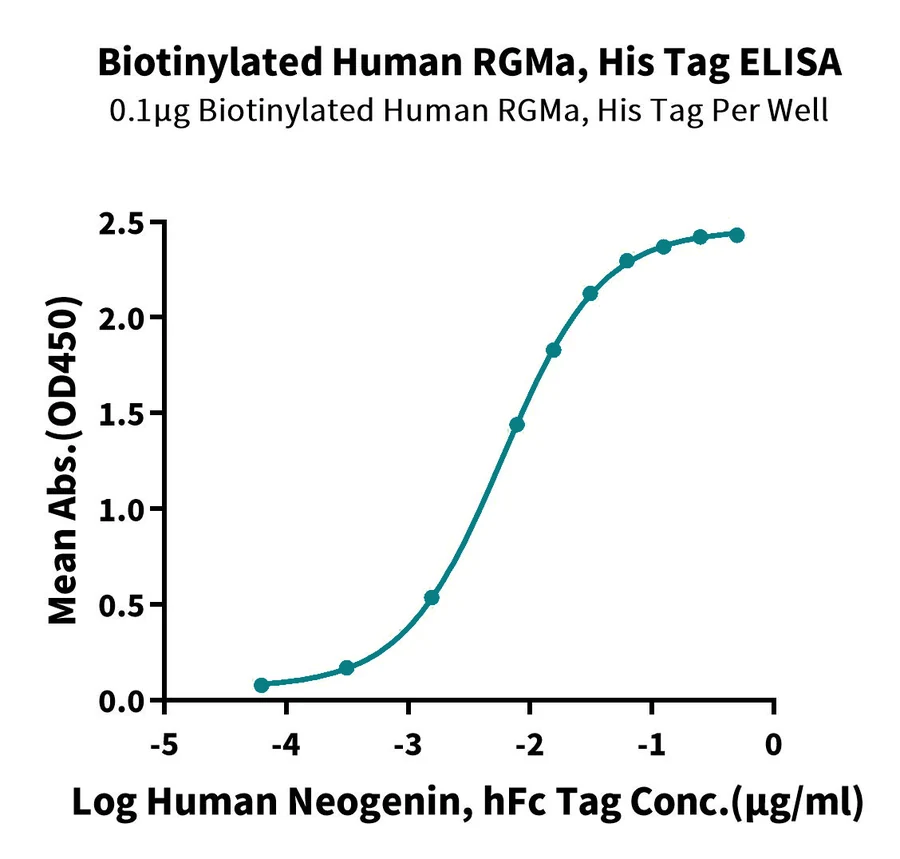
Immobilized Biotinylated Human RGMa, His Tag at 1μg/ml (100μl/Well) on streptavidin (5μg/ml) precoated plate. Dose response curve for Human Neogenin, hFc Tag with the EC50 of 5.9ng/ml determined by ELISA.
Background
Repulsive guidance molecule (RGM) is a glycosylphosphatidylinositol (GPI)-anchored glycoprotein that has diverse functions in the developing and pathological central nervous system (CNS). The binding of RGM to its receptor neogenin regulates axon guidance, neuronal differentiation, and survival during the development of the CNS. RGMa induces T cell activation in experimental autoimmune encephalomyelitis (EAE), which is the animal model of multiple sclerosis (MS).
References
- Fujita Y, Yamashita T. The roles of RGMa-neogenin signaling in inflammation and angiogenesis. Inflamm Regen. 2017;37:6. Published 2017 Mar 8. doi:10.1186/s41232-017-0037-6
Have questions about this product?
Our technical team can help with product selection, application questions and order support.