Biotinylated Human FGF10 Protein (Primary Amine Labeling)
Catalog No: FGF10-HB001
- Species
- Human
- Expression System
- E.coli
- Tag
- Biotin
- Activity
- Activity verified
Product overview
Recombinant Biotinylated Human FGF10 Protein (Primary Amine Labeling) is expressed in E. coli without tag. It contains amino acid residues Gln38-Ser208 (UniProt accession: O15520).
Product Details
- Molecular Aliases
- FGF-10; KGF2; FGF10; Fibroblast growth factor-10; Fibroblast growth factor 10
- Protein Length
- Gln38-Ser208
- Expression System
- E.coli
- Theoretical Molecular Weight
- The protein has a predicted MW of 19.3 kDa same as Bis-Tris PAGE result.
- Purity
- > 95% as determined by Bis-Tris PAGE > 95% as determined by HPLC
- Endotoxin
- Less than 1 EU per μg by the LAL method.
- Buffer / Formulation
- Lyophilized from 0.22 μm filtered solution in PBS, 200mM L-arginine (pH 7.4). Normally 8% trehalose is added as protectant before lyophilization.
- State
- Lyophilized
- Storage Conditions
- -20 to -80°C for 12 months as supplied from date of receipt. -80°C for 3 months after reconstitution. Recommend to aliquot the protein into smaller quantities for optimal storage. Please minimize freeze-thaw cycles.
- Reconstitution Advice
- Dissolve the lyophilized protein in distilled water. Please refer to the Certificate of Analysis for detailed instructions.
Data Display
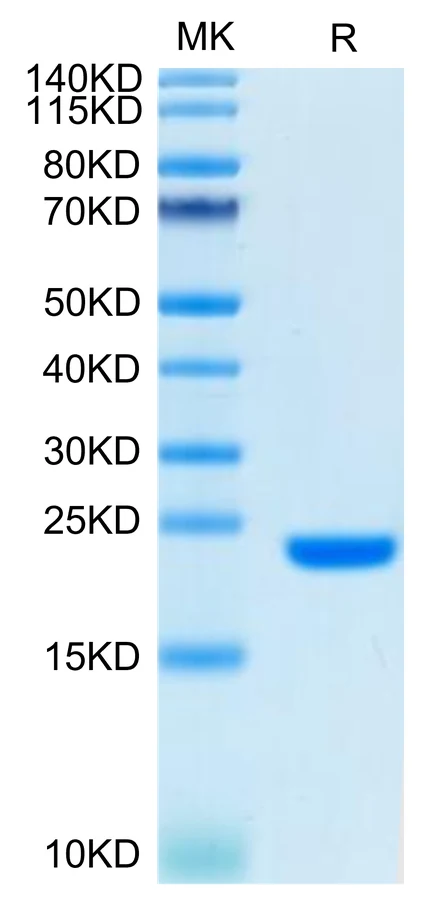
Biotinylated Human FGF10 on Bis-Tris PAGE under reduced condition. The purity is greater than 95%.
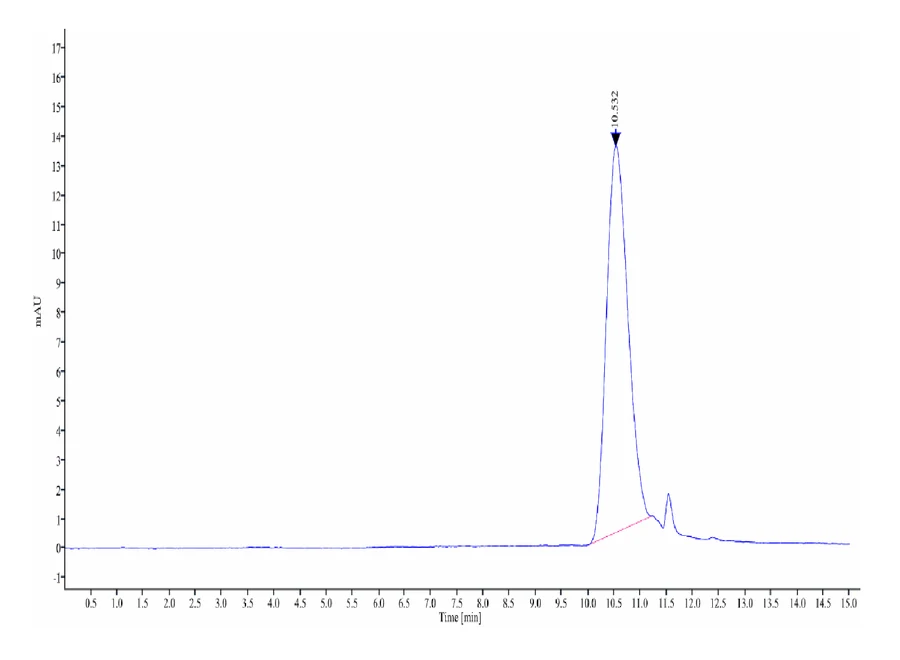
The purity of Biotinylated Human FGF10 is greater than 95% as determined by SEC-HPLC.
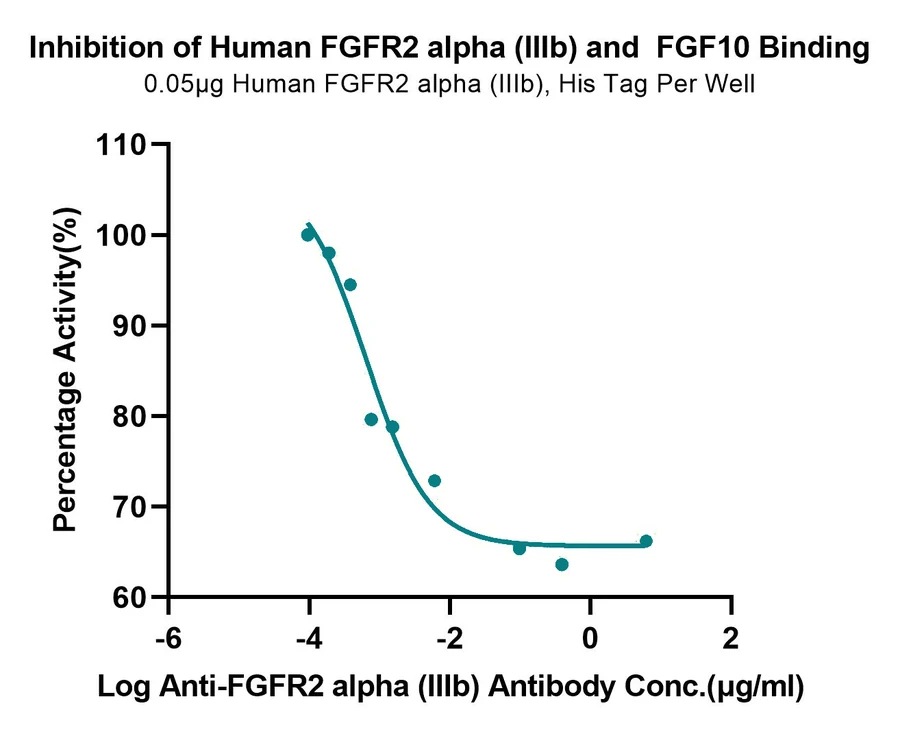
Serial dilutions of Anti-FGFR2 alpha (IIIb) Antibody were added into Human FGFR2 alpha (IIIb), His Tag: Biotinylated Human FGF10, No Tag binding reactioins. The half maximal inhibitiory concentration (IC50) is 0.7ng/ml.
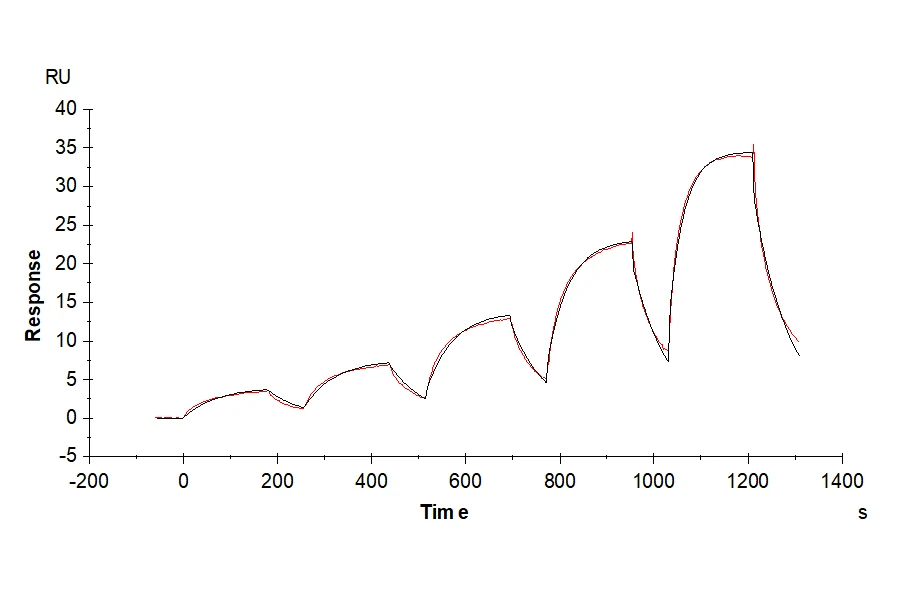
Biotinylated Human FGF10, No tag immobilized on CM5 Chip can bind Human FGFR2 alpha IIIb, His tag with an affinity constant of 147.70 nM as determined in SPR assay (Biacore T200) (QC Test).
Background
Fibroblast growth factor 10 (FGF10) regulates multiple stages of structural lung morphogenesis, cellular differentiation, and the response to injury. As a driver of lung airway branching morphogenesis, FGF10 signaling defects during development lead to neonatal lung disease. Lung diseases impact patients across the lifespan, from infants in the first minutes of life through the aged population. Congenital abnormalities of lung structure can cause lung disease at birth or make adults more susceptible to chronic disease.
References
- Prince LS. FGF10 and Human Lung Disease Across the Life Spectrum. Front Genet. 2018 Oct 31;9:517. doi: 10.3389/fgene.2018.00517. PMID: 30429870; PMCID: PMC6220039.
Have questions about this product?
Our technical team can help with product selection, application questions and order support.