Biotinylated Human CXCR7 Nanodisc
Catalog No: CXCR7-HB001
- Species
- Human
- Expression System
- HEK293
- Tag
- His
- Activity
- Activity verified
Product overview
Recombinant Biotinylated Human CXCR7 Nanodisc is expressed in HEK293 cells with a His tag at the C-terminus. It contains amino acid residues Met1-Lys362 (UniProt accession: P25106).
Product Details
- Molecular Aliases
- CXC-R7; CXCR-7; ACKR3; CMKOR1; GPR159; RDC1; RDC-1; CXCR7
- Protein Length
- Met1-Lys362
- Expression System
- HEK293
- Theoretical Molecular Weight
- The protein has a predicted MW of 54.4 kDa.
- Endotoxin
- Less than 1 EU per μg by the LAL method.
- Buffer / Formulation
- Supplied as 0.22 μm filtered solution in PBS, 200mM L-arginine (pH 7.4). Notice: Not recommended for flow cytometry in mammalian cells.
- State
- Liquid
- Storage Conditions
- Valid for 6 months from date of receipt when stored at -80°C. Recommend to aliquot the protein into smaller quantities for optimal storage. Please minimize freeze-thaw cycles.
Data Display
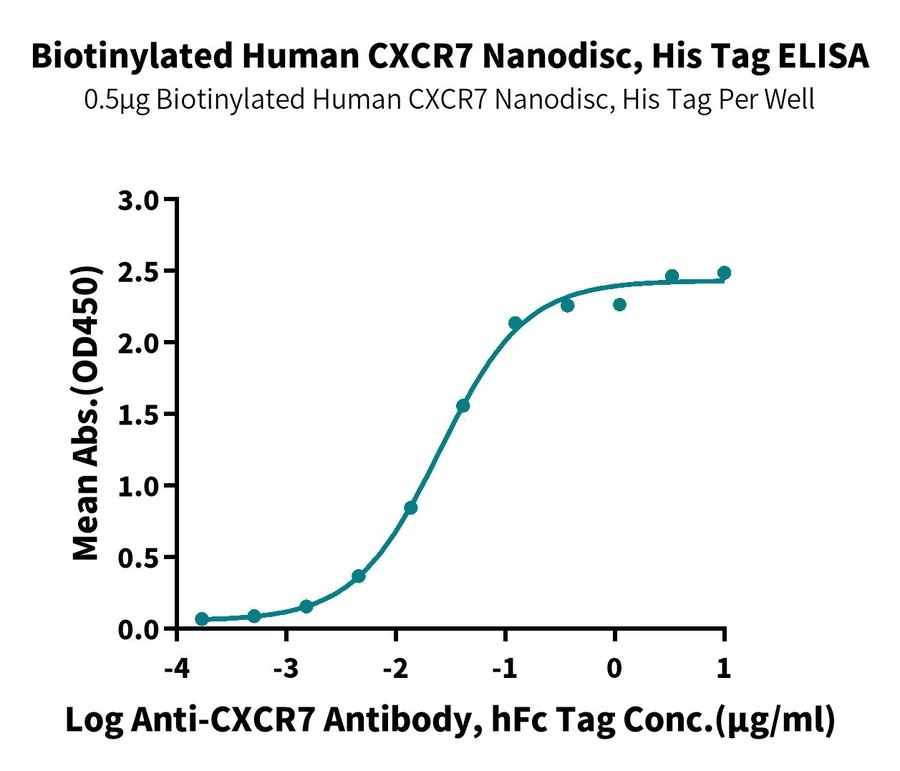
Immobilized Biotinylated Human CXCR7 Nanodisc, His Tag at 5μg/ml (100μl/well) on the streptavidin precoated plate (5μg/ml). Dose response curve for Anti-CXCR7 Antibody 1, hFc Tag with the EC50 of 24.2ng/ml determined by ELISA. (QC Test)
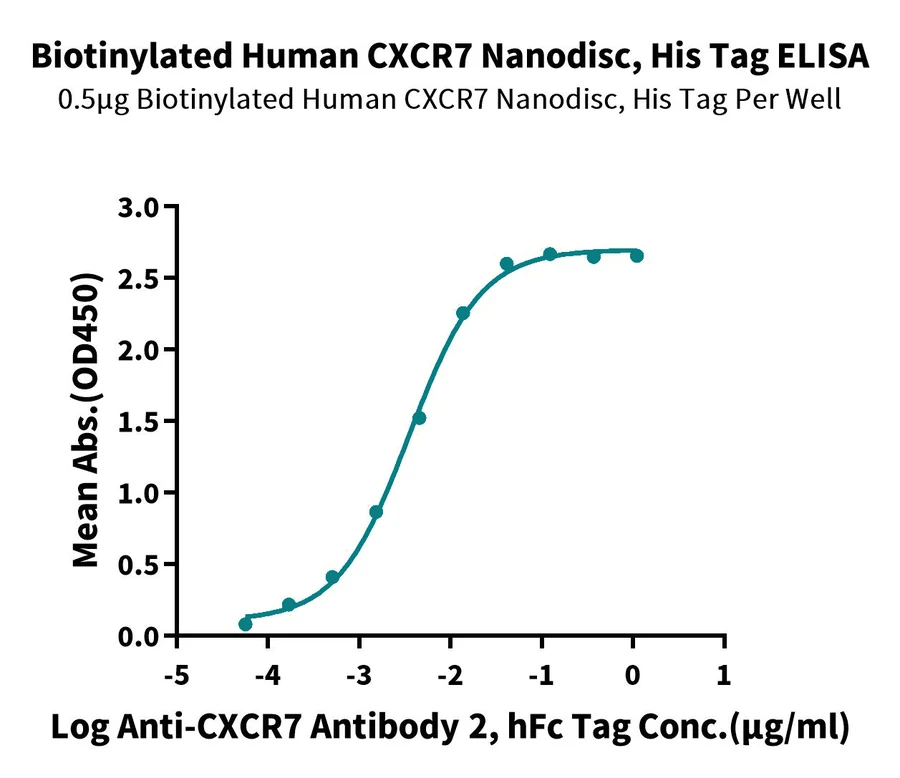
Immobilized Biotinylated Human CXCR7 Nanodisc, His Tag at 5μg/ml (100μl/well) on the streptavidin precoated plate (5μg/ml). Dose response curve for Anti-CXCR7 Antibody 2, hFc Tag with the EC50 of 3.5ng/ml determined by ELISA.
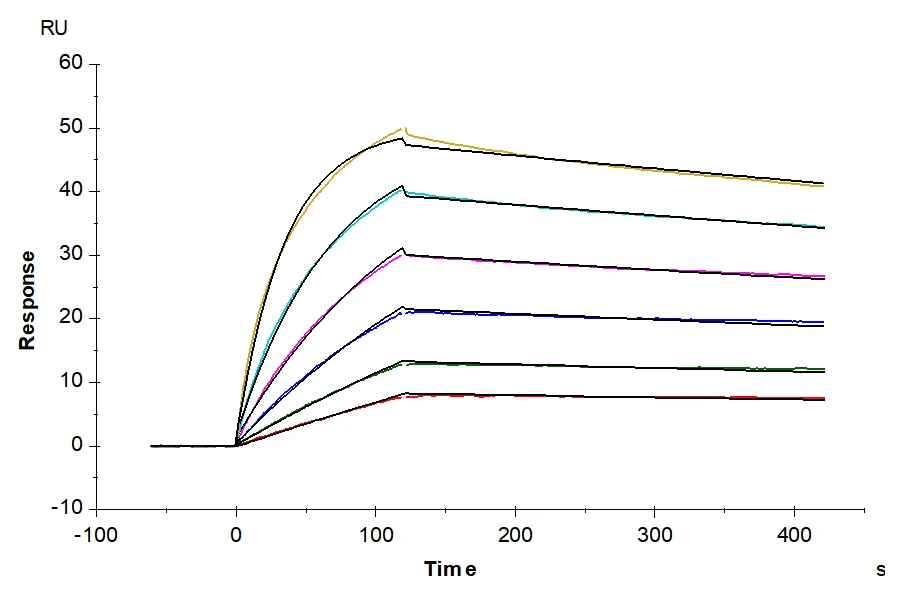
Biotinylated Human CXCR7 Nanodisc, His Tag captured on CM5 Chip via Streptavidin can bind Anti-CXCR7 Antibody 1, hFc Tag with an affinity constant of 3.22 nM as determined in SPR assay (Biacore T200).
Background
Atypical chemokine receptor 3 (ACKR3), previously known as C-X-C chemokine receptor type 7 (CXCR7), has emerged as a key player in several biologic processes, particularly during development. Its CXCL11 and CXCL12 scavenging activity and atypical signaling properties, together with a new array of other nonchemokine ligands, have established ACKR3 as a main regulator of physiologic processes at steady state and during inflammation.
References
- Koenen J, Bachelerie F, Balabanian K, Schlecht-Louf G, Gallego C. Atypical Chemokine Receptor 3 (ACKR3): A Comprehensive Overview of its Expression and Potential Roles in the Immune System. Mol Pharmacol. 2019 Dec;96(6):809-818. doi: 10.1124/mol.118.115329. Epub 2019 Apr 30. PMID: 31040166.
Have questions about this product?
Our technical team can help with product selection, application questions and order support.