Biotinylated Human CDCP1 CTF Protein
Catalog No: CDCP1-HB002
- Species
- Human
- Expression System
- HEK293
- Tag
- an hFc (IgG1), Avi
- Activity
- Activity verified
Product overview
Recombinant Biotinylated Human CDCP1 CTF Protein is expressed in HEK293 cells with an hFc (IgG1) tag and Avi tag at the C-terminus. It contains amino acid residues Lys369-Thr667 (UniProt accession: Q9H5V8-1).
Product Details
- Molecular Aliases
- CDCP1; CD318; SIMA135; TRASK; UNQ2486; PRO5773
- Protein Length
- Lys369-Thr667
- Expression System
- HEK293
- Theoretical Molecular Weight
- The protein has a predicted MW of 61.66 kDa. Due to glycosylation, the protein migrates to 85-85 kDa based on Bis-Tris PAGE result.
- Purity
- > 95% as determined by Bis-Tris PAGE > 90% as determined by HPLC
- Endotoxin
- Less than 0.1 EU per μg by the LAL method.
- Buffer / Formulation
- Lyophilized from 0.22 μm filtered solution in PBS (pH 7.4). Normally 8% trehalose is added as protectant before lyophilization.
- State
- Lyophilized
- Storage Conditions
- -20 to -80°C for 12 months as supplied from date of receipt. -80°C for 3 months after reconstitution. Recommend to aliquot the protein into smaller quantities for optimal storage. Please minimize freeze-thaw cycles.
- Reconstitution Advice
- Dissolve the lyophilized protein in distilled water. Please refer to the Certificate of Analysis for detailed instructions.
Data Display
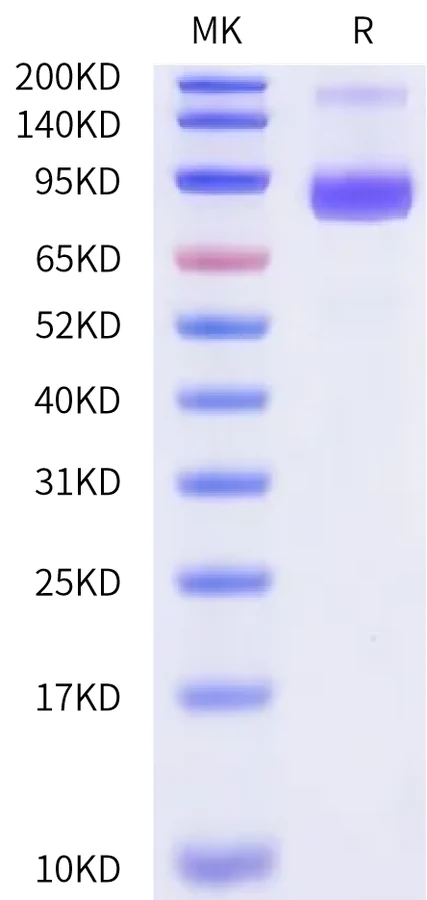
Biotinylated Human CDCP1 CTF on Bis-Tris PAGE under reduced condition. The purity is greater than 95%.
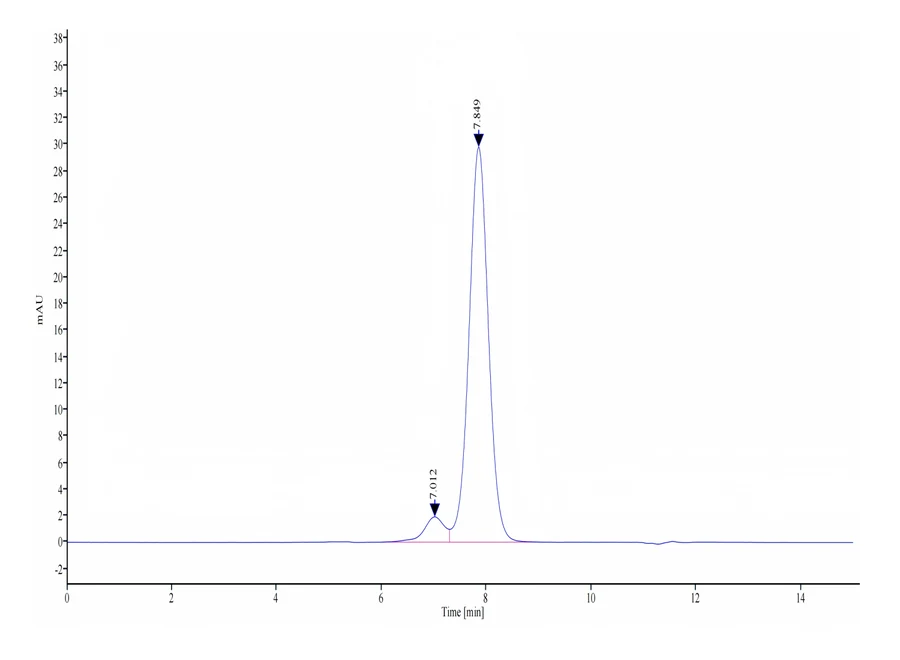
The purity of Biotinylated Human CDCP1 CTF is greater than 90% as determined by SEC-HPLC.
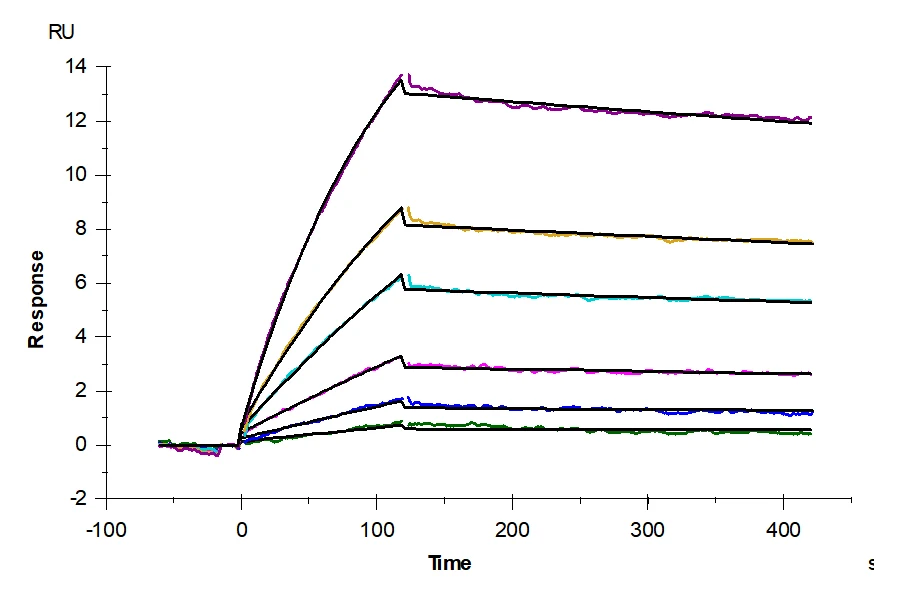
Biotinylated Human CDCP1 CTF, hFc-Avi tag captured on CM5 Chip via Streptavidin can bind Anti-CDCP1 CTF Antibody with an affinity constant of 6.88 nM as determined in SPR assay (Biacore T200).
Background
Tumor metastasis depends on the dynamic regulation of cell adhesion through β1-integrin. The Cub-Domain Containing Protein-1, CDCP1, is a transmembrane glycoprotein which regulates cell adhesion. Overexpression and loss of CDCP1 have been observed in the same cancer types to promote metastatic progression.
References
- Wright HJ, Hou J, Xu B, Cortez M, Potma EO, Tromberg BJ, Razorenova OV. CDCP1 drives triple-negative breast cancer metastasis through reduction of lipid-droplet abundance and stimulation of fatty acid oxidation. Proc Natl Acad Sci U S A. 2017 Aug 8;114(32):E6556-E6565. doi: 10.1073/pnas.1703791114. Epub 2017 Jul 24. PMID: 28739932; PMCID: PMC5559020.
Have questions about this product?
Our technical team can help with product selection, application questions and order support.