Anti-IgE Antibody (Omalizumab Biosimilar)
Catalog No: IGE-AB001
- Species
- Human/Cyno
- Expression System
- HEK293
- Activity
- Activity verified
Product overview
Anti-IgE Antibody (Omalizumab Biosimilar) is a research-use biosimilar antibody expressed in HEK293. The source page specifies target IgE, reactivity Human/Cynomolgus, isotype Human IgG1-Kappa, source-listed application ELISA.
Product Details
- Expression System
- HEK293
- Theoretical Molecular Weight
- 51.48 kDa and 23.90 kDa.
- Purity
- > 95% as determined by Bis-Tris PAGE > 95% as determined by HPLC
- Endotoxin
- Less than 1 EU per μg by the LAL method.
- Buffer / Formulation
- PBS, 10% glycerol (pH 7.4)
- Storage Conditions
- Valid for 12 months from date of receipt when stored at -80°C. Recommend to aliquot the protein into smaller quantities for optimal storage. Please minimize freeze-thaw cycles.
Data Display
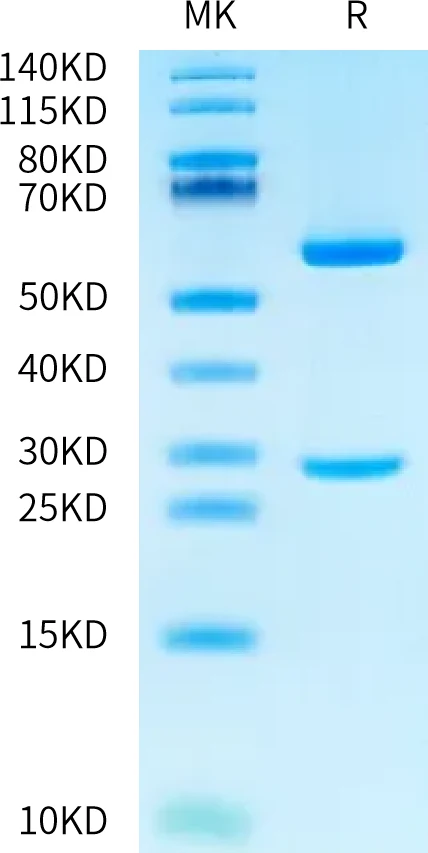
Omalizumab Biosimilar on Bis-Tris PAGE under reduced condition. The purity is greater than 95%.
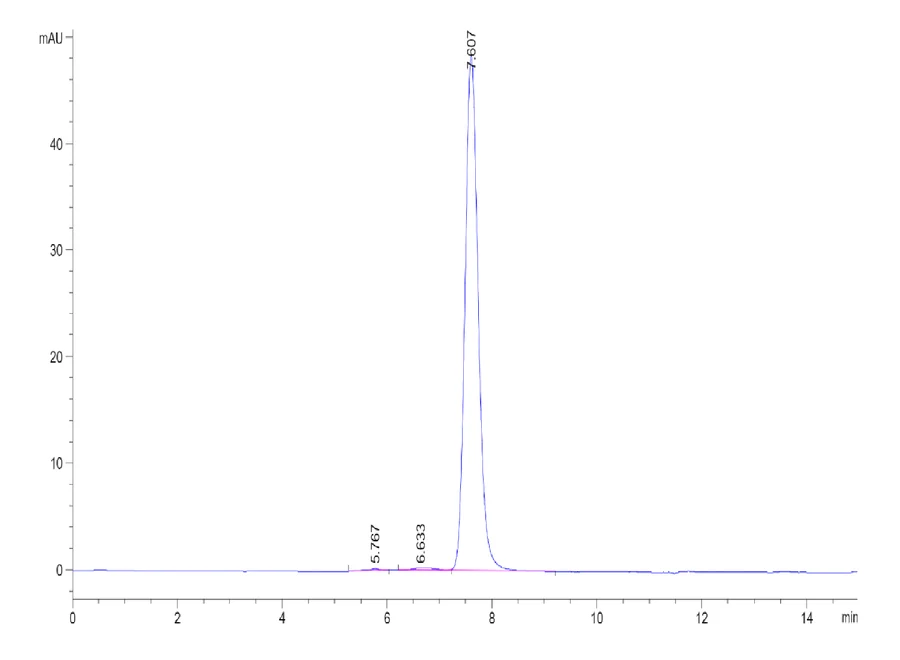
The purity of Omalizumab Biosimilar is greater than 95% as determined by SEC-HPLC.
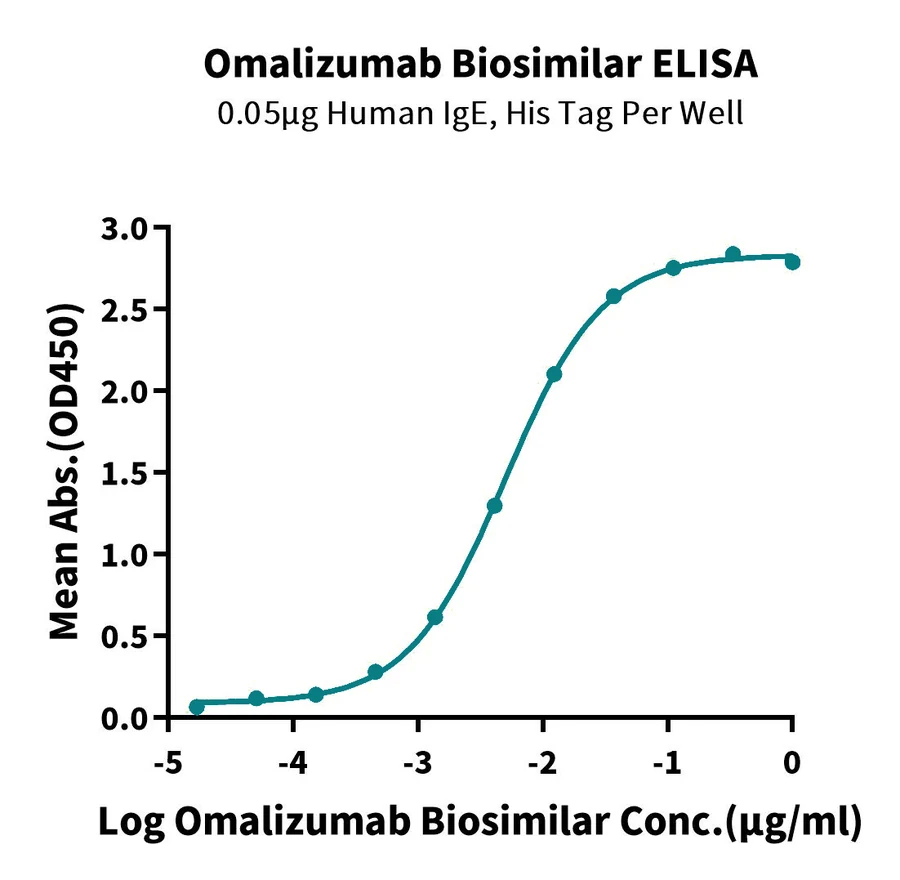
Immobilized Human IgE, His Tag at 0.5μg/ml (100μl/well) on the plate. Dose response curve for Omalizumab Biosimilar with the EC50 of 5.0ng/ml determined by ELISA. (QC Test)
Background
Immunoglobulin E (IgE) is well known for its role in allergic disease, the manifestations of which are mediated through its two Fc receptors, FcεRI and CD23 (FcεRII). IgE and its interactions with these receptors are therefore potential targets for therapeutic intervention, and exciting progress has been made in this direction. Furthermore, recent structural studies of IgE-Fc, the two receptors, and of their complexes, have revealed a remarkable degree of plasticity at the IgE-CD23 interface and an even more remarkable degree of dynamic flexibility within the IgE molecule.
References
- Sutton BJ, Davies AM. Structure and dynamics of IgE-receptor interactions: FcεRI and CD23/FcεRII. Immunol Rev. 2015 Nov;268(1):222-35. doi: 10.1111/imr.12340. PMID: 26497523.