Anti-Her2 Antibody (Trastuzumab Biosimilar)
Catalog No: HER2-AB001
- Species
- Human/Cyno/Mouse
- Expression System
- HEK293
- Activity
- Activity verified
Product overview
Anti-Her2 Antibody (Trastuzumab Biosimilar) is a research-use biosimilar antibody expressed in HEK293. The source page specifies target Her2, reactivity Human/Cynomolgus/Mouse, isotype Human IgG1-Kappa, source-listed application ELISA.
Product Details
- Expression System
- HEK293
- Theoretical Molecular Weight
- 49.3 kDa and 23.4 kDa.
- Purity
- > 95% as determined by Bis-Tris PAGE > 95% as determined by HPLC
- Endotoxin
- Less than 1 EU per μg by the LAL method.
- Buffer / Formulation
- PBS, 10% glycerol (pH 7.4)
- Storage Conditions
- Valid for 12 months from date of receipt when stored at -80°C. Recommend to aliquot the protein into smaller quantities for optimal storage. Please minimize freeze-thaw cycles.
Data Display
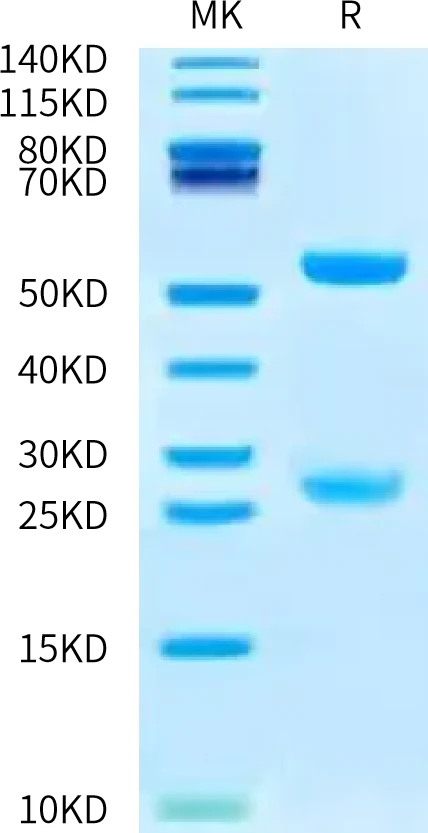
Trastuzumab Biosimilar on Bis-Tris PAGE under reduced condition. The purity is greater than 95%.
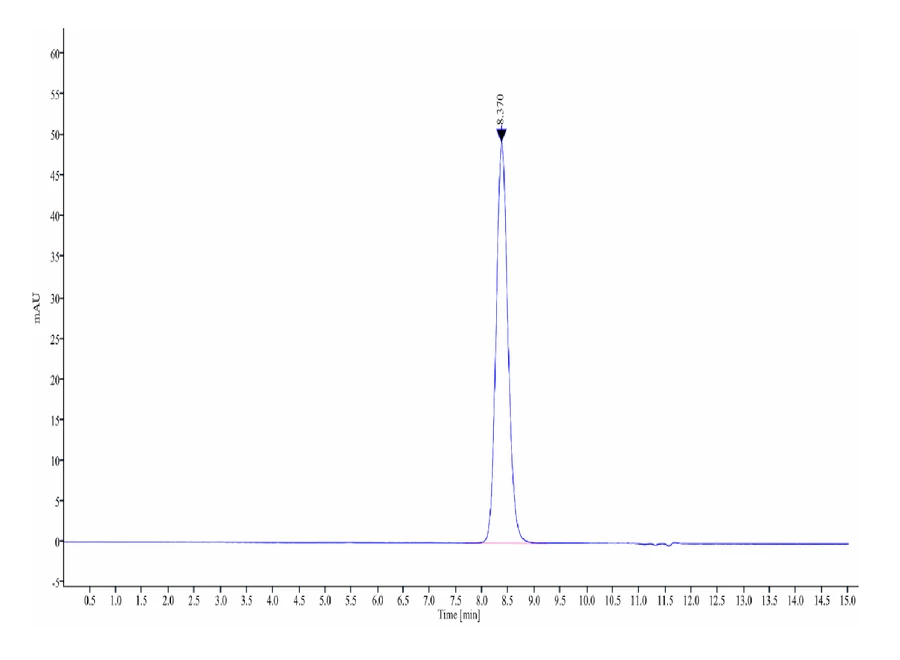
The purity of Trastuzumab Biosimilar is greater than 95% as determined by SEC-HPLC.
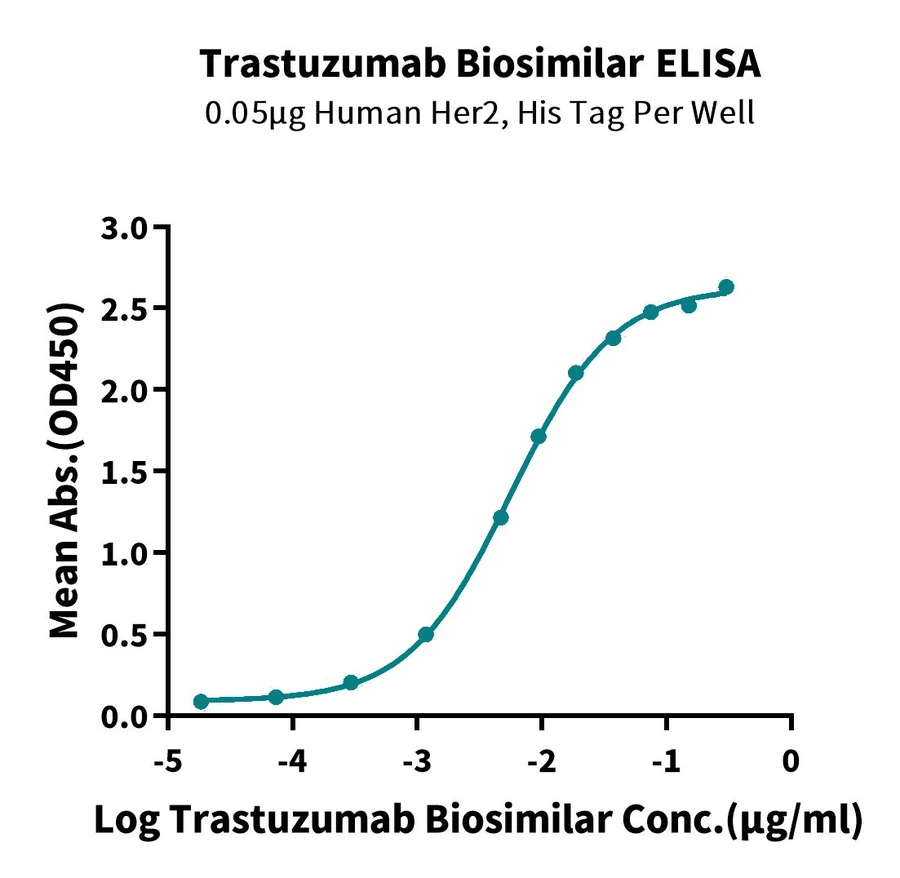
Immobilized Human Her2, His Tag at 0.5μg/ml (100μl/well) on the plate. Dose response curve for Trastuzumab Biosimilar with the EC50 of 5.6ng/ml determined by ELISA. (QC Test)
Background
ErbB2, also called Neu and Her2 (human epidermal growth factor receptor 2), is a type I membrane glycoprotein that is a member of the ErbB family of tyrosine kinase receptors. ErbB family members serve as receptors for the epidermal growth factor (EGF) family of growth factors.Upon ERBB2 activation, the MEMO1-RHOA-DIAPH1 signaling pathway elicits the phosphorylation and thus the inhibition of GSK3B at cell membrane. This prevents the phosphorylation of APC and CLASP2, allowing its association with the cell membrane.
References
- Tagliabue E, Balsari A, Campiglio M, et al. HER2 as a target for breast cancer therapy[J]. EXPERT OPINION ON BIOLOGICAL THERAPY, 2010, 10(5):711-724.