Human FGF21 Protein
Catalog No: FGF21-HF001
- Species
- Human
- Expression System
- HEK293
- Tag
- an hFc (IgG1)
- Activity
- Activity verified
Product overview
Recombinant Human FGF21 Protein is expressed in HEK293 cells with an hFc (IgG1) tag at the N-terminus. It contains amino acid residues His29-Ser209 (UniProt accession: Q9NSA1).
Product Details
- Molecular Aliases
- UNQ3115; PRO10196; FGF-21; FGF21; Fibroblast growth factor-21; Fibroblast growth factor 21
- Protein Length
- His29-Ser209
- Expression System
- HEK293
- Theoretical Molecular Weight
- The protein has a predicted MW of 45.35 kDa. Due to glycosylation, the protein migrates to 52-65 kDa based on Bis-Tris PAGE result.
- Purity
- > 95% as determined by Bis-Tris PAGE > 95% as determined by HPLC
- Endotoxin
- Less than 1 EU per μg by the LAL method.
- Buffer / Formulation
- Lyophilized from 0.22 μm filtered solution in PBS (pH 7.4). Normally 8% trehalose is added as protectant before lyophilization.
- State
- Lyophilized
- Storage Conditions
- -20 to -80°C for 12 months as supplied from date of receipt. -80°C for 3 months after reconstitution. Recommend to aliquot the protein into smaller quantities for optimal storage. Please minimize freeze-thaw cycles.
- Reconstitution Advice
- Dissolve the lyophilized protein in distilled water. Please refer to the Certificate of Analysis for detailed instructions.
Data Display
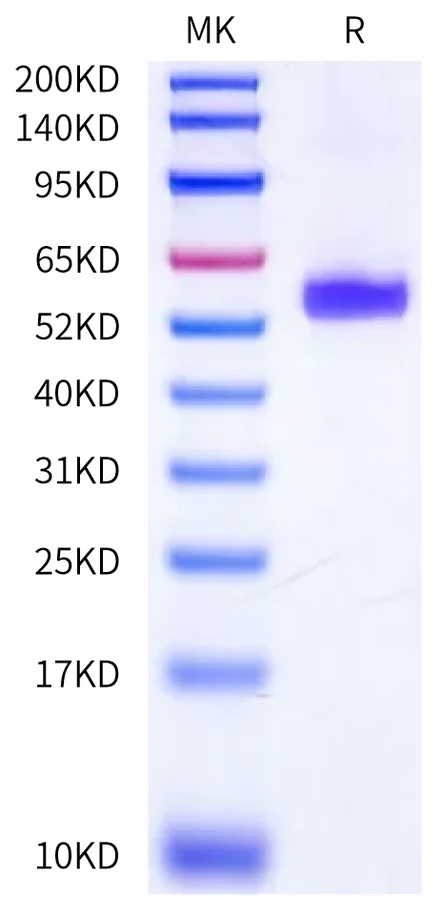
Human FGF21 on Bis-Tris PAGE under reduced condition. The purity is greater than 95%.
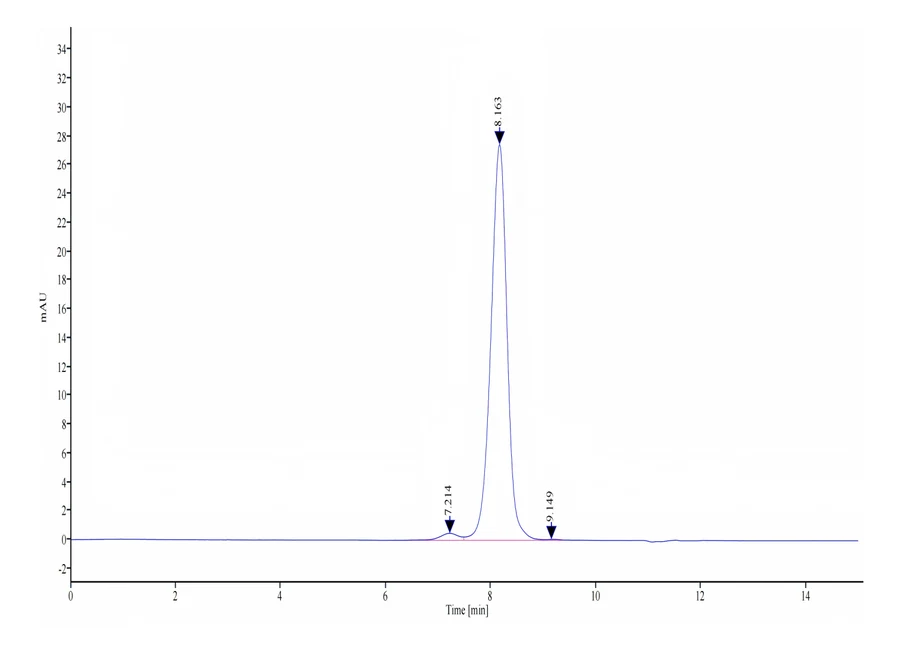
The purity of Human FGF21 is greater than 95% as determined by SEC-HPLC.
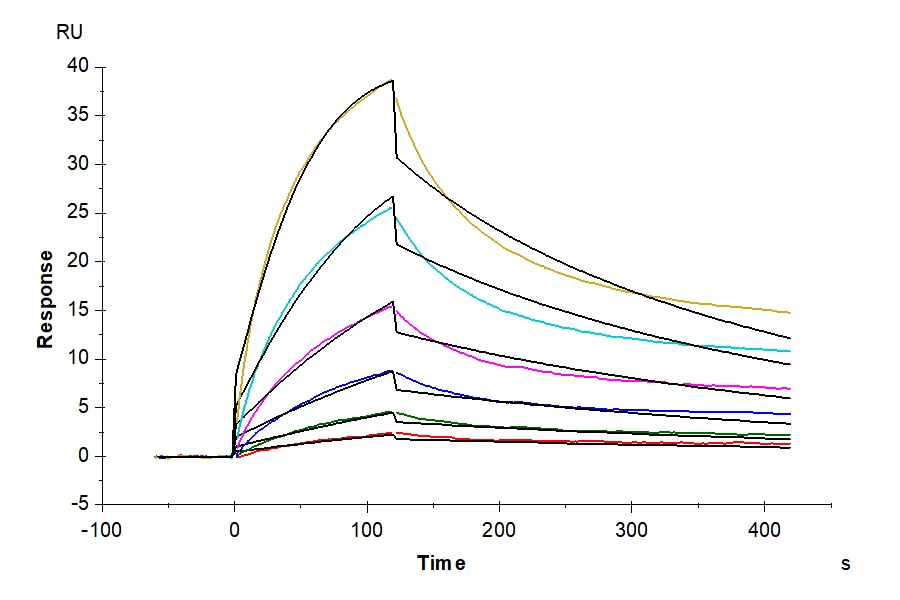
Human FGF21, hFc Tag captured on CM5 Chip via ProteinA can bind Human Beta Klotho, His Tag (Cat. KLB-HM101) with an affinity constant of 7.49 nM as determined in SPR assay (Biacore T200). (QC Test)
Background
Fibroblast growth factor 21 (FGF21) is a peptide hormone that is synthesized by several organs and regulates energy homeostasis. Excitement surrounding this relatively recently identified hormone is based on the documented metabolic beneficial effects of FGF21, which include weight loss and improved glycemia.
References
- Lewis JE, Ebling FJP, Samms RJ, Tsintzas K. Going Back to the Biology of FGF21: New Insights. Trends Endocrinol Metab. 2019;30(8):491-504. doi:10.1016/j.tem.2019.05.007