Human/Cynomolgus Her4/ErbB4 Protein
Catalog No: HER4-HF001
- Species
- Human/Cyno
- Expression System
- HEK293
- Tag
- an hFc (IgG1)
- Activity
- Activity verified
Product overview
Recombinant Human/Cynomolgus Her4/ErbB4 Protein is expressed in HEK293 cells with an hFc (IgG1) tag at the C-terminus. It contains amino acid residues Gln26-Pro651 (accession: Q15303-1(Human) / A0A2K5W0D7(Cynomolgus)).
Product Details
- Molecular Aliases
- p180erbB4; 4ICD; E4ICD; HER4; ErbB4; MGC138404; ALS19
- Protein Length
- Gln26-Pro651
- Expression System
- HEK293
- Theoretical Molecular Weight
- The protein has a predicted MW of 96.6 kDa. Due to glycosylation, the protein migrates to 100-120 kDa based on Bis-Tris PAGE result.
- Purity
- > 95% as determined by Bis-Tris PAGE > 95% as determined by HPLC
- Endotoxin
- Less than 1 EU per μg by the LAL method.
- Buffer / Formulation
- Lyophilized from 0.22μm filtered solution in PBS (pH 7.4). Normally 8% trehalose is added as protectant before lyophilization.
- State
- Lyophilized
- Storage Conditions
- -20 to -80°C for 24 months as supplied from date of receipt. -80°C for 3 months after reconstitution. Recommend to aliquot the protein into smaller quantities for optimal storage. Please minimize freeze-thaw cycles.
- Reconstitution Advice
- Dissolve the lyophilized protein in distilled water. Please refer to the Certificate of Analysis for detailed instructions.
Data Display
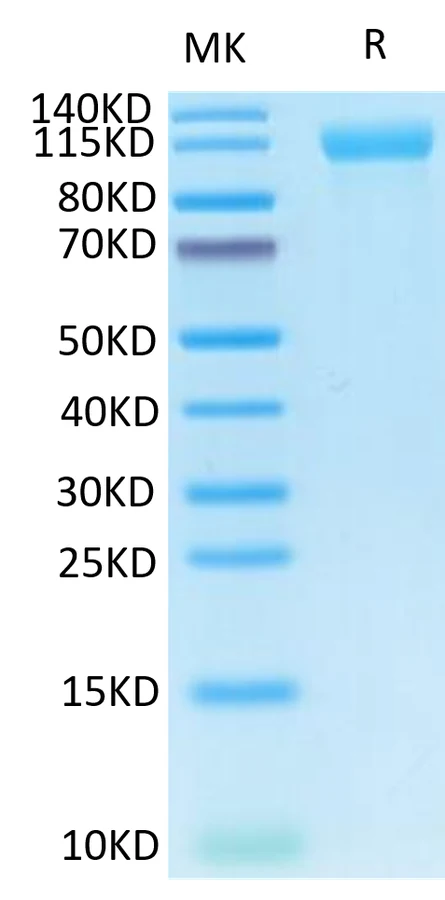
Human/Cynomolgus Her4 on Bis-Tris PAGE under reduced condition. The purity is greater than 95%.
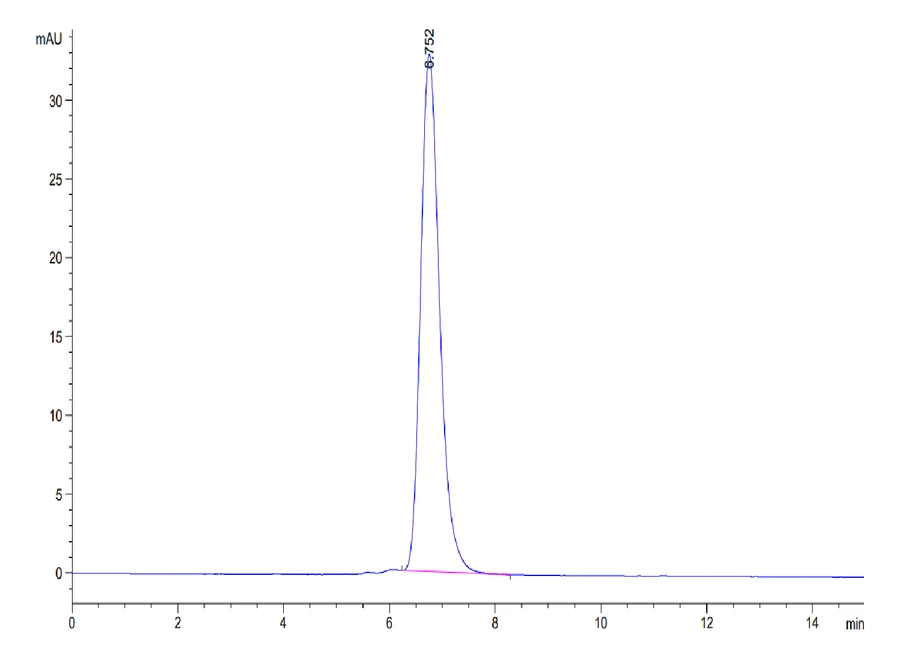
The purity of Human/Cynomolgus Her4 is greater than 95% as determined by SEC-HPLC.
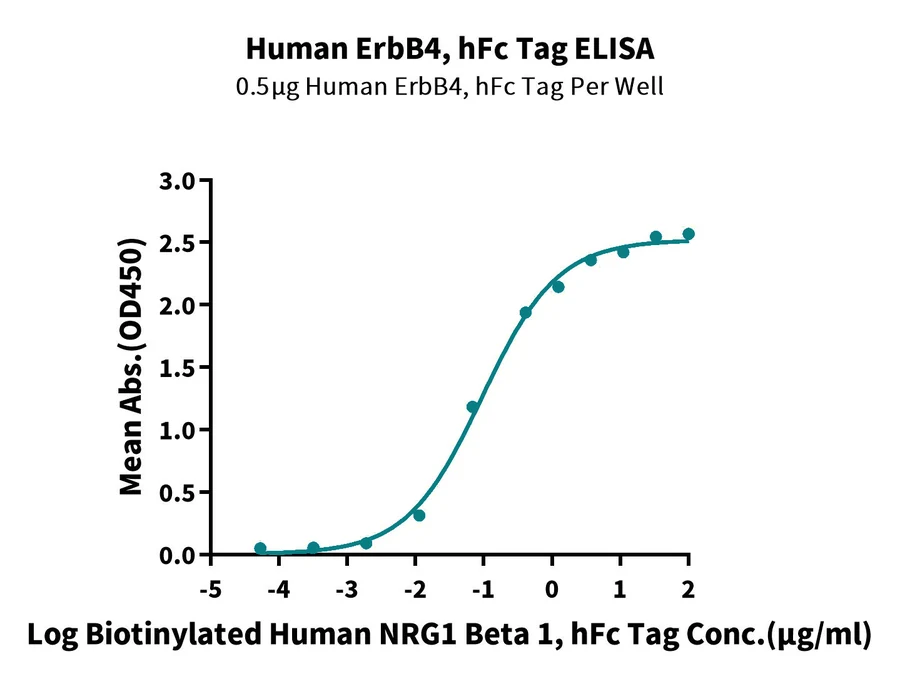
Immobilized Human/Cynomolgus Her4, hFc Tag at 5μg/ml (100μl/well) on the plate. Dose response curve for Biotinylated Human NRG1 Beta 1, hFc Tag with the EC50 of 94.6ng/ml determined by ELISA.
Background
ErbB4, a member of the EGF receptor family, plays a variety of roles in physiological and pathological states. Genetic studies have indicated a link between ErbB4 and type 2 diabetes and obesity. ErbB4 may play an important role in glucose homeostasis and lipogenesis. ErbB4 deficiency-related obesity and adipose tissue inflammation may contribute to the development of MetS.
References
- Zeng F, Wang Y, Kloepfer LA, Wang S, Harris RC. ErbB4 deletion predisposes to development of metabolic syndrome in mice. Am J Physiol Endocrinol Metab. 2018 Oct 1;315(4):E583-E593. doi: 10.1152/ajpendo.00166.2018. Epub 2018 Jun 26. PMID: 29944391; PMCID: PMC6230712.
Have questions about this product?
Our technical team can help with product selection, application questions and order support.