Biotinylated Human B7-H7/HHLA2 Protein
Catalog No: HHLA2-HB001
- Species
- Human
- Expression System
- HEK293
- Tag
- His, Avi
- Activity
- Activity verified
Product overview
Recombinant Biotinylated Human B7-H7/HHLA2 Protein is expressed in HEK293 cells with a His tag and Avi tag at the C-terminus. It contains amino acid residues Ile23-Asn344 (UniProt accession: Q9UM44-1).
Product Details
- Molecular Aliases
- B7H7; B7-H7; HHLA2; B7 Homolog 7
- Protein Length
- Ile23-Asn344
- Expression System
- HEK293
- Theoretical Molecular Weight
- The protein has a predicted MW of 39.88 kDa. Due to glycosylation, the protein migrates to 55-70 kDa based on Bis-Tris PAGE result.
- Purity
- > 95% as determined by Bis-Tris PAGE > 95% as determined by HPLC
- Endotoxin
- Less than 1 EU per μg by the LAL method.
- Buffer / Formulation
- Supplied as 0.22 μm filtered solution in PBS (pH 7.4).
- State
- Liquid
- Storage Conditions
- Valid for 12 months from date of receipt when stored at -80°C. Recommend to aliquot the protein into smaller quantities for optimal storage. Please minimize freeze-thaw cycles.
Data Display
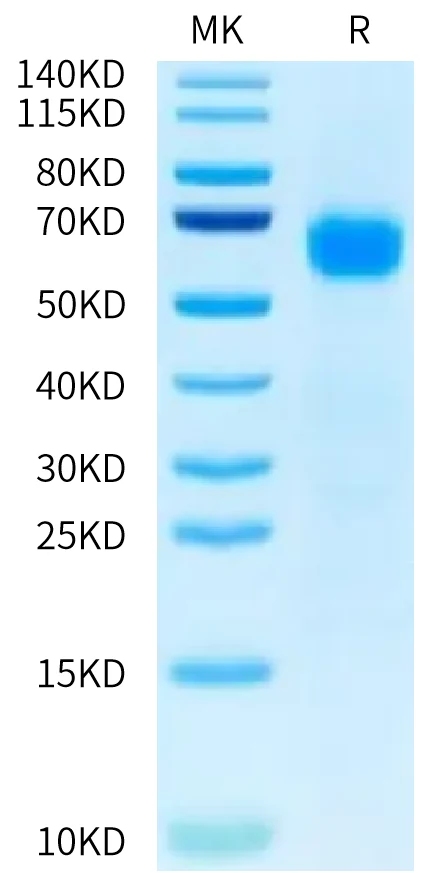
Biotinylated Human B7-H7 on Bis-Tris PAGE under reduced condition. The purity is greater than 95%.
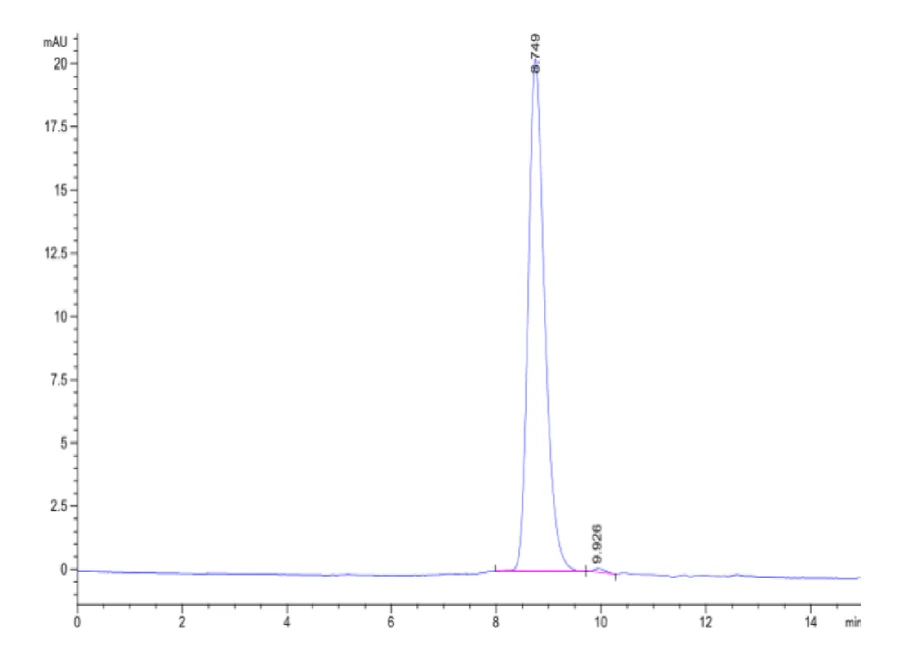
The purity of Biotinylated Human B7-H7 is greater than 95% as determined by SEC-HPLC.
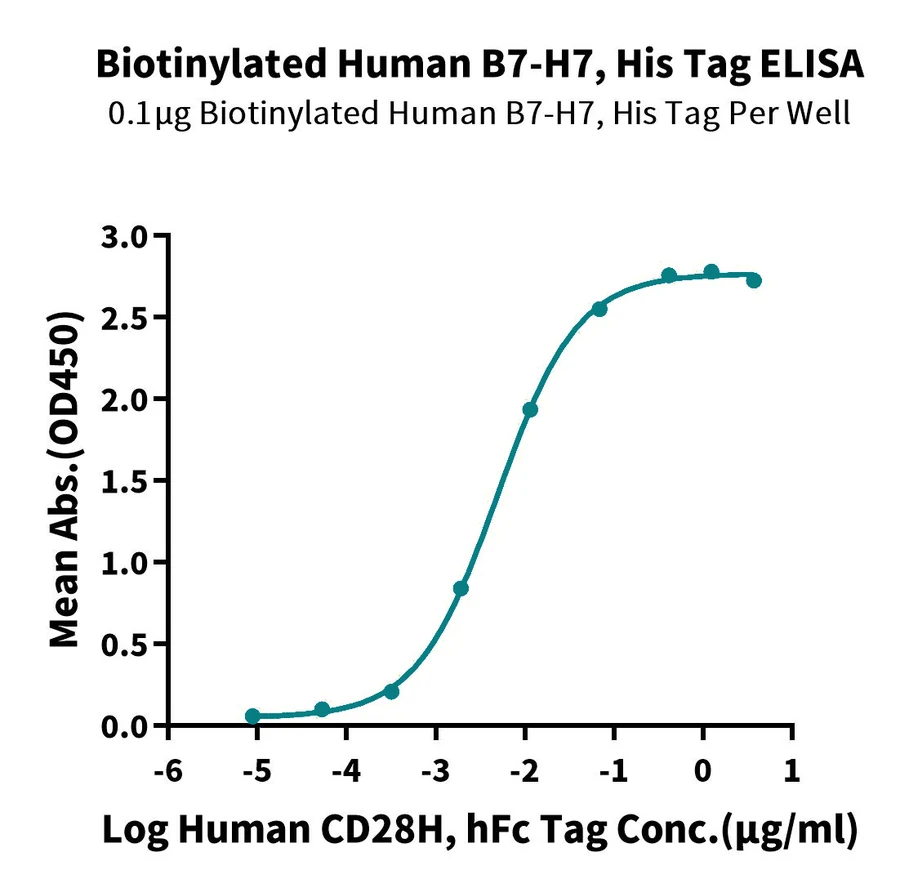
Immobilized Biotinylated Human B7-H7, His Tag at 1μg/ml (100μl/well) on the streptavidin precoated plate (5μg/ml). Dose response curve for Human CD28H, hFc Tag (Cat. CD8-HM28H) with the EC50 of 4.9ng/ml determined by ELISA. (QC Test)
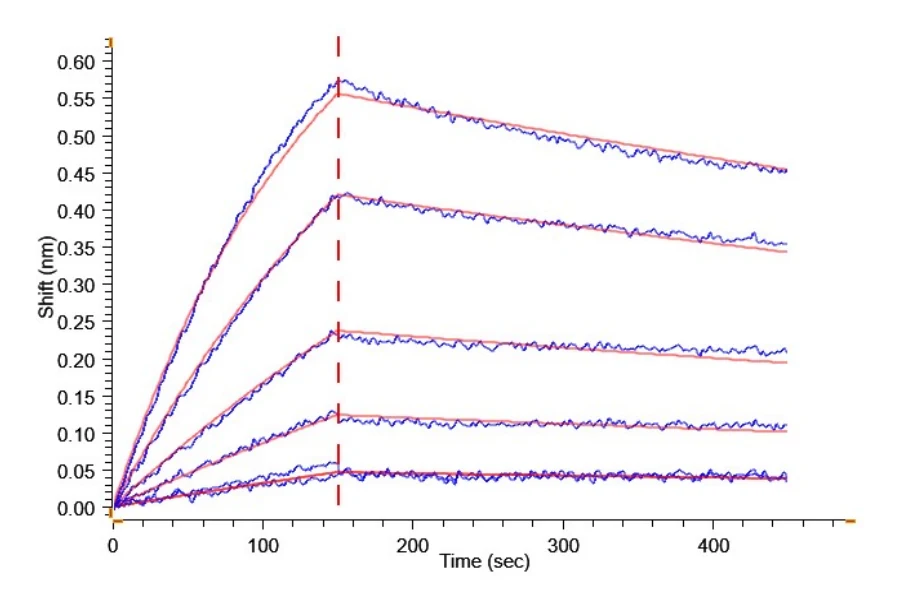
Loaded Biotinylated Human B7-H7, His-Avi tag on Streptavidin-Biosensor can bind Human CD28H, hFc Tag (Cat. CD8-HM28H) with an affinity constant of 5.28 nM as determined in BLI assay.
Background
B7-H7, also known as HHLA2 (HERV-H LTR-associating 2), is a member of the B7 family of immune regulatory proteins. Through interaction with TMIGD2, costimulates T-cells in the context of TCR-mediated activation. Enhances T-cell proliferation and cytokine production via an AKT-dependent signaling cascade.
References
- Leung J, Suh W K. The CD28-B7 Family in Anti-Tumor Immunity: Emerging Concepts in Cancer Immunotherapy[J]. Immune Network, 2014, 14(6).
Have questions about this product?
Our technical team can help with product selection, application questions and order support.