Biotinylated Human SKP1 Protein
Catalog No: SKP1-HB001
- Species
- Human
- Expression System
- HEK293
- Tag
- Biotin, His, Avi
Product overview
Recombinant Biotinylated Human SKP1 Protein is expressed in HEK293 cells His tag at the N-terminus and Avi tag at the C-terminusIt contains Pro2-Lys163 (UniProt accession: P63208-1).
Product Details
- Molecular Aliases
- p19A; OCP-2; OCP-II; SIII; EMC19; OCP2; SKP1A; TCEB1L
- Protein Length
- Pro2-Lys163
- Expression System
- HEK293
- Theoretical Molecular Weight
- The protein has a predicted MW of 21.43 kDa. Due to glycosylation, the protein migrates to 23-28 kDa based on Bis-Tris PAGE result.
- Purity
- > 95% as determined by Bis-Tris PAGE > 95% as determined by HPLC
- Endotoxin
- Less than 1 EU per μg by the LAL method.
- Buffer / Formulation
- Lyophilized from 0.22 μm filtered solution in PBS (pH 7.4). Normally 8% trehalose is added as protectant before lyophilization.
- State
- Lyophilized
- Storage Conditions
- -20 to -80°C for 12 months as supplied from date of receipt. -80°C for 3 months after reconstitution. Recommend to aliquot the protein into smaller quantities for optimal storage. Please minimize freeze-thaw cycles.
- Reconstitution Advice
- Dissolve the lyophilized protein in distilled water. Please refer to the Certificate of Analysis for detailed instructions.
Data Display
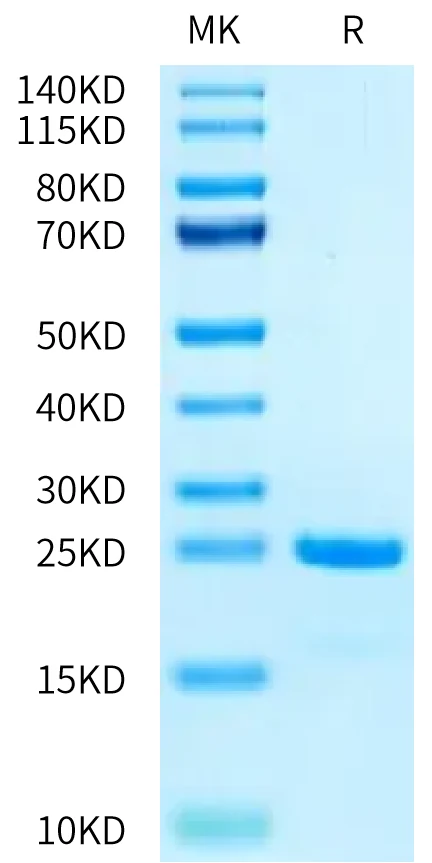
Biotinylated Human SKP1 on Bis-Tris PAGE under reduced condition. The purity is greater than 95%.
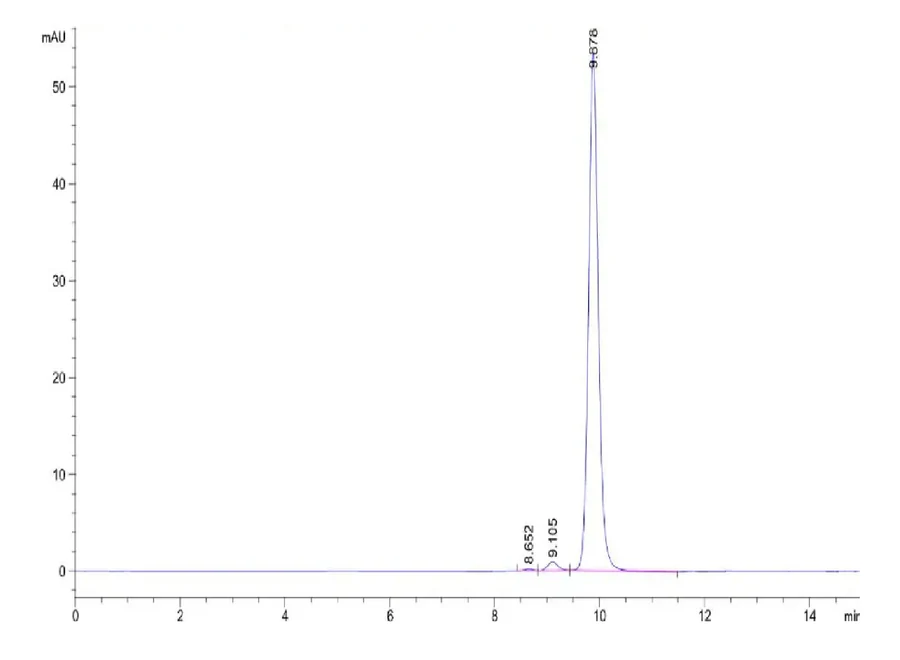
The purity of Biotinylated Human SKP1 is greater than 95% as determined by SEC-HPLC.
Background
The S-phase Kinase-Associated Protein 1 (SKP1) is a core component of the SKP1, Cullin 1, F-box protein (SCF) complex, an E3 ubiquitin ligase that serves to poly-ubiquitinate a vast array of protein targets as a signal for their proteasomal degradation, thereby playing a critical role in the regulation of downstream biological processes.
References
- Thompson LL, Rutherford KA, Lepage CC, McManus KJ. Aberrant SKP1 Expression: Diverse Mechanisms Impacting Genome and Chromosome Stability. Front Cell Dev Biol. 2022 Mar 8;10:859582. doi: 10.3389/fcell.2022.859582. PMID: 35345853; PMCID: PMC8957228.
Have questions about this product?
Our technical team can help with product selection, application questions and order support.