Biotinylated Human Siglec-3/CD33 Protein
Catalog No: CD33-HB001
- Species
- Human
- Expression System
- HEK293
- Tag
- His, Avi
- Activity
- Activity verified
Product overview
Recombinant Biotinylated Human Siglec-3/CD33 Protein is expressed in HEK293 cells with a His tag and Avi tag at the C-terminus. It contains amino acid residues Asp18-His259 (UniProt accession: P20138-1).
Product Details
- Molecular Aliases
- CD33 molecule; CD33; FLJ00391; gp67; Siglec3; Siglec-3; p67
- Protein Length
- Asp18-His259
- Expression System
- HEK293
- Theoretical Molecular Weight
- The protein has a predicted MW of 29.6 kDa. Due to glycosylation, the protein migrates to 48-58 kDa based on Bis-Tris PAGE result.
- Purity
- > 95% as determined by Bis-Tris PAGE > 95% as determined by HPLC
- Endotoxin
- Less than 1 EU per μg by the LAL method.
- Buffer / Formulation
- Supplied as 0.22μm filtered solution in 50mM MES, 500mM NaCl, 200mM L-arginine (pH 7.4).
- State
- Liquid
- Storage Conditions
- Valid for 12 months from date of receipt when stored at -80°C. Recommend to aliquot the protein into smaller quantities for optimal storage. Please minimize freeze-thaw cycles.
Data Display
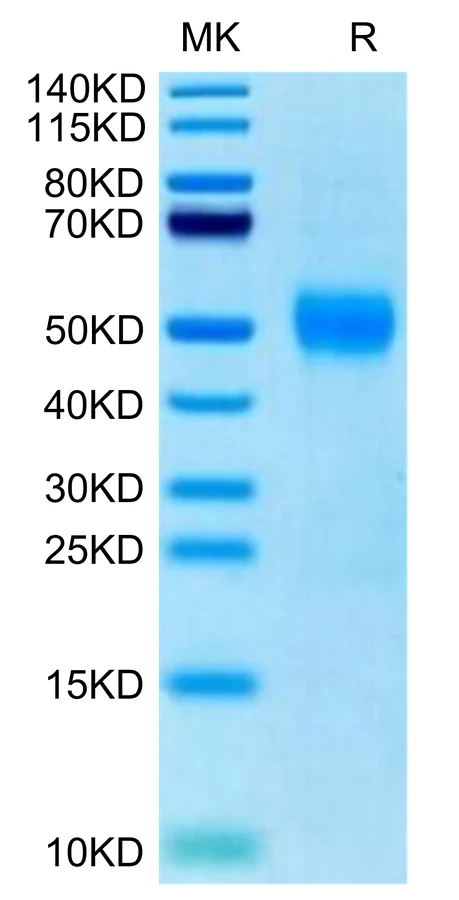
Biotinylated Human Siglec-3 on Bis-Tris PAGE under reduced condition. The purity is greater than 95%.
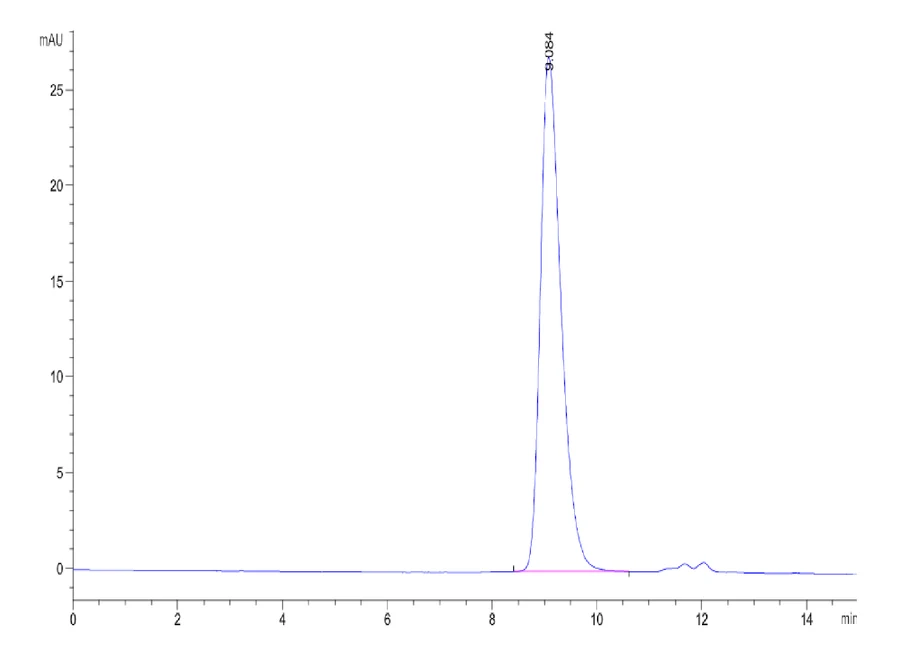
The purity of Biotinylated Human Siglec-3 is greater than 95% as determined by SEC-HPLC.
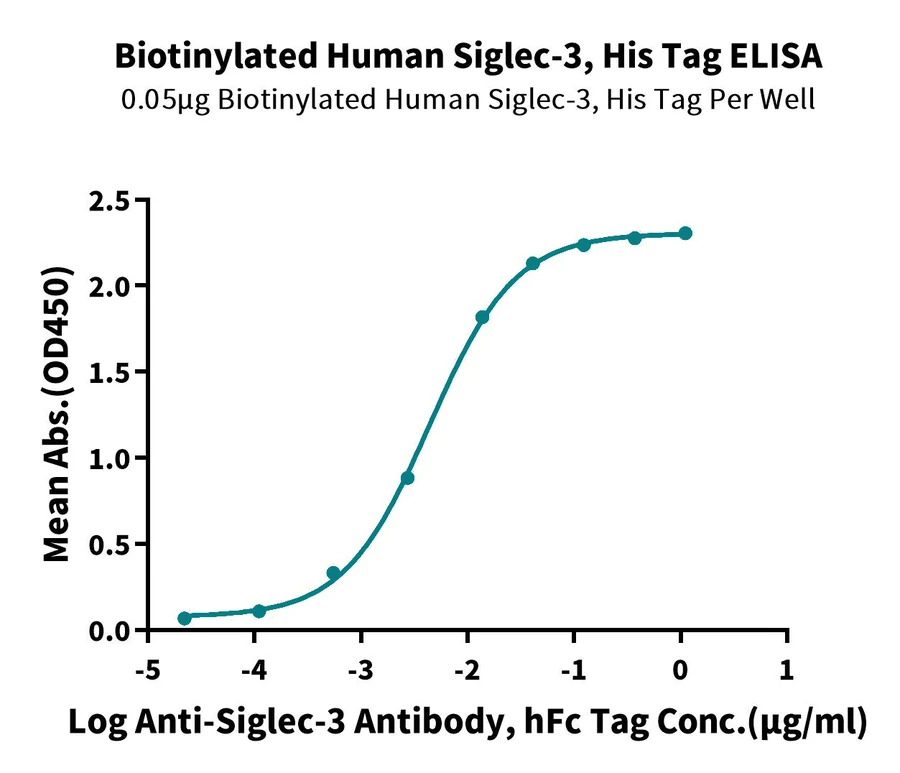
Immobilized Biotinylated Human Siglec-3, His Tag at 0.5μg/ml (100μl/Well) on streptavidin (5μg/ml) precoated plate. Dose response curve for Anti-Siglec-3 Antibody, hFc Tag with the EC50 of 4.4ng/ml determined by ELISA.
Background
CD33 (siglec-3), a well-known target in leukemia therapy, is an inhibitory sialoadhesin expressed in human leukocytes of the myeloid lineage and some lymphoid subsets, including NK cells. CD33 is the smallest siglec member. It preferentially binds to α2-6- and α2-3-sialylated glycans and strongly binds to sialylated ligands on leukemic cell lines.
References
- Hernández-Caselles T, Miguel RC, Ruiz-Alcaraz AJ, García-Peñarrubia P. CD33 (Siglec-3) Inhibitory Function: Role in the NKG2D/DAP10 Activating Pathway. J Immunol Res. 2019 Apr 15;2019:6032141. doi: 10.1155/2019/6032141. PMID: 31143782; PMCID: PMC6501159.
Have questions about this product?
Our technical team can help with product selection, application questions and order support.