Biotinylated Human Kv1.3 Nanodisc
Catalog No: KV1.3-HB001
- Species
- Human
- Expression System
- HEK293
- Tag
- His
- Activity
- Activity verified
Product overview
Recombinant Biotinylated Human Kv1.3 Nanodisc is expressed in HEK293 cells with a His tag at the C-terminus. It contains amino acid residues Met1-Val575 (UniProt accession: P22001-1).
Product Details
- Molecular Aliases
- HGK5; HLK3; HPCN3; KCNA3
- Protein Length
- Met1-Val575
- Expression System
- HEK293
- Theoretical Molecular Weight
- The protein has a predicted MW of 76.79 kDa.
- Endotoxin
- Less than 1 EU per μg by the LAL method.
- Buffer / Formulation
- Supplied as 0.22 μm filtered solution in PBS, 200mM L-arginine (pH 7.4). Notice: Not recommended for flow cytometry in mammalian cells.
- State
- Liquid
- Storage Conditions
- Valid for 6 months from date of receipt when stored at -80°C. Recommend to aliquot the protein into smaller quantities for optimal storage. Please minimize freeze-thaw cycles.
Data Display
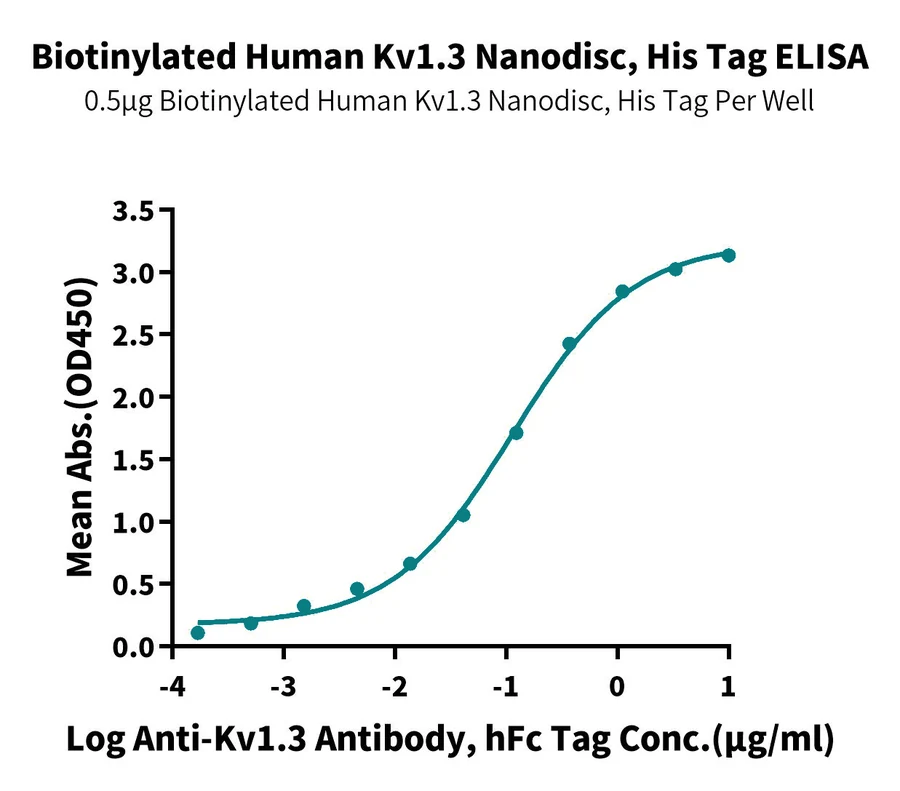
Immobilized Biotinylated Human Kv1.3 Nanodisc, His Tag at 5μg/ml (100μl/well) on the streptavidin precoated plate (5μg/ml). Dose response curve for Anti-Kv1.3 Antibody, hFc Tag with the EC50 of 0.11μg/ml determined by ELISA. (QC Test)
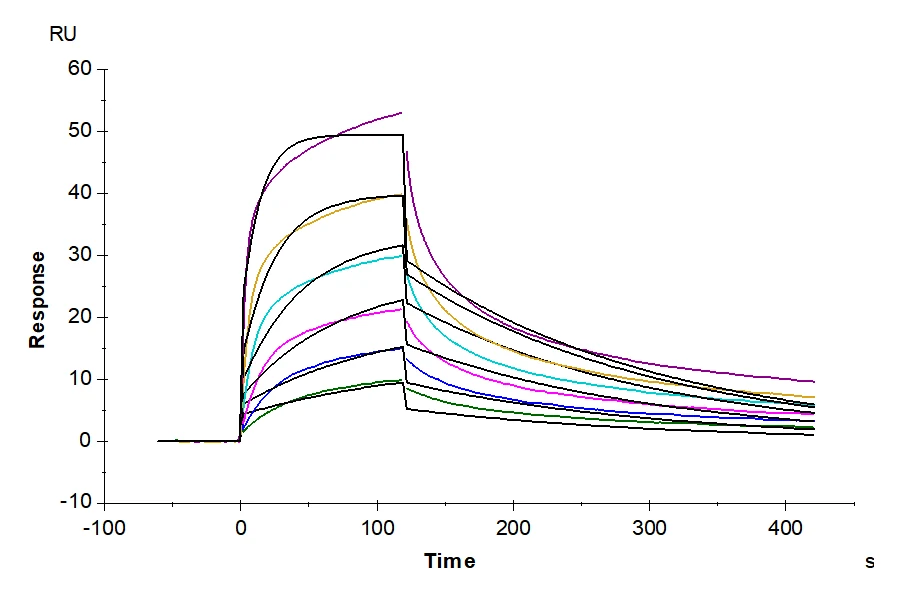
Biotinylated Human Kv1.3 Nanodisc, His Tag captured on CM5 Chip via Streptavidin can bind Anti-Kv1.3 Antibody, hFc Tag with an affinity constant of 0.78 nM as determined in SPR assay (Biacore T200).
Background
Kv1.3 is a voltage gated potassium channel located in the plasma membrane, as well as at intracellular levels, such as mitochondria (mitoKv1.3), nucleus and Golgi apparatus. The plasma membrane channel has been shown to be important for cell proliferation, while the mitochondrial counterpart has been related to modulation of cell death. Moreover, altered expression of Kv1.3 was observed in various tumors and Kv1.3 seems to be involved in development and progression of various cancerous forms.
References
- Checchetto V, Prosdocimi E, Leanza L. Mitochondrial Kv1.3: a New Target in Cancer Biology? Cell Physiol Biochem. 2019;53(S1):52-62. doi: 10.33594/000000195. PMID: 31854954.
Have questions about this product?
Our technical team can help with product selection, application questions and order support.