Feline PD-1/PDCD1 Protein
Catalog No: PD1-FP001
- Species
- Feline
- Expression System
- HEK293
- Tag
- an hFc (IgG1)
- Activity
- Activity verified
Product overview
Recombinant Feline PD-1/PDCD1 Protein is expressed in HEK293 cells with an hFc (IgG1) tag at the C-terminus. It contains amino acid residues Leu25-Gly168 (accession: A9YUA6).
Product Details
- Molecular Aliases
- PDCD1; PD1; CD279; SLEB2; PD-1
- Protein Length
- Leu25-Gly168
- Expression System
- HEK293
- Theoretical Molecular Weight
- The protein has a predicted MW of 42.09 kDa. Due to glycosylation, the protein migrates to 60-80 kDa based on Bis-Tris PAGE result.
- Purity
- > 95% as determined by Bis-Tris PAGE > 95% as determined by HPLC
- Endotoxin
- Less than 0.1 EU per μg by the LAL method.
- Buffer / Formulation
- Supplied as 0.22 μm filtered solution in PBS (pH 7.4).
- Storage Conditions
- Valid for 12 months from date of receipt when stored at -80°C. Recommend to aliquot the protein into smaller quantities for optimal storage. Please minimize freeze-thaw cycles.
Data Display
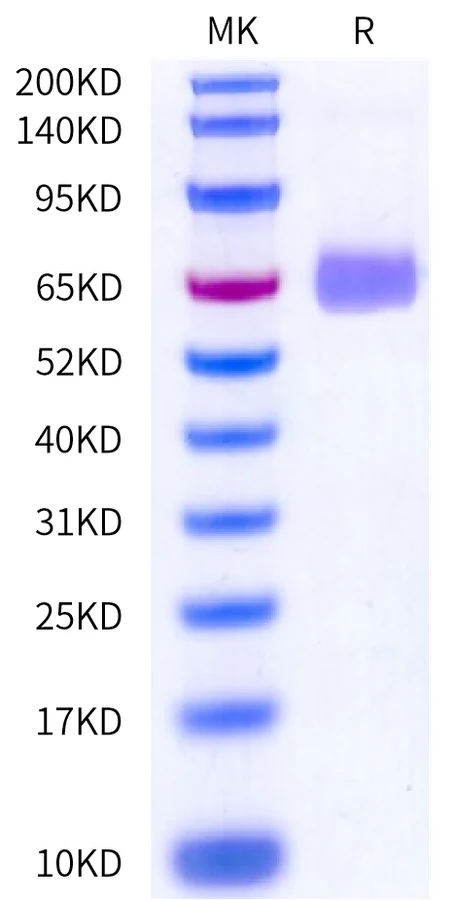
Feline PD-1 on Bis-Tris PAGE under reduced condition. The purity is greater than 95%.
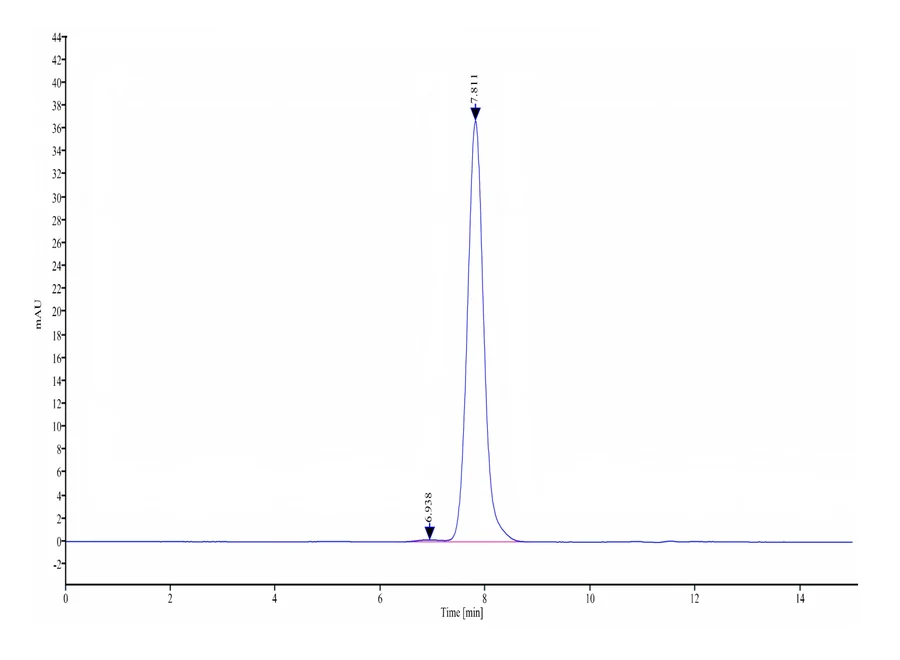
The purity of Feline PD-1 is greater than 95% as determined by SEC-HPLC.
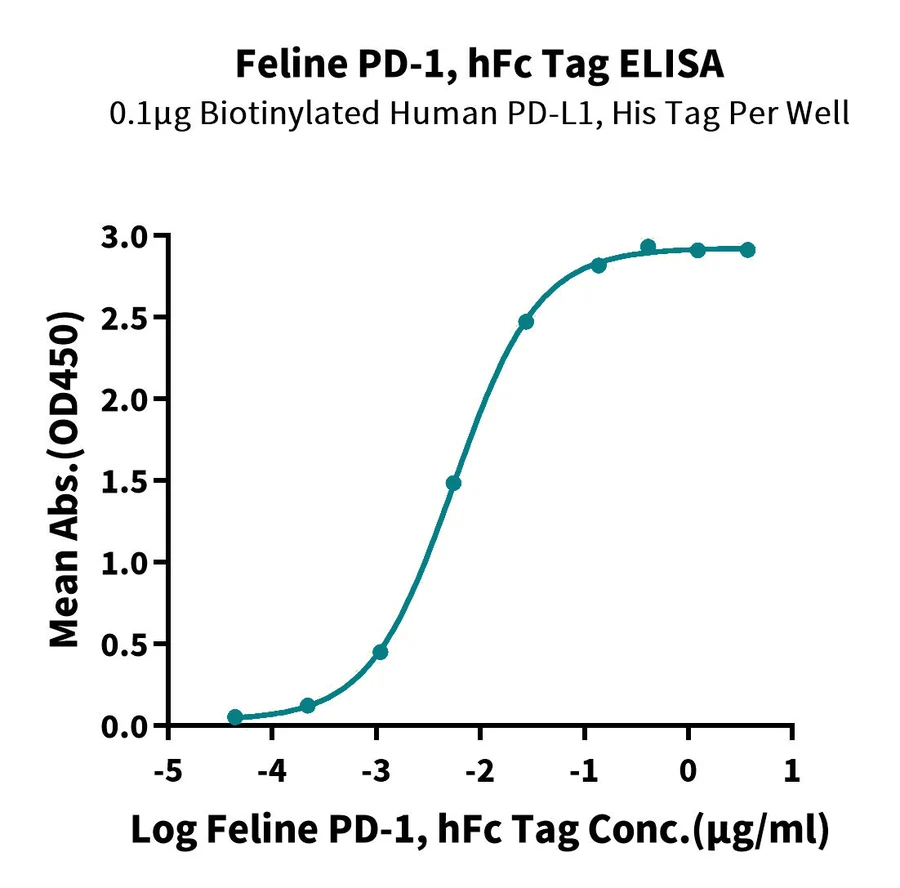
Immobilized Biotinylated Human PD-L1, His Tag (Cat. PDL-HM410B) at 1μg/ml (100μl/well) on the streptavidin precoated plate(5μg/ml). Dose response curve for Feline PD-1, hFc Tag with the EC50 of 5.5ng/ml determined by ELISA. (QC Test)
Background
Programmed Death-1 receptor (PD-1), also known as CD279, is type I transmembrane protein belonging to the CD28 family of immune regulatory receptors.PD1 is a inhibitory receptor on antigen activated T-cells that plays a critical role in induction and maintenance of immune tolerance to self. Delivers inhibitory signals upon binding to ligands CD274/PDCD1L1 and CD273/PDCD1LG2 (PubMed:21276005). Following T-cell receptor (TCR) engagement, PDCD1 associates with CD3-TCR in the immunological synapse and directly inhibits T-cell activation.
References
- Blank C, Mackensen A. Contribution of the PD-L1/PD-1 pathway to T-cell exhaustion: an update on implications for chronic infections and tumor evasion[J]. Cancer Immunology Immunotherapy, 2007, 56(5):739-745.