Human 4-1BB CDR234 Protein
Catalog No: 41BB-HP003
- Species
- Human
- Expression System
- HEK293
- Tag
- an hFc (IgG1)
Product overview
Recombinant Human 4-1BB CDR234 Protein is expressed in HEK293 cells with an hFc (IgG1) tag at the C-terminus. It contains amino acid residues Pro47-Gly159 (UniProt accession: Q07011-1).
Product Details
- Molecular Aliases
- CD137; TNFRSF9; 4-1BB ligand receptor; 41BB; 4-1BB; CDw137; FLJ43501; ILA; T cell antigen ILA
- Protein Length
- Pro47-Gly159
- Expression System
- HEK293
- Theoretical Molecular Weight
- The protein has a predicted MW of 38.9 kDa. Due to glycosylation, the protein migrates to 48-58 kDa based on Bis-Tris PAGE result.
- Purity
- > 90% as determined by Bis-Tris PAGE > 90% as determined by HPLC
- Endotoxin
- Less than 1 EU per μg by the LAL method.
- Buffer / Formulation
- Lyophilized from 0.22 μm filtered solution in PBS (pH 7.4). Normally 8% trehalose is added as protectant before lyophilization.
- State
- Lyophilized
- Storage Conditions
- -20 to -80°C for 12 months as supplied from date of receipt. -80°C for 3 months after reconstitution. Recommend to aliquot the protein into smaller quantities for optimal storage. Please minimize freeze-thaw cycles.
- Reconstitution Advice
- Dissolve the lyophilized protein in distilled water. Please refer to the Certificate of Analysis for detailed instructions.
Data Display
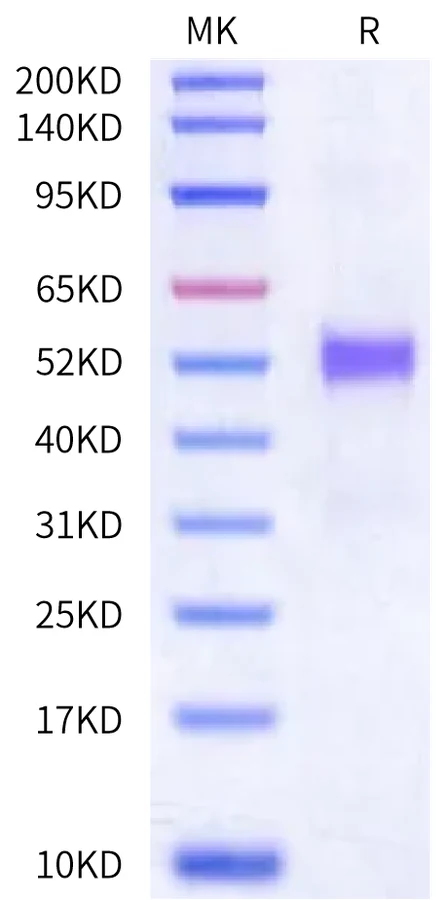
Human 4-1BB CDR234 on Bis-Tris PAGE under reduced condition. The purity is greater than 90%.
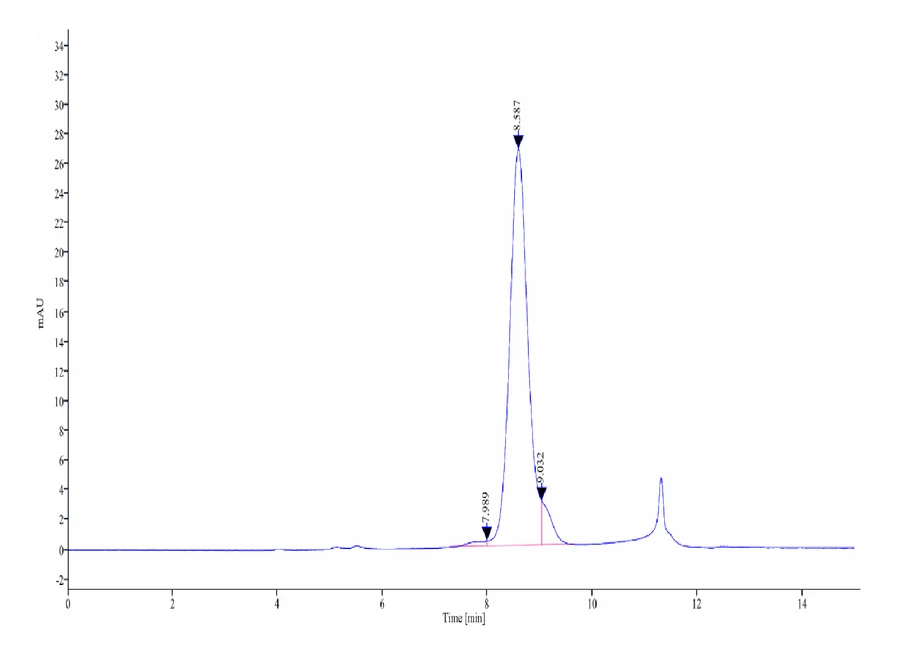
The purity of Human 4-1BB CDR234 is greater than 90% as determined by SEC-HPLC.
Background
4-1BB, is also known as CD137, is a type 2 transmembrane glycoprotein receptor belonging to the TNF superfamily.CD137 can be expressed by activated T cells, but to a larger extent on CD8 than on CD4 T cells. In addition, CD137 expression is found on dendritic cells, B cells, follicular dendritic cells, natural killer cells, granulocytes and cells of blood vessel walls at sites of inflammation.
References
- Vinay D S, Kwon B S. 4-1BB (CD137), an inducible costimulatory receptor, as a specific target for cancer therapy[J]. BMB Reports, 2014, 47(3):122-129. Note: HPLC results always come from liquid protein, due to absorption peak interference of trehalose in lyophilized powder.