Mouse PD-1/PDCD1 Protein, Ultra Low Endotoxin
Catalog No: PD1-MP002
- Species
- Mouse
- Expression System
- HEK293
- Tag
- an hFc (IgG1)
- Activity
- Activity verified
Product overview
Recombinant Mouse PD-1/PDCD1 Protein is expressed in HEK293 cells with an hFc (IgG1) tag at the C-terminus. It contains amino acid residues Leu25-Gln167 (accession: NP_032824).
Product Details
- Molecular Aliases
- PDCD1; PD1; CD279; SLEB2; PD-1
- Protein Length
- Leu25-Gln167
- Expression System
- HEK293
- Theoretical Molecular Weight
- The protein has a predicted MW of 42.9 kDa. Due to glycosylation, the protein migrates to 60-70 kDa based on Bis-Tris PAGE result.
- Purity
- > 95% as determined by Bis-Tris PAGE > 95% as determined by HPLC
- Endotoxin
- Less than 0.01 EU per μg by the LAL method.
- Buffer / Formulation
- Lyophilized from 0.22 μm filtered solution in PBS (pH 7.4). Normally 8% trehalose is added as protectant before lyophilization.
- State
- Lyophilized
- Storage Conditions
- -20 to -80°C for 12 months as supplied from date of receipt. -80°C for 3 months after reconstitution. Recommend to aliquot the protein into smaller quantities for optimal storage. Please minimize freeze-thaw cycles.
- Reconstitution Advice
- Dissolve the lyophilized protein in distilled water. Please refer to the Certificate of Analysis for detailed instructions.
Data Display
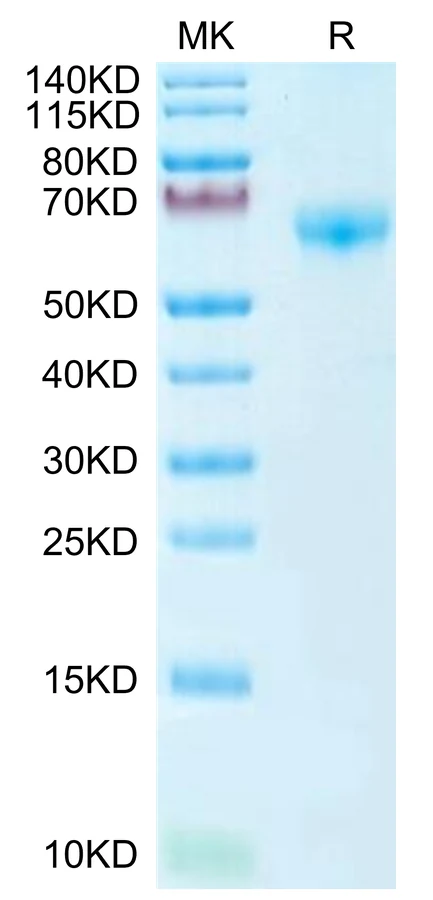
Mouse PD-1 on Bis-Tris PAGE under reduced condition. The purity is greater than 95%.
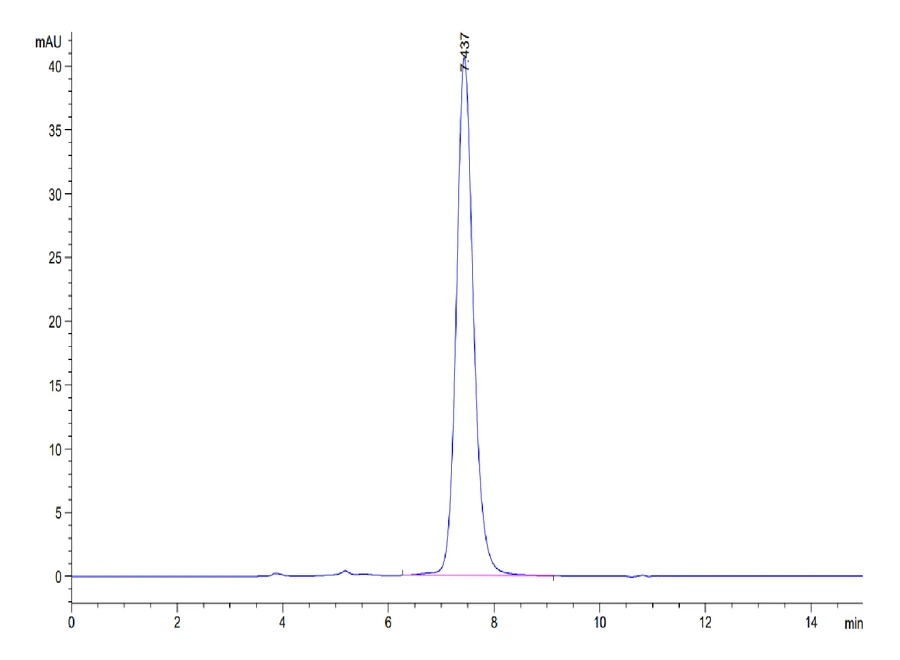
The purity of Mouse PD-1 is greater than 95% as determined by SEC-HPLC.
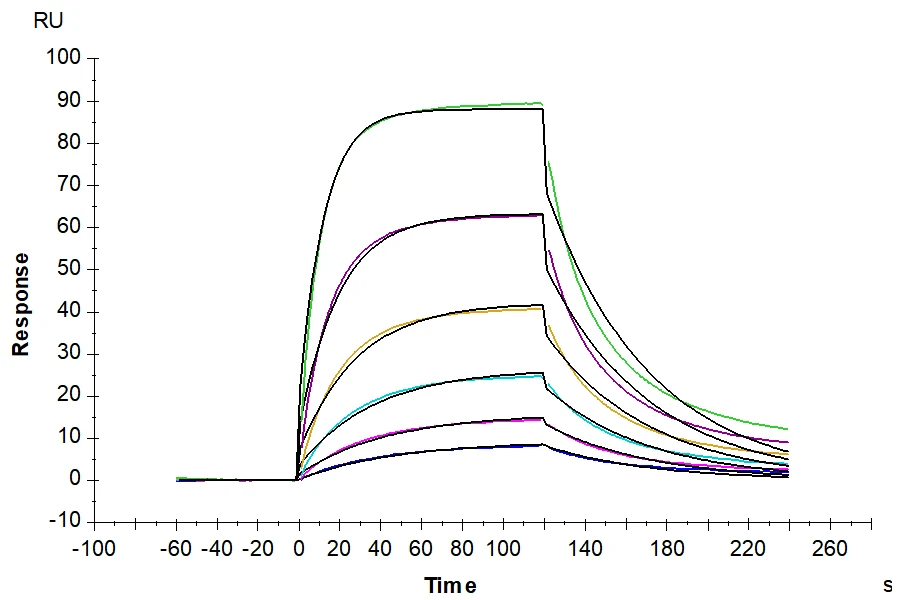
Mouse PD-L1, His Tag (Cat. PDL-MM110) captured on CM5 Chip via anti-his antibody can bind Mouse PD-1, hFc Tag with an affinity constant of 0.62 μM as determined in SPR assay (Biacore T200). (QC Test)
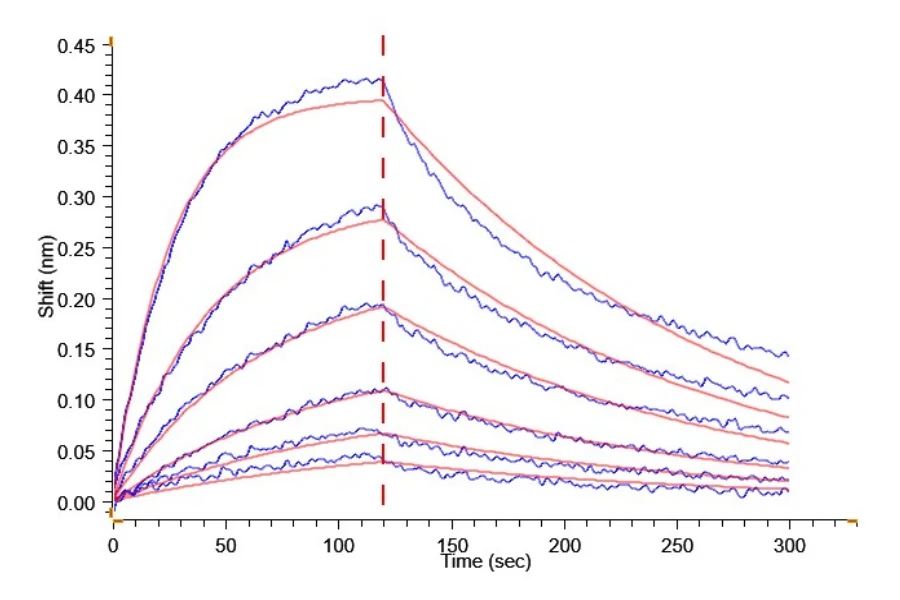
Loaded Mouse PD-L1, His Tag (Cat. PDL-MM110) on Anti-His-Biosensor can bind Mouse PD-1, hFc Tag with an affinity constant of 0.20 µM as determined in BLI assay.
Background
Programmed cell death protein 1, also known as PD-1 and CD279, is a protein found on the surface of cells that has a role in regulating the immune system's response to the cells of the human body by down-regulating the immune system and promoting self tolerance by suppressing T cell inflammatory activity.
References
- Blank C, Mackensen A. Contribution of the PD-L1/PD-1 pathway to T-cell exhaustion: an update on implications for chronic infections and tumor evasion[J]. Cancer Immunology Immunotherapy, 2007, 56(5):739-745. Note: HPLC results always come from liquid protein, due to absorption peak interference of trehalose in lyophilized powder.
Have questions about this product?
Our technical team can help with product selection, application questions and order support.